SiteGround CDN 2.0 Is Here, Now Even Faster!

SiteGround CDN version 2.0

UPDATE

As of February 28th, 2023, all clients using our CDN have been migrated to its latest version, SiteGround CDN 2.0, providing faster and even more efficient site performance. Our in-house built CDN is included for free in all our plans, so all new clients will also be able to activate it.

Website loading speed may have a serious impact on search engine standings, bounce rates and sales conversions of your site. As a web hosting provider we are able to contribute to your website’s success by helping it load faster. That’s why at SiteGround we’re constantly implementing new speed-enhancing technologies that are more powerful and easier to use for our clients. 

One of our latest products, that ensures faster sites for our clients, is our custom-built CDN. Just a few months after its launch, it is already used by hundreds of thousands of domains. We have seen the service has a considerable positive impact on our clients’ website performance and we are also receiving a steady flow of positive feedback from the users.

To improve the service even more, we have just deployed version 2.0 of SiteGround CDN. It employs the power of anycast routing and Google network edge locations and thus increases the website loading speed by 20% on average and may go up to 100% for visitors located in some specific parts of the world. 

Why is the CDN 2.0 faster?

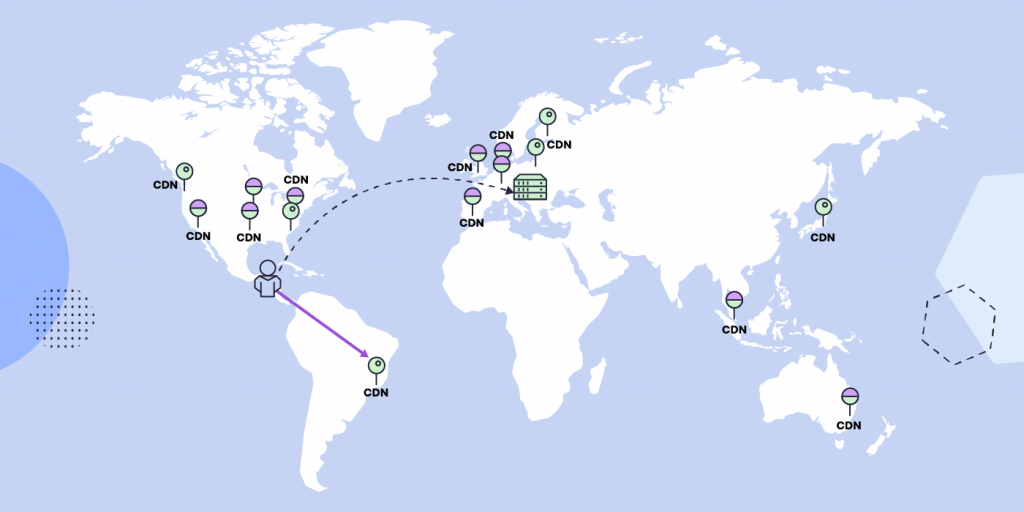
As you probably already know, the idea of the CDN (Content Delivery Network) is to keep a copy of your website on multiple locations called points of presence (PoPs) around the globe. When you have website visitors located far away from the original server that hosts your site, the CDN allows them to see a version of your site from the closest PoP. Thus the time needed for the data to reach your visitors is shorter than if it was served by the original server and your site loads faster. The closer your visitor is to a PoP the shorter the time it takes your site to load.

But apart from the geographical distance between the visitor and the PoP there are, of course, other factors that influence the speed with which the PoP is reached. It makes a difference if the data travels through the public network or through the much faster Google Cloud internal network. 

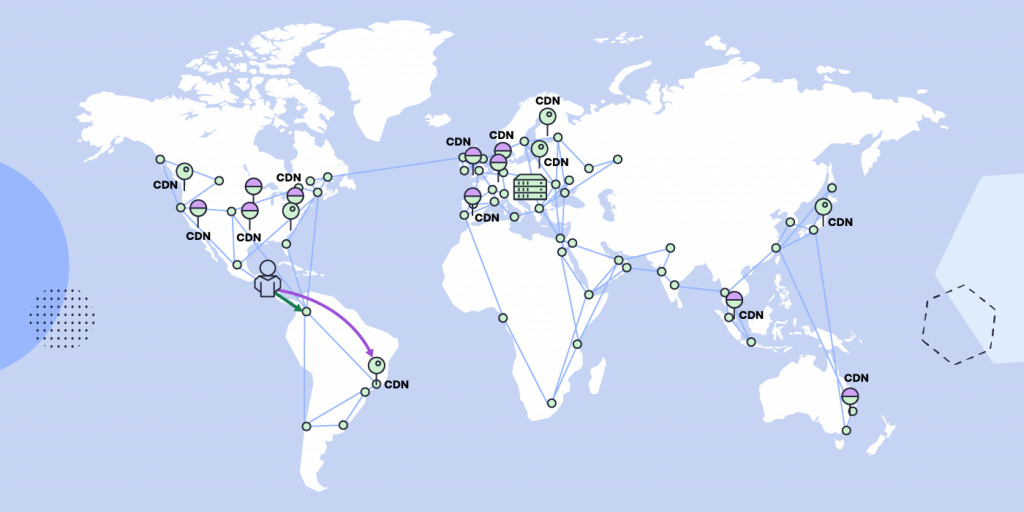
In our initial CDN setup each PoP had its own unique IP address and required the central DNS system to calculate the distance between users and PoPs, determining the best routing through the public network. Now in the CDN 2.0 we have implemented an anycast layer which ensures that IP addresses remain the same for all our PoPs. This way we eliminate the DNS layer calculations and clients requests are automatically routed to the closest edge location of Google network. Once the request reaches the edge location, it enters the much faster Google Internal network and reaches the closest SiteGround CDN PoP almost instantly. So now the closer your visitors are to the network edge location, the faster your site loads.

The great news is that Google Cloud network already has 200+ edge locations around the globe, which means that most visitors are always very near one of these. Also whenever new such points are added by Google, they will naturally make our CDN faster in new regions.

What are the benefits of the CDN 2.0?

  • Faster sites and better TTFB 


Due to the implementation of the anycast routing and the fact that we are able to take advantage of the extraordinary speed of the Google internal network, now millions of visitors of the sites that use our CDN service will have better experience and have the requested sites load faster.

Time to First Byte (TTFB) is a measurement of the time it takes for a browser to receive the first byte of response data from a web server after making a request. When comparing the first byte response times from more than 50 locations the TTFB improvement is around 20% on average and up to 100% in regions that were further from the SiteGround’s CDN PoPs.

  • Higher CDN reliability 

CDN 2.0 is backed by cross-region load balancing, including automatic multi-region failover which allows them to react instantaneously to changes in users, traffic, network, backend health, and other related conditions. This helps to ensure that the content remains available, even in case any of the CDN PoPs goes down.

How to get the CDN 2.0?

Starting from the middle of February, we will gradually switch both the Free SiteGround CDN users and the Premium SiteGround CDN users to the new version of the service. The process wouldn’t require any action on the client’s end and will be fully automated. If you are still not taking advantage of our CDN, it is a great time to add CDN to your site now through your client area.

[subscribe_cta]

Client Survey Results 2022: Superb Website Speed and Security

client survey results 2022

The results from our traditional annual client survey are here! Looking back at 2022, we’ve been working hard to introduce new and improve existing tools and services that make your websites even faster and safer. But at the end of the day, what really matters is the impact of these improvements and the positive effect they brought for our users. Here is what you had to say and how you rated our efforts and your experience with our hosting services throughout the past year.

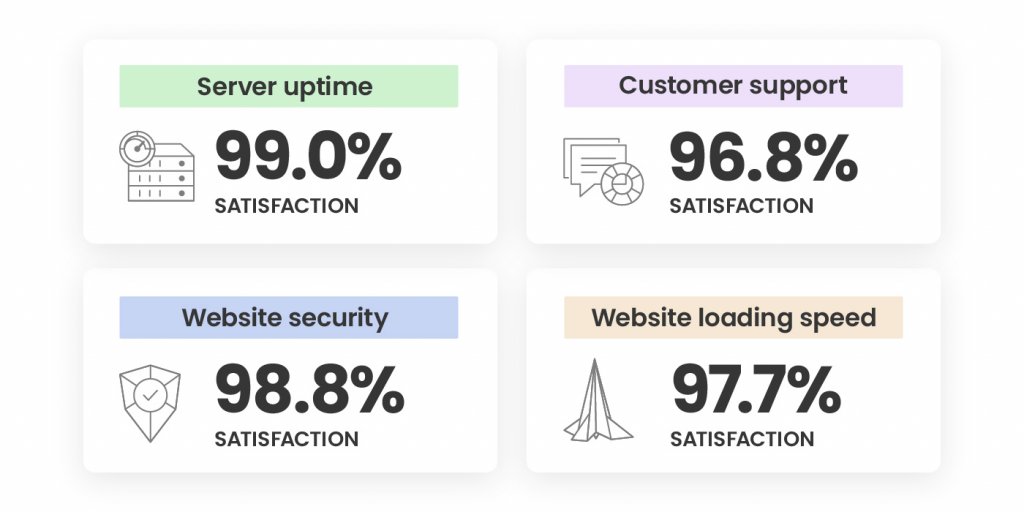
An Outstanding 98.8% Satisfaction with Site Security

Securing your websites has always been a top priority for us during the years. 2022 was not an exception and our efforts didn’t go unnoticed – our Website Security was rated high by an overwhelming 98.8% of all respondents! Here’s what we did to achieve that:

We improved our already great-performing Site Scanner with features improving early malware detection and introduced a new plan with proactive reaction tools in case of a website attack. During our #CyberSecurityMonth campaign last October, we went even further. We not only ran an intense email awareness campaign about website security, but we also introduced new security features, such as an on-demand IP and Geo traffic blocking tool. We also improved our AI-driven brute-force prevention system and its state-of-art self-learning mechanism, which now blocks over 95% more bad traffic before it even reaches our servers. Here’s a recap of all essential website security features for your website, in case you’ve missed it.

Last but not least, towards the end of 2022, we launched our new monthly security reports, included for free with all our plans. You can now sign up and receive directly in your inbox a personalized security overview of your website(s) every month, with highlights of what security measures we’ve applied and suggestions of what you can improve.

A Supreme 97.7% Satisfaction with Website Loading Speed

Website loading speed is important for your conversion rates, SEO rankings, and users’ experience. That’s why boosting website performance is of utmost importance to us and we’re constantly working on making your websites as fast as possible.

As early as February 2022, we introduced a newer version of our SiteGround Optimizer plugin for WordPress, making it available and free to all WordPress users, regardless of where they host their websites and included new advanced speed features, such as file-based caching. The plugin now has over 1 Million active installations and was voted Silver in the top 3 best WordPress optimization plugins in the annual WordPress community awards. 

One of our biggest speed-boosting achievements in 2022 was the launch of our in-house built SiteGround CDN which not only makes websites load blazingly fast around the world, but it’s super simple to configure in a few clicks and included free in all our plans. We didn’t stop there and kept on growing our CDN and data center networks with a new location in Madrid and a few new locations in the USA.

Top Marks for Easy Website Migration and Setup

We’re happy to welcome those of you who have recently joined SiteGround as clients.

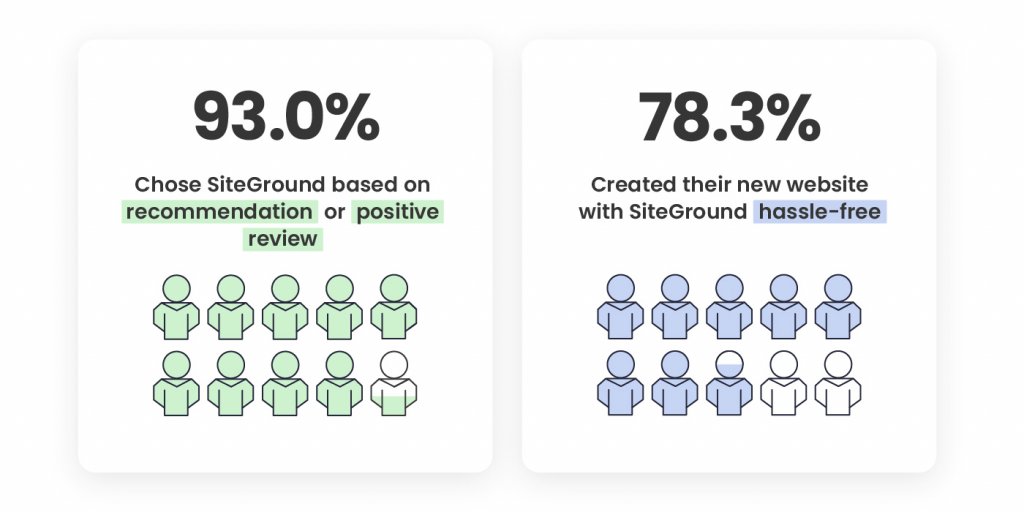
48.6% of our new clients say that the number one factor that led to the decision to get on board was a recommendation for SiteGround by someone they trust. 44.4% of you point out positive reviews about SiteGround were what influenced your decision to choose our hosting services, which is the greatest mark for the level of quality we provide, and the recognition and loyalty of our clients. 

Your feedback about how easy our onboarding process is was also extremely valuable. A total of 78.3% of you, who created a new website with us, have noted that setting up a website on SiteGround was a hassle-free process. 76.9% of you, who switched over from another host, pointed out in the survey that transferring your websites to us was a seamless process.

Now it’s even easier to migrate and manage all elements of your website presence to SiteGround with our newly launched Email Migrator tool. It helps you transfer emails to SiteGround servers easily, securely, and automatically.

We’re looking forward to making your future experience with us even better and contributing to your websites’ success.

A Steady 98% Overall Satisfaction In the Last Few Years

We completed 2022 with an overall client satisfaction rating of 98.1% which solidifies our top-rank customer happiness rate in the last couple of years. The overall satisfaction rate is based on your reviews for the following services we provide:

The breakdown of the satisfaction rate of each aspect of our services is based on the evaluation of both long-term and new clients. The overall ratio of all respondents is 90.40% long-term clients and 9.6% clients who have joined in the past 12 months. The fact that the majority of respondents have been with us for a couple of years now, and continue to express their satisfaction with our services with top marks is the greatest recognition a company can have.

You Helped the Environment by Completing Our Client Survey

Just like everything else we do, we also tried to maximize the impact of our client survey this year. In return for completing it, we committed to donate funds for planting a SiteGround forest. Thanks to you, we’ve already planted more than 11,000 trees worldwide – in the USA, Spain, Portugal, France, Indonesia, Madagascar.

We’d like to thank you for your trust, for your feedback, and for helping the environment! Stay tuned for all the upcoming services improvements and new tools launches that will aim to make your websites even more secure, better-performing and successful in 2023.

[subscribe_cta]

New Monthly Security Reports Now Available

SiteGround Monthly Security Reports

Do you know how secure your site is and if its security level is changing over time? Have you ever wondered how many actual attacks toward your site are being mitigated? Do you want to know if you have missed doing something easy that may protect your site from incidents? 


Now with SiteGround’s Monthly Security Reports, you can get all that information and more – straight to your inbox. Just sign up and start receiving an actionable monthly report covering what SiteGround is doing to safeguard your site and highlighting security measures that you may have overlooked.

What’s in the Monthly Security Reports?

Each month we will perform automated security checks for your website covering malware protection, SSL certificates, software exploits, brute force attacks, and other security areas. Based on our checks, you’ll receive a digestible summary of the results – including a total site security score, breakdown score for each security check, and actionable tips if some area needs your attention. The monthly security reports will be your go-to place to get an overview of your website security status.

The benefits of the Monthly Security Reports 

Site security information in one place

Performing website security checks manually can be an investment of valuable time, effort, and money that most website owners can’t commit. With the monthly security reports, SiteGround will handle the heavy lifting for you, performing all necessary security checks and delivering user-friendly reports straight into your inbox. So you get to know everything with no effort required on your side. 

Easy to understand format

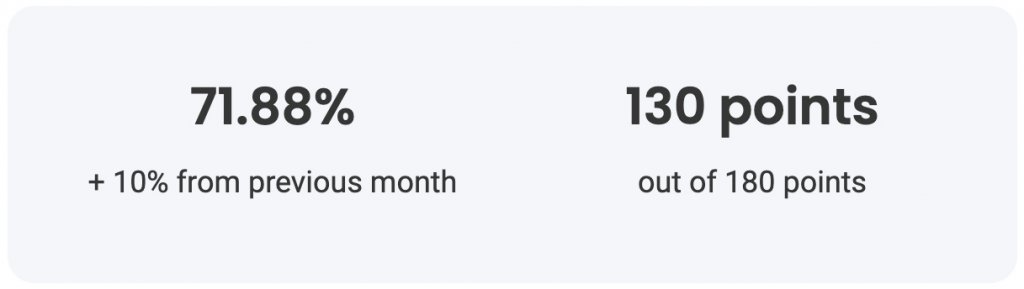
With our user-friendly design, you can quickly scan the report and easily identify areas that need your attention, if any. All you have to do is follow our straightforward color codes:  green when everything is good; yellow: needs improvement; red: definitely needs attention. You also receive an overall score for the month and information how it has changed in comparison with the previous month.

Actionable advice when needed

If we have identified an area of your site security that may be improved, the report will include easy-to-follow instructions on what can be done. For example, if we detect that you don’t have an SSL certificate installed on your site, it will provide you with a link to the information on how to set it up.

Confidence that your website is protected

By signing up for our monthly security reports, you may easily monitor what we do on a regular basis to keep your website safe. Each month you will see information like: how many software vulnerability attacks have been prevented; how many malicious IPs were stopped from reaching your site; how many backups you may count on, etc. Making sure your site is secure is an enormous part of our job as a host, and with the reports you can keep an eye on this process.

How to get the Monthly Security Reports? 

Starting from next year we will gradually begin to proactively send the reports to all our clients. However, you may hurry up and sign in yourself today and be among the first to receive their report in early January 2023.

To subscribe for your report now, just go to: Client Area -> Notification Preferences -> Monthly Security Reports.

The reports are sent out at the beginning of each month for sites that have been active for more than 30 days and have their domains pointed to SiteGround. You can see detailed information on subscription, content and score calculation in our Security Reports Explained article. 

Sign up today and sleep soundly, knowing that all relevant site security information is right at your fingertips.

[subscribe_cta]

PHP 8.2 Is Now Stable and Available on SiteGround Servers

stable release of php 8.2 version

PHP 8.4: Stay Updated! 🚀 Check out our latest blog post to explore the newest features and enhancements in PHP 8.4.

It’s that time again! Time for the Santa ElePHPant to visit all the good little PHP developers around the world and shower them with new goodies that make it easier for them to build the web.

As of this writing, PHP 8.2 is in Release Candidate 1 (RC1) status. We are in the late stages of development and bug fixing for this version and you can tell because forward looking web hosts like SiteGround are now making the RC builds available for their clients to test with. (Did you see the word TEST there? For those who don’t know what that means, it means NOT IN PRODUCTION!)

So let’s take a look at some of the new presents that Santa ElePHPant is bringing us.

New Goodies

First up, let’s take a look at a few of the new features that will be of interest to PHP developers. This is not an exhaustive list of the new goodies in Santa ElePHPant’s bag. It’s more a short list of the things I think the majority of PHP developers will be interested in.

readonly classes

In PHP 8.1 we got readonly properties for classes. This was a great leap forward for a lot of projects. However, there is still a small hole that needed to be plugged, clases. Yes, you can make every typed property in a class as read only and you are good to go, but honestly, that’s a lot of typing and if we know anything, we know that developers are lazy. So instead, in PHP 8.2 we can mark an entire class as readonly.

readonly class MyClass {
    public int $myProp;
    public string $myOtherProp;
    public __construct(string $myOtherProp, int $myProp) 
    {
        $this->myProp = $myProp;
        $this->myOtherProp = $myOtherProp;
    }
}

Here we have a class defined as readonly. We have 2 properties of the class and both of them are inherently readonly. The readonly rules from PHP 8.1 still apply. You can initialize the property only once, after that it is set. 

$myObj = new MyClass(‘Cal was here’,42);

However, once they are initialized, they are now immutable.

$myObj->myProp = ‘Cal is no longer here’;

// Fatal Error: Uncaught Error: Cannot modify readonly property MyClass::myProp

One other behavior of the readonly class is that properties cannot be dynamically added to the class, ever. Below we talk about deprecating Dynamic properties and how that’s a good thing. There is even an annotation that allows you to override this. However, if you mark a class as readonly, then it cannot be overridden.

Constants in Traits

Traits have been with us in PHP since PHP 5.4. They have long been the language’s answer to “composition over inheritance”. Now traits are getting an interesting new feature, the ability to define constants in a trait.

trait MyTrait {

    private const MY_CONSTANT = 42;

}

Now, if your trait uses a constant, you can define it in the trait and not have to remember to define it in each class that uses the trait.

trait MyTrait {

    private const MY_CONSTANT = 42;

    public function meaningOfLife() : int

    {

        return self::MY_CONSTANT;

    }

}

class MyClass {

    use MyTrait;

}

$myObj = new MyClass();

echo $myObj->meaningOfLife(); // prints 42

Like everything in life, there are a few rules.

Traits can define class constants. If a class uses that trait it can also define the same class constant as long as both the visibility and value are exactly the same. So the example above works but the one below will trigger a fatal error

trait MyTrait {

    private const MY_CONSTANT = 42;

    public function meaningOfLife() : int

    {

        return self::MY_CONSTANT;

    }

}

class MyClass {

    use MyTrait;

    public const MY_CONSTANT = 42;

}

Still, even with the rules that you have to follow, this is a real step forward. Traits are a great way to share code between classes and now they are even more self-contained.

Random Extension 5.x + Random Extension Improvement

The original PHP random number generator is still in the base code. It’s never been great and it’s absolutely useless for cryptographic uses. In PHP 7, we got a couple new functions, random_int() and random_bytes(). They went a long way to fix the problems but under the hood, they are just interfaces to the native OS’s random number generator. At the time this was a good solution but the problem is it’s a slow one. 

Now with PHP 8.2 we get not only an entirely new Random number generator, it is built into PHP,  and we get an extensible object oriented interface to it.

This is actually two different RFCs that I’m lumping together. After the first one “Random Extension 5.x” was voted on and passed, it was discovered that there was a few issues with it. A second RFC, “Random Extension Improvement”,  was prepared and voted on to fix the issues found with the first one.

The end result is a new set of classes that give us better pseudo-random numbers in PHP.

While we are actually getting several new random number generators (RNG), for simplicity I’ll discuss the new Random\Engine\Secure class.

$engine = new Random\Engine\Secure();

$randomString = $engine->generate(); // a random binary string

echo bin2hex($randomString); 

Now if we want to do something like sort an array, we need one of the new Randomizer objects. 

$randomizer = new Random\Randomizer($engine);

$items = range(1, 10);

$randomizedItems = $randomizer->shuffleArray($items);

print_r($randomizedItems);

Now in the above example, we used the Secure engine. The secure engine does not accept a seed and will always generate a non-reproducible string. The engines that allow you to specify a seed will produce the same results each time if you use the same seed. 

The Randomizer class also provides several other methods that are really what PHP developers are looking for.

  • getInt() : int
    This replaces the old mt_rand() function
  • getInt(int $min, int $max) : int
    This replaces both the old mt_rand() function as well as the newer random_int() function.
  • getBytes(int length): string
    This replaces the random_bytes() function 
  • shuffleArray(array $array): array
    This replaces the old shuffle_array() function
  • shuffleString(string $string): string
    This replaces the old str_shuffle() function

Among other things, since this brings all of the randomizing functionality into a single area of the engine, it streamlines the core code and will make further improvements easier.

“So long and thanks for all the fish”

All good things must come to an end and that includes some features and commands of PHP. Let’s look at a couple of the important deprecations that if you aren’t careful will end up causing you problems.

Deprecate dynamic properties

At first blush, this one seems like it’s going to be a huge problem. Since PHP got the current object model, it’s been possible to add properties to an object any time you want. Now somebody thinks this behavior is a bad thing. (HINT: It was always a bad thing but one a lot of developers took advantage of.)

class MyClass {

    public string $name;

}

$myObj = new MyClass():

$myObj->nmae = ‘Cal Evans’;

Notice that I misspelled the property name. I know I’m probably the only developer who has misspelled a property name but in PHP when it happens, I get a new property on the object and the original property remains unchanged. That was not my intent.

Starting with PHP 8.2, this will emit a DEPRECATED WARNING.

There are 3 exceptions to this new rule.

  1. Any instance of StdClass will still be able to accept dynamic properties.
  2. Any class with magic __get() and __set() methods will still accept any property.
  3. Any class that has the compiler annotation #[AllowDynamicProperties] and any child class will allow dynamic properties to be set.

So while all is not lost for those that depend on this “feature” of PHP, if you are still going to use it, you are going to have to make some changes to your code. 

The good news is that all that will happen right now is the warning emitted to the log files. So while it might fill up your log files reminding you that you need to fix this, PHP 8.2 won’t break your code. That happens in PHP 9.0 when the warning – and the ability to automatically add dynamic properties – gets removed from PHP.

(Partial) Deprecate ${} string interpolation

This is another depreciation that on the surface I thought was going to be a huge deal. Turns out, it is probably not going to affect many developers.

There are 4 ways to implement the “{$variableName}” syntax, 2 that make sense, and two that don’t. The two that don’t are going away.

echo “$meaningOfLife”;

By far, this is the most common version of string interpolation. Just put the variable in a string with double quotes. If you are doing this, you are fine, this is one of the two ways that are staying.

echo “{$meaningOfLife}”;

echo “{$dogulasAdams->meaningOfLife()}”;

I always considered this way “old-skool”. Yeah, we used to do it way back in the day but I’ve not done it this way in a long time. Still this works, it’s clean, and it’s easy to understand. This is the other one that is staying.

This is also the only method that allows you to use object properties and methods. So if you want to use string interpolation with an object, you will need this method.

echo “${meaningOfLife}”;

This one is going away. Yes, it does the same thing as the first two, but it is a little more confusing because the $ is outside of the braces. 

$fourtyTwo = 42;

$meaningOfLife = ‘fourtyTwo’;

echo “${meaningOfLife}”;

Finally, we have the way that you can use “variable variables” from within string interpolation. This is just too many levels of indirection. In the code above, we eventually get to the point where we echo out 42, but we take the long way around. 

Starting in PHP 8.2, the last two structures will emit a DEPRECATION WARNING in your log files. In PHP 9.0, they will stop working altogether and cause your program to crash. (or throw an Error that you can catch, but probably can’t recover from.

Wrap Up

This is the first PHP 8.2 Release Candidate. Don’t play with it on any production site. If you want to test it with an existing site, set up a new site for testing, clone your production site into it, and play with that. When you are done, you can just delete it. 

As you poke around in your new testing environment, check your log files after every test. Make sure nothing fails and see if any new WARNINGS pop up. 

If PHP 8.2 is anything like PHP 8.0 and PHP 8.1, I don’t expect modern PHP code to have issues with it. Thankfully, Santa ElePHPant’s Elves that work for SiteGround make it incredibly easy for you to test things out to make sure your site can run as fast as possible with PHP 8.2

Speaking of performance, PHP 8.2 hasn’t been properly benchmarked yet, but we have come to expect every version of PHP to be a little faster than previous versions. With changes to the CSPRNG system and other things like removing the old libmysql, it’s a safe bet that this version will be faster than PHP 8.1.


While you are testing, cloning, and observing results, make sure you take time to tweet out a huge THANK YOU to Santa ELePHPant and all of the little ElePHPant Elves that made this release possible. Rumor has it that they keep an eye on twitter.com/@php_net

To celebrate the latest release candidate PHP 8.2, we are giving away 5 exclusive SiteGround PHP elephant plush toys (a.k.a Groundy) in a raffle, running from September 8, 2022 until September 11, 2022. Read more on Twitter.

[subscribe_cta]

Moving to a State-of-the-art, In-house Built Spam Protection Solution

email spam protection service

When you’re busy processing tons of emails each day, and we all are, the last thing you need is a bunch of spam messages sneaking into your inbox. Spam protection has always been an important part of our email service and in our strive to constantly improve it we are now introducing a new in-house built solution. It is designed to efficiently minimize the amount of SPAM emails delivered to your inbox, while constantly learning from your email reading behavior. It is also built specifically for our clients and works seamlessly as part of our hosting environment.

Efficient and easy to use for our clients

Less SPAM messages delivered to your inbox

Based on our multiple years of managing email services, we have created a system that decides with a high amount of accuracy which messages are legitimate and should reach your inbox, which are suspicious and should be delivered in your Junk folder, and which are outright dangerous and should not reach your email at all and will bounce instead.

Your email reading behavior trains the system

Your natural actions, while working with your mailbox will train the system. Whenever you move a message to or from your Junk folder you will improve its accuracy. Based on your action the system will add your personal perception of what is SPAM on top of its own underlying rules. Thus your feedback is taken into account seamlessly, without a need for you to use an additional SPAM management interface.

Easy interface to allow and block senders

And also, if you would like to tell the Spam protection system directly how to treat a certain sender, you can still use our easy interface to block or allow specific senders. By adding an email address or an entire domain to the Block or Allow List you indicate how you want this sender to be treated by the system. Check the following tutorial on how to use the Spam Protection service in Site Tools.

Better control and easier scalability for us

We may address our clients’ needs 

By using an in-house solution we can more easily address our clients’ specific needs and introduce new features and improvements faster. For example, we have noticed that the current setup makes it difficult for our users to find out when a legitimate email is not delivered to them and is marked as spam by the system. This happens because the message is placed in a quarantine folder in a separate tool that is not part of the user’s natural email management. With the new solution we were able to address this issue by using the much more visible Junk folder instead.

We may handle email usage spike better

When we manage the spam protection system as part of our own infrastructure, we can easily scale it. Even if there is a steep global increase in the email traffic we can seamlessly add the resources needed for the evaluation of the excessive messages. Thus the email delivery will not be delayed for our clients, regardless of the unexpected usage spike.

How to use SiteGround Spam Protection?

All SiteGround clients have our state-of-the-art Spam Protection features enabled by default.

[subscribe_cta]

New Email Migrator Tool for Fast and Easy Email Transfers

migrating email messages from one server to another

When changing your hosting provider, sometimes it is not only about moving your website and pointing your domain to the new server. If you also use email services as part of your hosting plan, the most challenging part of the process may be transfering your email accounts and messages without losing data or creating disruption to your business communication process. To address this challenge for people, who prefer to have everything hosted at one place, we have now added a new Email Migrator tool. It allows you to transfer your mail service from another server to our mail servers fast, easy and securely.

Why did we develop the Email Migrator

SiteGround clients who are transferring from other hosting providers already benefit from our automatic website transfer options. The Email Migrator tool streamlines this process even further, making the transfer of email services possible in just a few clicks, even by not so tech-savvy users. On top of that, the tool helps you keep your email communication intact and safely transfer all of it to our servers.

What are the benefits of our Email Migrator tool

In addition to making it easier to transfer your emails to SiteGround and have everything in one secure place, our Email Migrator has a couple of other added benefits:

  • Intuitive interface for easy migration start 🏗️

The tool interface guides you through the few steps needed to get the process started.

  • Secure and reliable transfer 🛡️

We’ll move your emails in a secure manner, ensuring privacy and data protection.

  • Fast migration 🚀

We’ve developed the tool in a way that the procedure won’t take too long. Yet, the exact time needed will depend on different factors, such as the size of the mailbox, remote server speed, and others.

  • Keeping the structure of the email account being migrated 📧

We’ll transfer your email account for you, including folders, messages and attachments.

  • No duplicates created 📑

We’ll make sure that there are no duplicates created during the migration process.

  • Automated process 🪄

There’s no manual work required on your end, as the migration happens in the background. You’ll need, though, to set up the systems that are beyond SiteGround control: point your MX records to make the new messages come to our server and reconfigure your email client to start receiving the messages from our server.

How to transfer your emails with the Email Migrator

To transfer your emails, you need to follow a few simple steps in your Site Tools > Email > Email Migrator. Read detailed instructions on how to transfer your emails and enjoy a hassle-free email migration to SiteGround!

The Email Migrator is basically the last piece of the puzzle that lets you have everything in one place. Transferring all things to SiteGround allows you to easily manage both your website and email in one account. Not only do you have everything in one place, but you’re counting on our proven expertise in both web hosting and email services.

[subscribe_cta]

Our USA Data Center and CDN Network Just Got Bigger

map of the USA with pins where SiteGround has data centers

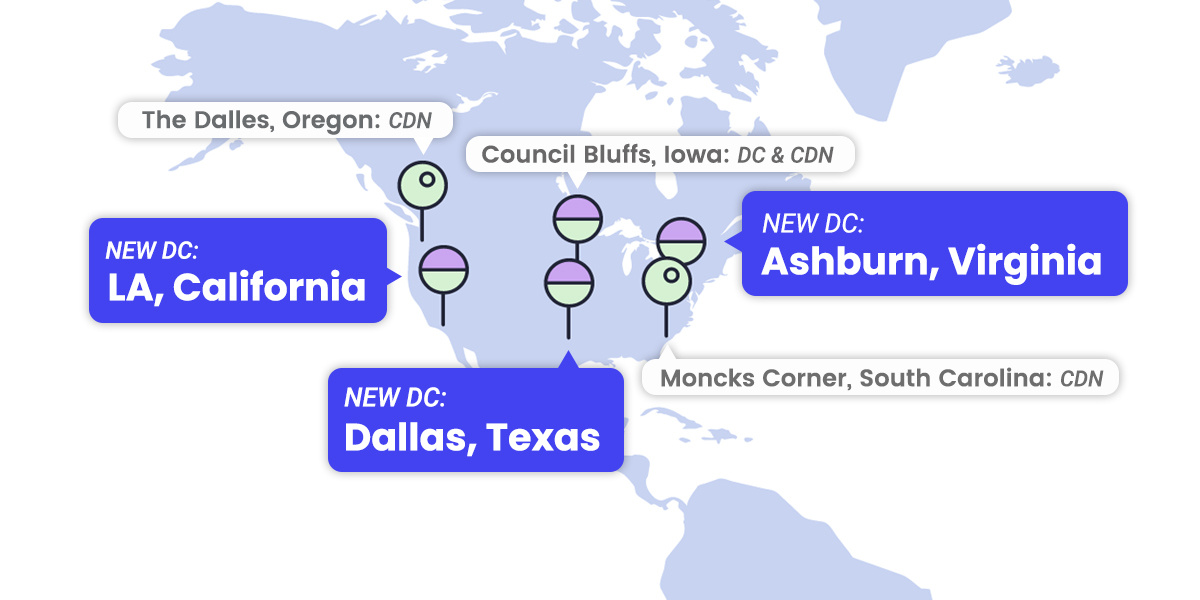
We are happy to announce that we have increased the number of our data centers and CDN locations in the USA. Our clients may now choose among four US-based data centers to have their sites hosted as close as possible to their visitors. What is more, we already have six US-based CDN edge points, which help improve the website speed in the region as a whole for all our CDN users.

4 Data Centers in the USA

With the introduction of three new data centers, we now have four locations in the USA, all part of the modern Google Cloud infrastructure that ensures high redundancy, fast connectivity, and multi-layered security:

  1. USA North in Council Bluffs, Iowa — best for websites that have visitors predominantly from the northern US and/or Canada
  2. NEW: USA South in Dallas, Texas — best for websites that have visitors predominantly from the southern US and/or Central and South American countries
  3. NEW: USA East in Ashburn, Virginia  — best for websites that have visitors predominantly from the Eastern US states 
  4. NEW: USA West in Los Angeles, California — best for website that have visitors predominantly from the Western US states

When choosing which of our data center locations is best for you, you should take into consideration where the majority of your website traffic is coming from. In case you have a strictly local audience, it is best to have your hosting account placed in the data center closest to your audience. 


You can check where an existing hosting account is currently placed and order a relocation if you think there is a better option for you through Client  Area > Marketplace > Hosting services > Hosting relocation.

6 CDN edge points in the USA

We are also aware that many of our clients receive traffic not just from one state, but from many and it’s hard to choose one, most convenient hosting server location. For such cases, any US-based data center is a good choice for being the original home of your site. However,  the best site loading results will be achieved by using our CDN. The CDN makes sure that a copy of your website is accessible from a location closer to your visitors from all over the USA, and even from all over the world. 

We now have the following CDN locations in the USA: Council Bluffs (Iowa, USA), Moncks Corner (South Carolina, USA), The Dalles (Oregon, USA), Los Angeles (California, USA), Ashburn (Virginia, USA), Dallas (Texas, USA). 


We encourage all our customers receiving traffic from different geographic locations to activate the CDN service. This can be done completely free of charge through your Site Tools > Speed > CDN.

[subscribe_cta]

95% Less Bad Traffic with Enhanced Brute-force Prevention

brute force system improvement

We have been talking about brute-force attacks in the past, but the truth is that many of our clients don’t even realize how real and how common the threat of these attacks is for anyone with a website. Based on our experience of hosting millions domains, we fully understand the destructive potential of brute-force and we have set defence mechanisms to prevent and mitigate such attempts directed at the websites we host. For years our AI brute-force prevention system has been successfully blocking millions of attacks every day. Now, we are happy to announce that the system got even better – by constantly learning from thousands of brute-force attempts per day and adding new functionality for traffic validation, it now filters 95% more of the bad queries!

Advanced AI system that recognizes & blocks brute-force attempts

Analyzing traffic behaviour and recognising patterns is the core feature that makes our AI brute-force prevention system so effective. When a behaviour that matches a certain pattern associated with brute-force is detected (like too many unsuccessful login attempts from an unrecognized location for example), the suspicious source is immediately challenged with a CAPTCHA page that only a real human can pass. This effectively stops brute-force attempts, adds up to the system knowledge and enables legitimate users who have accidentally mimicked a suspicious behaviour to reach the requested location by completing the captcha. The beauty of this constantly evolving system is that it gets better with every brute-force attempt it stops, it keeps sites under attack safe and it ultimately protects the other websites hosted on our servers by blocking bad traffic before it even targets them.

NEW: Traffic validation that minimizes the number of brute-force attacks

We have recently upgraded our system to become even more powerful.  We are now able to more efficiently block the great majority of malicious non-human bots – e.g. incoming brute-force attacks or data hunting agents which aim to profile your site and later hack you through future software exploits. That significantly boosted the system success rate and reduced bad visits by roughly 95%. 

The best example to illustrate how the system works is with the XML-RPC, a file in the root directory of every WordPress installation. Many (WordPress) hosts block its usage because it’s known to be insecure and blocking it is the easiest way to avoid XML-RPC-related hacks. However, XML-RPC also has many legitimate use cases for communicating with external systems and software. That is the reason we don’t aim at stopping XML-RPC – we want to empower our clients to use the tools and services they need to get the best of their websites. Instead of blocking it, we have looked for ways to harden its security and significantly decrease the potential for brute-force attacks. After our latest AI brute-force prevention system upgrade, we now validate all traffic coming through XML-RPC to stop all recognized malicious visits and eventually reduce the overall hits reaching the clients’ sites through XML-RPC by 99%. This means that we successfully filter potential brute-force sources before an attack is even attempted.

Less resource consumption, lower carbon footprint

The impact of this upgrade to our AI bruteforce prevention system is enormous. Not only are we further minimizing the chances for our sites to get brute-forced and potentially hacked, but we significantly reduce resource consumption (like CPU and RAM) generated by traffic coming from bots and brute-force attempts. Lower resource consumption effectively means more resources available for your legitimate visitors and a lower carbon footprint of your site. 

Preventing brute-force attempts is just one of the many ways we constantly protect the websites we host, along with our Smart Web Application Firewall, DDoS protection, 24/7 server monitoring and many more. We believe that security is one of the foundations for any successful website, and we continuously develop new prevention and mitigation solutions, improve existing ones and keep adding new security features to our hosting, so you can have the peace of mind that your website is in good hands and focus on what’s important – your business.

[subscribe_cta]

You Can Now Block Country Traffic to Protect your Website

traffic blocking tool announcement

The security of our clients’ websites has always been one of our top priorities and something that we continuously improve on. The latest tool in our website protection arsenal, available for FREE on all hosting plans, is the option to easily block the traffic coming to your site from specific countries. This will not only increase your website security, but can also help website performance by decreasing resource usage when blocking the traffic coming from locations you would rather not get traffic from.

When to consider blocking the traffic from a specific country?

There are different reasons why someone would like to block the traffic from a specific country to their site, but the most common are the following:

  • To Stop Malicious Traffic

If you notice abnormally high traffic from a country that your site is not targeting as audience, or you start receiving too many spam comments from such a country on your blog posts, or you identify any other behavior you consider suspicious, coming from a geographic region that’s not your main user target, it may be a wise idea to block the traffic from this location.

  • To Streamline Your Business

There are various reasons due to which you might not be willing or able to do business with certain countries. Some examples are expensive and/or complicated deliveries; legal requirements that prevent you from providing your service, heavy taxation requirements, etc. Now, if you need to stop access to your site from a specific country due to such reasons, this can be easily done through your Site Tools.

How does SiteGround country block work?

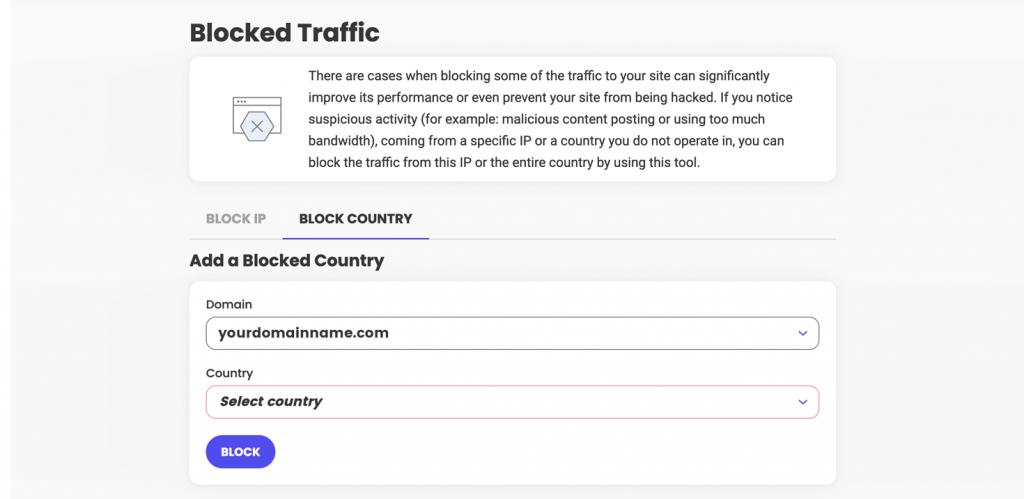
Adding a country to your Blocked list is easy. You need to go to your Site Tools > Security > Blocked Traffic  > Block Country section:

Once a country is blocked, all visitors coming from an IP address that we identify as being located in this country will start seeing our default Country Block HTML page.

The tool allows you to block multiple countries, and also to block certain countries from accessing your main domain, or specific sub-domains. You can review the list of all countries you have denied access to, and/or add or remove countries from it with a click of a button at any time. 


Our new Country blocking option is also fully compatible with our SiteGround CDN and visitors from blocked countries would not be able to access your website pages whether you have our CDN service activated or not.

[subscribe_cta]

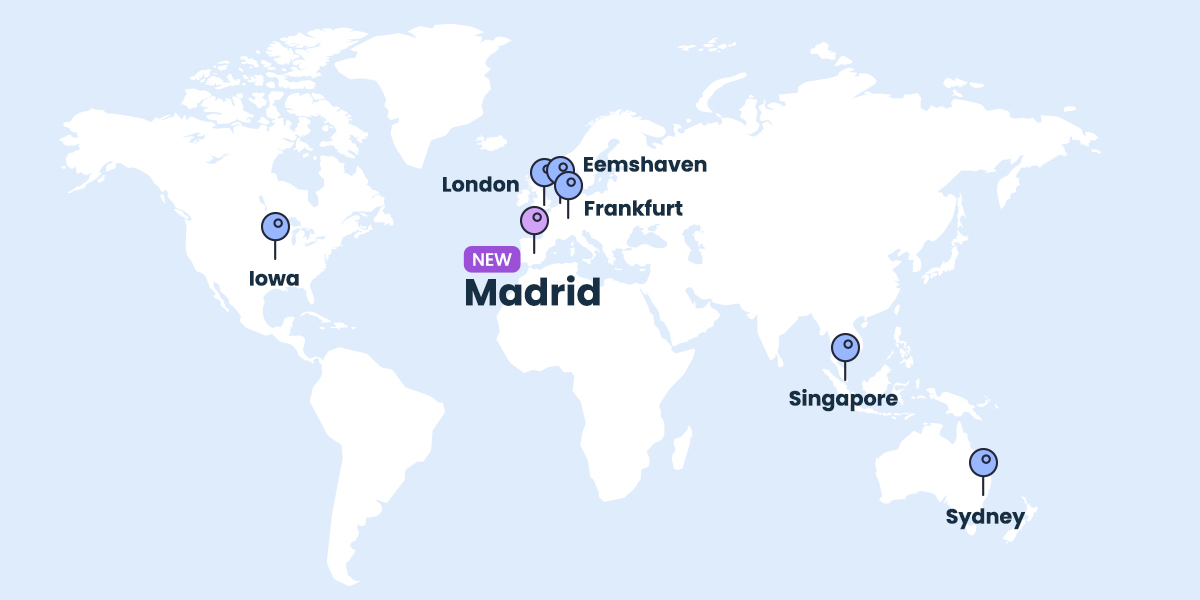
New Data Center and CDN Location in Madrid

map of the world with new Data center in Madrid, Spain

We’re expanding our data center and CDN network with a new location in Madrid, Spain. As soon as Google Cloud, on which our platform is built, announced the launch of their new region Madrid, we started the process of adding this location to our network too. Now all customers, whose websites receive traffic from Spain, may further increase the loading speed of their websites for Spanish visitors by using this new data center and CDN point.

Data Center in Madrid, Spain

Throughout the years, we’ve been growing our data center network by adding new geographical locations. We started off with one server location in the USA, and later on launched our first data center in Europe (in the Netherlands), followed by data centers in Singapore, London, Sydney, and Frankfurt. Currently, all our data centers are part of the modern Google Cloud infrastructure that ensures high redundancy, fast connectivity and multi-layered security.

When choosing which of our data center locations is best for you, you should take into consideration where the majority of your website traffic is coming from. If your website traffic is predominantly from Spain, our Madrid data center is now the best option as it shortens the distance between your website visitors from Spain and the best Google Cloud data center. The geographical proximity, combined with the unmatched Google network will result in reduced latency of the connection and faster page loading time, which in turn helps improve your SEO rankings, ensures better user experience, and leads to higher conversion rates.

Our newly launched data center in Madrid is available for all shared and cloud hosting plans. From now on all new accounts of our Spanish customers will be created by default in our Madrid data center, while existing customers can order a relocation to that data center in their Client  Area > Marketplace > Hosting services > Hosting relocation.

CDN location in Madrid, Spain

Our CDN service is used by thousands of websites with traffic from multiple geographical locations to optimize their loading speed globally. The CDN makes sure that a copy of your website is accessible from a location closer to your visitors from all over the world.

With the launch of our Madrid CDN location we provide an option for sites with traffic from Spain to increase their loading speed there and all over the world by simply switching the CDN on. We encourage all our customers to activate the CDN service. This can be done completely free of charge through your Site Tools > Speed > CDN.

[subscribe_cta]