
Geographically Distributed Backups for Enhanced Data Protection

distributed_backups_SiteGround

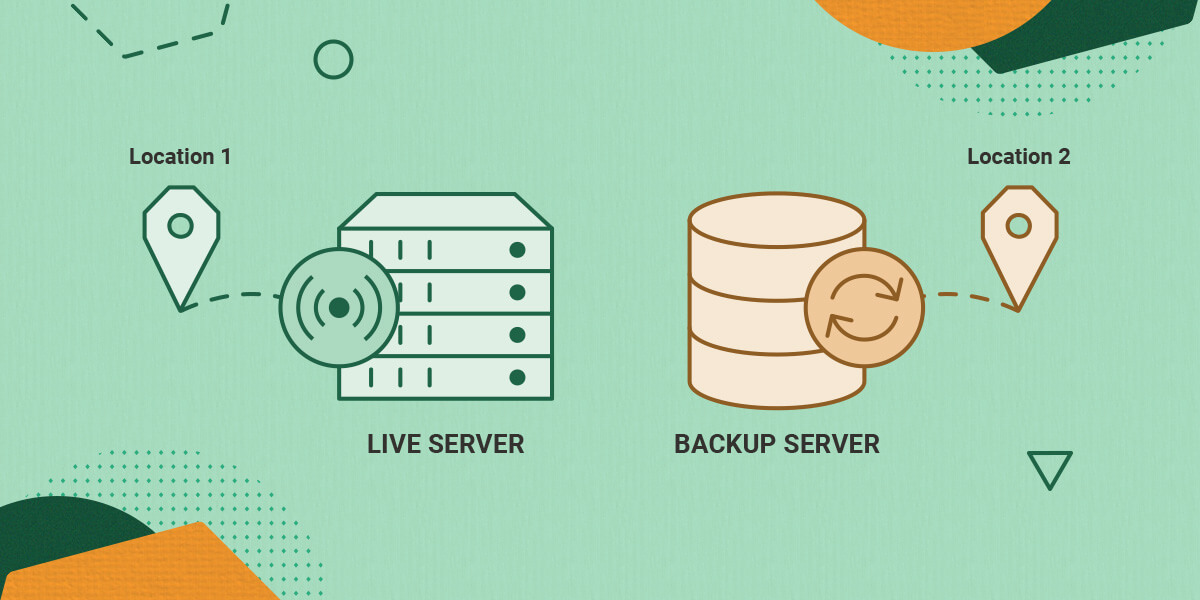
We are excited to announce that as of this month, we have deployed a system for geographically distributed backups, which minimizes the risk of data loss and аllows for fast data recovery even in case of a serious incident that may affect a whole data center. 

Backups are stored in a different physical data center from the one hosting the live account

As of this month, we started backing up accounts in a data center different from the one hosting the live account as follows: 

  • Iowa, US servers are backed up on machines in Virginia, US
  • Virginia, US servers are backed up on machines in Ohio, US
  • California, US servers are backed up on machines in Oregon, US
  • Texas, US servers are backed up on machines in Southern Carolina, US
  • London, UK servers are backed up in Eemshaven, NL
  • Frankfurt, DE servers are backed up in Eemshaven, NL
  • Madrid, ES servers are backed up in Eemshaven, NL
  • Eemshaven, NL servers are backed up in Frankfurt, DE 
  • Sydney, AU servers are backed up in Singapore, SG
  • Paris, FR servers are backed up in Madrid, ES

This service is not available for accounts hosted in Singapore for now. These accounts are backed up on different servers within the Singapore facility.

Enhanced data protection

Data storage and safety is a key component of our service and there are multiple risk factors and threats that we keep in mind when coming up with data security solutions. The most common ones are human errors, hardware failure, and hacks. For those occasions, we rely on our daily backups stored on different servers independently from the live account. But then, there are the less likely, yet more damaging risks such as fire, power outage, or a natural disaster that may shut down a whole data center facility. Hosting the backups in a different location means we improve the chances of saving your data and putting it back online even in case of such a serious incident.

Faster service restore

Now imagine your website goes offline due to a massive power outage and the ETA is unknown, which most often means hours of downtime. Or, a hurricane completely destroyed the facility and all servers are lost beyond recovery. That was a very real threat we experienced with Katrina hurricane back in 2005 and is a growing risk in some areas given the climate change and the growing number of natural disasters all over the world. Or, maybe a fire burns the datacenter and a lot, if not all, servers are hurt. That one happened quite recently to a third-party data center in France.

Thanks to our new system, we now have you covered since we have your data safely backed up not more than 24 hours ago in a different data center. In case of an incident, we would be able to put your website back online in the new location that is fully operational.

Thus the distributed backups not only save your data but allow us to restore service in the new DC much faster than any optimistic ETA would forecast for restoring in the original DC.

The distributed backup strategy has been something we have considered for a long time. However, it became practically possible once we started to use the Google Cloud infrastructure. The use of one and the same provider for all our geographical locations, with a super fast interrelatedness between its different data centers and a wide network of facilities around the world, allowed us to distribute data across regions, countries, and continents in a way that was not possible before.

We have to recognize the fact that before switching to Google Cloud infrastructure that strategy for distributed backups was not possible in such a sophisticated way. Google Cloud has given us easy access to all their worldwide facilities, including networking capacity and that generated various new possibilities to distribute data across regions, countries, and continents.

Same level of data privacy

Our Privacy Policy and DPA continue to apply in light of our new geographically distributed backups. Our clients’ data will be protected in the same way as before, as promised, and under our DPA.

While we are hopeful that no natural forces will affect any data centers, our team prefers to be prepared for the worst and provide our clients with reassurance for their websites.

[subscribe_cta]

Optimizing the RAM Utilization by the MySQL on the Cloud

Over the last 6 months, it has been all about speed at SiteGround. We have boosted the performance of the websites hosted with SiteGround up to 5 times by launching the new Ultrafast PHP and MySQL setups and enabling the dynamic cache (full page caching) for all sites. As a next major step in this process, we have turned our attention to our cloud servers and are glad to announce that we rolled out a new dynamic RAM-allocation algorithm that further improves the resource utilization of the MySQL and makes the database-intensive websites hosted on our higher cloud plans run faster. 

What is the problem with MySQL?

MySQL could be a real troublemaker. When left untamed, it devours resources and keeps asking for more. If it doesn’t get what it wants, it starts slowing processes one after the other and turns into a bottleneck for database-driven apps like WordPress. So the MySQL settings are the key to resolving many of the site slow issues reported, but many webmasters have difficulties tracing the origins of the slow performance. It is not just a question of adding more RAM. This RAM should be smartly utilized in a way that allows MySQL to run as fast as possible, but still to be restrained from eating up all the available resources.  

We have been helping clients with evaluating what is an optimal allocation of RAM to the MySQL given the specific services running on the website and the available specs and manually resolving those case by case, but, now we have come up with a way to automate that and diminish the amount of work and expertise required by our clients in the process.

What have we done?

We have implemented a dynamic configuration that depends on the amount of memory your Cloud account has. This means that MySQL settings will be adjusted depending on the available resources. We will not only start new Cloud instances with predefined configurations, but in case of an Automatic Scale event (or upgrade), the server config will adjust itself for optimal resource utilization without manual intervention.  That means that database queries will be processed faster and the I/O usage will be lower. Last, but not least, the additional RAM you add will now be utilized more efficiently, and even fast-growing sites will have to add less of it less often and thus save on their hosting expenses.  

Who Gets It?

The new system is already deployed on all Cloud servers! You don’t need to enable it or otherwise configure it. Just watch out for performance improvements and do let us know your feedback. The more database-intensive your site is (such are, for example, membership sites, online stores, forums, etc.), the bigger the improvement from the change will be!

[subscribe_cta]

SuperCacher and Up to 5 Times Faster Sites for All!

It was in the ancient 2012 when we announced our SuperCacher – the feature that allowed our clients to enable static cache, dynamic cache, and Memcached for their accounts. Since then, we have heavily enhanced the technology and fine-tuned its behavior and we believe it is one of the most powerful speed tools we have created for our clients. Currently, the most massively used part of our SuperCacher is the Static cache (NGINX direct delivery), as it is switched on by default on all our plans. Today we take a major step that will result in much more massive adoption of the other two SuperCacher layers and will significantly increase the speed of the sites we host. We now make Dynamic Cache and Memcached available at no additional cost on our StartUp plans too. Additionally, the dynamic cache will be activated on our servers by default. 

Dynamic caching ON for everybody!

Between 50% and 500% faster page loading

To briefly recap, dynamic caching is a technology that caches the HTML output of your PHP code. The PHP language is used so that the content of that same HTML is changed dynamically and upon a set of conditions predefined by the web creator. When using cache, next time that a page is requested, the pure HTML will be displayed from the Cache which is in the server’s RAM, as opposed to wasting CPU and I/O resources to read the PHP file from the disk. Thanks to that mechanism the web page loads significantly faster. And by “faster”, we mean like 50-500% faster based on our internal statistics for sites that have it turned on. The bigger the impact we see on heavier sites – those with more products and queries. Once you enable the cache, the pages start loading as fast as your Internet allows it, literally, since the page response is returned instantaneously from the memory of the server.

WordPress cached out-of-the-box, other applications can also be configured

Until now, the dynamic cache has been available on our GrowBig and higher plans and had to be activated by the users through our WordPress SiteGround Optimizer plugin. Now, we are making the cache available on all plans and we are activating it by default on all servers. Thus, all WordPress sites hosted on our platform will be cached out of the box. Additionally, our clients will be able to configure other applications to take advantage of the cache too. For instructions on how to use the Dynamic Cache with some of the other popular applications, you can refer to our SuperCacher Knowledge base articles.

Dynamic cache management options 

As already mentioned, our dynamic cache option will now work with WordPress installations out-of-the-box. However, WordPress users will achieve the best results through the Dynamic Cache controls of our SiteGround Optimizer plugin. The plugin acts as an additional connector between our dynamic cache and the WordPress application. For example, the SiteGround Optimizer tells your server to clean the cache automatically on each relevant content change and it provides you with an easy option to exclude URLs from being cached altogether. You can also turn off the caching through the plugin. 

If you are using another application, you may need to allow the caching from its backend in order to start using it, regardless that it is activated on server level by us.

As for the flush option, if a change on your website is not shown immediately, as the cached version is still served, you may always use the Flush button in your Site Tools. 

Memcached available on all plans to opt-in

Memcached is probably the most popular memory caching system that is used by thousands of database-driven sites, which speeds up these websites by caching results from database queries in the server’s RAM. Thus, if the result of the same query is needed again, it will be instantaneously taken from the RAM, rather than generated again from the Database, which is usually a slower process and requires more computing power.

Memcached is now available on StartUp plans with Site Tools as well. You can enable it from Site Tools > Speed > Caching, look for tab Memcached. However, please bear in mind that you also need to configure your application to use this cache, once you switch it on from our interface. For WordPress, this takes just a click in our SiteGround Optimizer plugin > Memcached control section, for some of the other popular applications you can refer to our SuperCacher Knowledge base articles

Note:

The described changes will affect only our Site Tools based servers. However, in case your account is still on cPanel, don’t you worry – by the end of March 2021 we aim to complete all migrations from cPanel to Site Tools so you’ll also get these SuperCacher enhancements soon.

[subscribe_cta]

New MySQL Setup For Faster Query Processing

Update

We’re currently migrating all our servers to MySQL 8. Learn more about the migration process in our blog post.

Two of the most frequent reasons a site might be slow are unoptimized PHP processes and heavy MySQL queries. Website code optimization is always a crucial part of the constant battle for more website speed. However, webmasters hosting with SiteGround, have always had a reliable ally by their side in this quest.

Recently we have announced the new Ultrafast PHP, which significantly speeds up the processing of PHP scripts and improve the website performance up to 30%. 
As a natural next step in our efforts to offer a premium and superfast service, we deployed a server-side solution to optimise database queries which has already brought down the number of slow queries between 10 and 20 times!

What are slow MySQL queries and why they matter ?

If you are managing an active site with a database, you probably understand that when a visitor enters your site, there are tons of scripts that start running, some of which ask your database for information. For example, if you have an online shop and a visitor is trying to purchase an item, your store should check for its availability in the database and display if it’s possible to be ordered. That check triggers a MySQL query. And depending on how that query is written it may be quite heavy and time-consuming to be processed by the server. For you as a webmaster, these slow queries are a problem because you will be losing clients. You know how visitors drop out of the site when they have to wait longer than 2-3 seconds for a page to load? Well, you get it. For us as your host, we don’t like it when our servers get throttled processing too many slow queries because this means that the CPU and RAM of the machine get blocked and cannot be used for other processes, which are also important for yours and the other websites hosted on the server.

What did we do?

The battle with slow MySQL queries is an ongoing process, which involves both the webmaster and the host. That is why we recently launched a new MySQL setup on our servers, which takes an innovative approach to distributing the server RAM and allocating it to the MySQL. The new setup allows a much higher number of parallel requests to be processed simultaneously and this has a great impact on the effective handling of heavy MySQL queries. So great that the Sys Admins, watching the server load after the new MySQL setup launch, still don’t believe it – they saw a drop in slow queries between 10 and 20 times! 

All of our latest service improvements such as the Ultrafast PHP and now the MySQL setup are possible thanks to two things – the Google Cloud platform and the switch from cPanel to Site Tools. Since moving to Google Cloud, we upgraded our server configurations with more RAM. The RAM unit price is not cheaper, but working in the cloud offers possibilities for better distribution of that resource among different machines. And the fact that we don’t comply with third-party’s software resource requirements such as cPanel, gives us more freedom to innovate. Our DevOps feel empowered to create and keep developing smart technologies that benefit the greater majority of the sites we host spot on!

Who gets it?

Everyone hosted on our shared Site Tools servers already got the new MySQL setup! If you have been seeing an enhancement in the performance for the last week or so, it’s because of the new setup.

That means it’s less likely that you hear from us asking you to fix a slow query and “socially-distancing” your site due to that. Fewer slow queries, faster servers, less hassle for you!


Cloud accounts are also scheduled to receive the new MySQL setup by the end of February, 2021.

Still a SiteGround client on cPanel? We expect to migrate everyone by the end of March 2021 so all you need to do is wait just a little bit longer.

[subscribe_cta]

More Site Speed Gains with Brotli Compression Algorithm

We are happy to announce that we have deployed and enabled by default the Brotli compression algorithm on our Site Tools servers so websites hosted there could get up to 15-20% speed gains from using it. 

What is Brotli?

Brotli is a next generation compression algorithm developed by Google as a successor to the popular gzip method that we’ve had running on our servers for ages. The idea is simple – once your application produces the HTML output of your website and the output is compressed together with all the resources it loads, the data is transmitted over the Internet and then the browser decompresses the content before rendering it. This process significantly reduces the size of data that’s been moved from the server to the visitor, resulting in speed gains multiple times bigger than the milliseconds lost for compression and decompression.

How much faster is Brotli compared to gzip?

The new algorithm provided by Brotli compresses the website into smaller data size, which makes it faster to transfer. JavaScript files compressed with Brotli are roughly 15% smaller than the ones compressed with gzip. HTML files are around 20% smaller and CSS files get around 16% size reduction. Those numbers of course will differ depending on your particular files.

A test with one of the WordPress’s default themes – TwentyTwenty shows that it produces a 19584 bytes of data uncompressed, 6003 bytes compressed with gzip and only 4863 bytes when compressed with Brotli! This means that you get more than 75% reduction in size from uncompressed content and 19.5% from gzip. 

How to use Brotli?

We have enabled Brotli on all our Site Tools servers and if your account is hosted on one of these, your site will automatically take advantage of it. You don’t have to do anything to get it! 🙂 Browsers that support Brotli compression, which are the majority of the browsers now, pass the appropriate “accept-encoding: br” header when performing the request and get the Brotli-compressed content. Older browsers that don’t support it will be served with gzip-compressed data. If you are still hosted on a cPanel server, don’t worry – we expect migrations to Site Tools to be completed by the end of March 2021 so you won’t have to wait long to get it as well.

[subscribe_cta]

PHP 8 Available on Our Servers (What’s New + Game)

We’re happy to announce that we have deployed the latest release candidate version of PHP 8 on all our servers. As always we are among the first companies to provide the new PHP on their hosting platform. PHP 8 is expected to facilitate developers to write cleaner code with better quality that gets executed faster. Since release candidates are not suitable for live sites, we invite you to try it out on a staging copy of your site or on projects that are not live yet. We’ll give away awesome PHP elephants to 10 of the early adopters who share their opinion about PHP 8 with us. 

PHP 8.4: Stay Updated! 🚀 Check out our latest blog post to explore the newest features and enhancements in PHP 8.4.

What are the PHP 8 improvements and features

Faster code execution

The latest PHP version brings a lot of new things but the one we are obsessed with is JIT (just in time compiler). It is the first time that PHP version has a compiler – JIT – that caches a version of your already interpreted code and generates a machine code as an output (machine code is on with 0’s and 1’s only). The “just in time” compiler promises speed improvements for complex tasks and algorithms and opens new opportunities for the PHP language to broaden its reach and applications. 

Some of you may wonder how JIT relates to the Opcache, which brought significant performance gains to many websites? The main job of the Opcache is to cut the processes of tokenization, parsing, and compiling of Opcodes, which then get processed by the Zend engine. The role of JIT is to save on the execution of the Opcodes by the Zend engine, so it joins forces and intervenes to spare resources where the Opcache cannot help.

It’s worth mentioning a few downsides we have noticed so far:

  • Running PHP 8 with JIT might make it harder for you to troubleshoot code errors because it may be harder to locate which piece of your code in this interpreted version is actually at fault.
  • If you are running a WordPress site you may not be able to note significant performance improvements thanks to JIT. The WP developers are still working on making WP compatible with PHP 8 and are now calling for testers, meaning you won’t be really able to test PHP8 on your WP site right away. Also, because of the way WP interacts with MySQL, a lot of the waiting time does not come from the PHP compilation, but from the MySQL response time, which cannot be solved with the help of the JIT compiler.  

Code with higher quality 

One of the major differences that you will notice is that many of the warnings and notices that weren’t catchable are now exceptions or errors, which can be caught and logged. It is possible that due to this change, a lot of problems that remained hidden with the previous PHP versions will now surface. This is a great improvement, as it will allow developers to spot potential issues easier. However,  have in mind that it may be a good idea to set display_errors=Off if you decide to use PHP 8 on a live site to not show such errors to your site visitors.

Cleaner, shorter code

Some of the new elements, such as the nullsafe operator, greatly improve the readability of the code, making it shorter and neater.  Instead of nesting several “if’s” you can use the “null” operator to write all those in just 1 line of code. 

The “type” trend

For several versions now, PHP has been trying to define the arguments that each method could adopt and become more of a typed language. In this latest release, there is a feature called “union types” which allows you to define 2 value types for each function, which is a natural continuation of that trend. As the example below shows, the function can return an integer or a float: 

public function getNumber(): int|float {
return $this->number;
}

The list of new features keeps going and we suggest this article as a good reference point for PHP developers:

https://stitcher.io/blog/new-in-php-8
https://stitcher.io/blog/php-jit
https://wiki.php.net/rfc/nullsafe_operator

How to take advantage of PHP 8 on our platform?

All our clients can change the PHP version of their sites from their control panel – Site Tools > Dev section, or cPanel > PHP versions. With PHP8 still being a Release Candidate, we strongly advise that you do not enable it for your live sites, but run tests with it on our staging environment (staging is available for GrowBig, GoGeek and Cloud plans), or create copies of your sites in your accounts if you do not have the staging functionality. 

At the moment, we have deployed PHP 8 without the following modules: mcrypt, geoip, ioncube.

Tell us what you think and win a PHP elephant

We tried to give you the big picture on what the new PHP8 is all about. Now we would like to hear what you actually think about it, once you get the chance to try it out. What do you like and what do you dislike? How does it work on your website? Do you see any performance improvements? We are looking to explore how our more experienced users take advantage of this early release candidate before it becomes official.

To stimulate you to share your tests and opinions with us, we have styled and branded the original PHP elephants to celebrate this new release. We’ll give away 10 elephants to 10 random users who share their thoughts on PHP8 by November 26, 2020 in a comment under this post, or on Facebook or Twitter, tagging @SiteGround and using the hashtag #PHP8 in their post.

[subscribe_cta]

New, Ultrafast PHP for up to 30% Faster Websites

Custom PHP Setup on Site Tools

Speed is one of the pillars of our hosting services and wе’re constantly working on making our infrastructure faster and more reliable. One of the essentials for a fast loading speed is the way the PHP is handled on the web server and now, with our new Site Tools platform and without the constraints of the old system, our DevOps team got the opportunity to develop a new and ultrafast PHP setup that is up to 30% faster and as secure as everything we do.

Ultrafast, yet Super Secure PHP Setup

On its own, running a fast PHP is not a difficult task. However, if you want a fast, stable, and secure PHP while supporting Apache and the variety of .htaccess rules defined by users and apps, things get complicated. We wanted to solve these problems and at the same time increase the page loading speed and improve the server stability during traffic spikes. So once we released the new Client area and Site Tools and got rid of major constraints that our old platform was putting on us, modifying our PHP setup became one of the priorities of our DevOps team.  

After several iterations, we managed to overcome the biggest “speed over security” challenge and delivered a fast PHP with our WAF and account isolation integrated, thus getting better performance results without compromising with security. The new implementation is super fast, secure, and efficient.

Our Ultrafast PHP vs Our Standard PHP

While the new, ultrafast PHP setup is faster and is recommended for websites with a lot of traffic, the standard PHP setup provides some extra flexibility for PHP versions and variables management.  

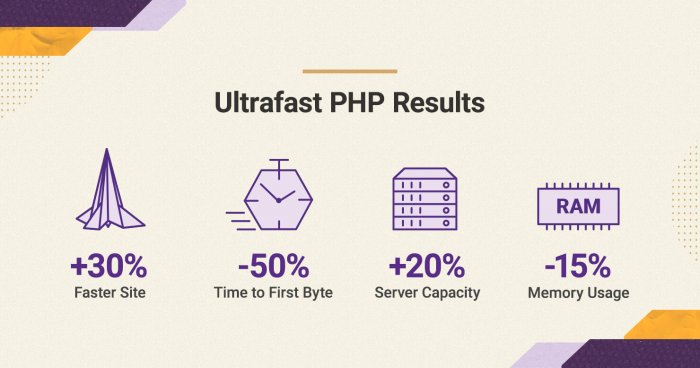
The websites that will benefit most from the ultrafast PHP are those that get solid traffic and may be experiencing resource deficit on the current plan they use. Based on the preliminary statistics we have run, we see the following raw data:

  • Faster page response: up to 50% drop in the TTFB (time to first byte), which will make your pages load faster than before.
  • Increased server capacity: the host node will be able to process about 20-30% more requests, which means it will be able to handle traffic spikes even better than before. 
  • Lower server memory usage: up to 15% drop in the memory usage, which again vacates server resources for handling more of your traffic faster.
  • Expected overall performance improvement: currently the new, ultrafast PHP averages at being 30% faster than the old setup.

Note: the numbers above are average and are based on internal tests. Results may vary per site. 

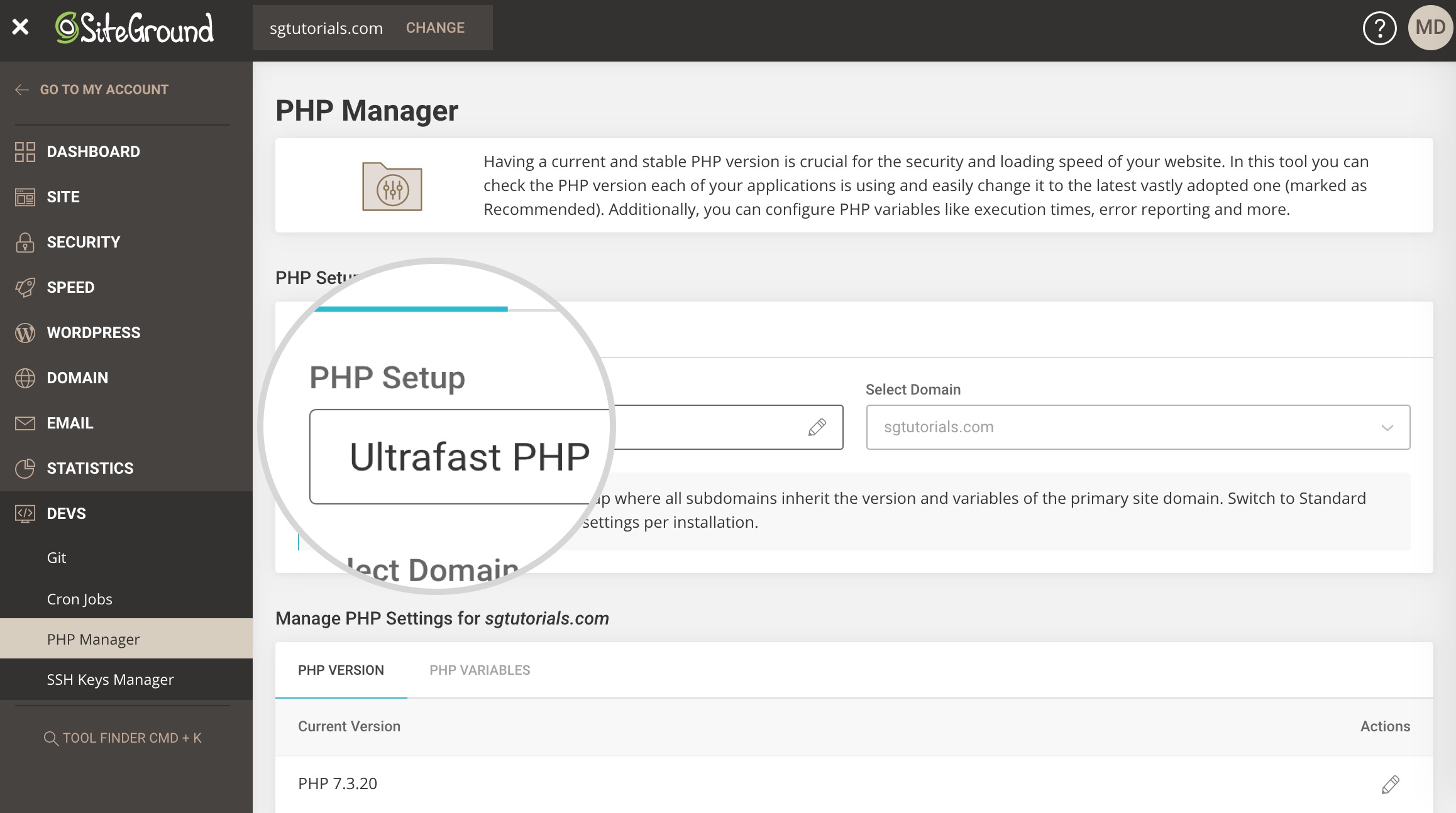
The new PHP setup is available for websites hosted on GrowBig, GoGeek and Cloud plans, as these plans usually host the type of sites that are most likely to benefit from the performance improvements it brings. It’s important to point out that it works for sites running on PHP 7.3 or higher and is not compatible with older versions. Furthermore, when using the ultrafast PHP service, all subdomains under your site will inherit the PHP version and variables settings from the site’s primary domain.

Our Standard PHP Allows Different PHP Settings for Each Subdomain 

The standard PHP setup is the one all StartUp accounts use. It is also available as an alternative to the ultrafast PHP setup on Site Tools-based GrowBig, GoGeek and Cloud accounts. Its performance is excellent for small and standard sites. Its biggest advantage is that it enables you to manage the PHP versions and variables separately for every subdomain in your site. 

As the standard PHP gives more flexibility for experiments, all staging sites are set up with it too. So if you need to use an older PHP than 7.3 or you need a setup with different PHP versions and variables per subdomain, the standard PHP setup is the one for you.

How to Switch to the Ultrafast PHP?

ultrafast PHP setup
  • All new sites created on Site Tools-based GrowBig, GoGeek or Cloud plan come with the new, ultrafast PHP switched on by default. 
  • For existing sites hosted on  Site Tools-based GrowBig, GoGeek and Cloud Plans, the ultrafast PHP is now available in Site Tools > PHP Manager and clients can instantly enable it from there. 
  • If you are a SiteGround client and have a Site Tools-based StartUp plan, you may upgrade it to a higher plan to get access to the ultrafast PHP setup.

[subscribe_cta]

Free CPU and RAM Added to All our Cloud Accounts

Starting today we are increasing the resources available to all our new and existing cloud plans with 1CPU Core and 2 GB RAM at no additional cost. The upgrade will make our cloud service faster and more reliable than ever. During the last few months, we have implemented multiple service improvements and the current cloud update is another enhancement made possible by our recent switch to Google Cloud Platform.

More Value With Our Managed Cloud Service on GCP

When we decided to move our infrastructure from bare metal servers to cloud infrastructure, we wanted to get the most out of that switch. We considered all the data redundancy factors, network capabilities, and of course the speed of the new platform compared to the old infrastructure. What was offered by Google Cloud on these parameters was really impressive. We knew that even the mere switch from the previous platform to the new one would result in performance improvements. But what motivated us, even more, to move to Google Cloud Platform were the opportunities we saw to optimize our resource usage, become more efficient and give more value to our clients. The current cloud upgrade is a direct result of the optimization opportunities we have on the new platform. Now our cloud services are not only hosted on a better infrastructure provided by Google Cloud but also receive more resources at the same price as before.  

New Clouds – More Resources at the Old Price

All our cloud offers now come with 1CPU Core and 2 GB RAM more without any change in their current price. Therefore, our entry cloud plan now includes 3CPU cores, 6 GB RAM, and 40 GB space at just 80 USD per month*, which sets the base for any configuration of CPU, RAM, and storage that you wish to create. Additional resource units can be added to this new base at the same prices as before. 

Current Cloud Plans – a Free Upgrade

In the next few days, all our existing cloud users will also receive a free update of their cloud features and will have 1CPU Core and 2 GB RAM added to their existing plan. 

No downtime is expected during this upgrade. However, the option to upgrade or downgrade cloud resources will be temporarily disabled in the Client Area during the upgrade process. Only the Autoscale option will be available to accommodate any urgent need for additional CPU or RAM that may arise during the short period of the feature update. 

* Prices depends on geographical region of the client starting from: 80 USD/mo; 64 EUR/mo; 48 GBP/mo; 80 AUD/mo

[subscribe_cta]

SiteGround Optimizer 5.6 – Heartbeat control, Automatic Database Optimization and More for Even Faster Websites!

We have just launched the latest major update of the SiteGround Optimizer plugin. The new version greatly enhances what’s already the best performance solution for your website if you are hosted with SiteGround! If you follow the plugin’s changelog you will notice that for the last few years we’ve constantly improved and added more and more functionalities turning the plugin from a simple connector to our server caching systems to an overall performance solution for your WordPress site. Now I am excited to guide you through the most recent features that will help you make your site run even faster:

WordPress Heartbeat Control

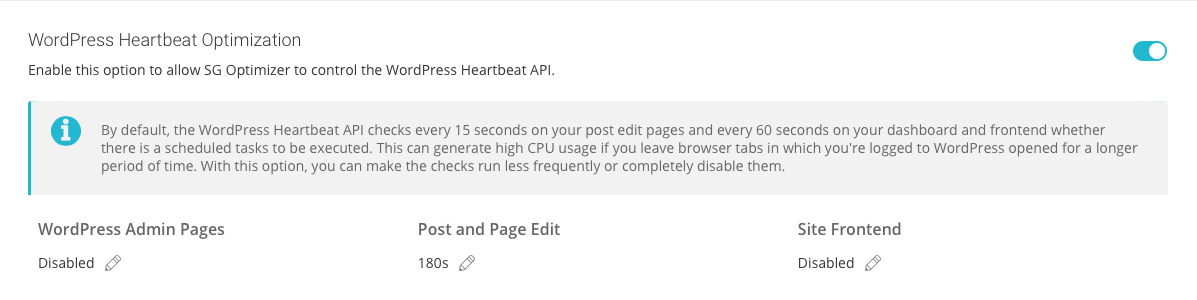
The Heartbeat API allows your browser to communicate with the WordPress application when you’re logged into your admin panel. This functionality makes it possible to handle things like scheduled tasks, post and page revisions, locking of a post when someone else is editing it, and more. 

Although it’s a great piece of functionality it may cause excessive CPU usage when left unsupervised. For example, if you just leave a couple of tabs open in your browser on the post edit page, that will execute a script saving your content as a draft for each tab every 15 seconds. That alone results in 480 executions per hour and 11520 per day.

Most people don’t need to save that often. For example, if you’re writing a blog post, having a save every 3 minutes is perfectly fine. With the new settings in the SiteGround Optimizer, you can either completely disable the Heartbeat API if you don’t have any functionality requiring it, or you can set it to work at far bigger intervals. By default, we disable it on your admin and frontend pages and leave it only on post edit to run every 180 seconds.

WordPress Heartbeat Optimization

Automatic Database Maintenance

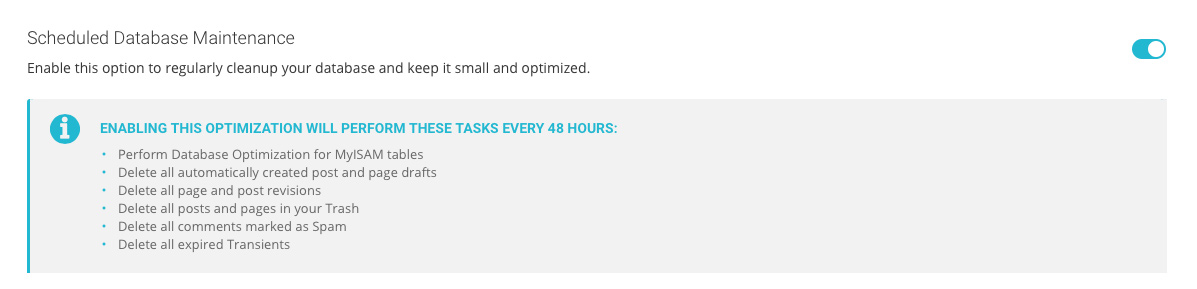
This optimization is really important for WordPress websites but often neglected by webmasters. That’s why we’ve added it to the plugin and set it to run every week. Having that feature enabled will automatically clean your spam comments and trashed posts and pages, and will perform a table optimization and clear all the expired transients from your database. Basically, you will be sure that your database is in a top condition without having to perform the same tasks manually on a regular basis.

WordPress Database Optimization

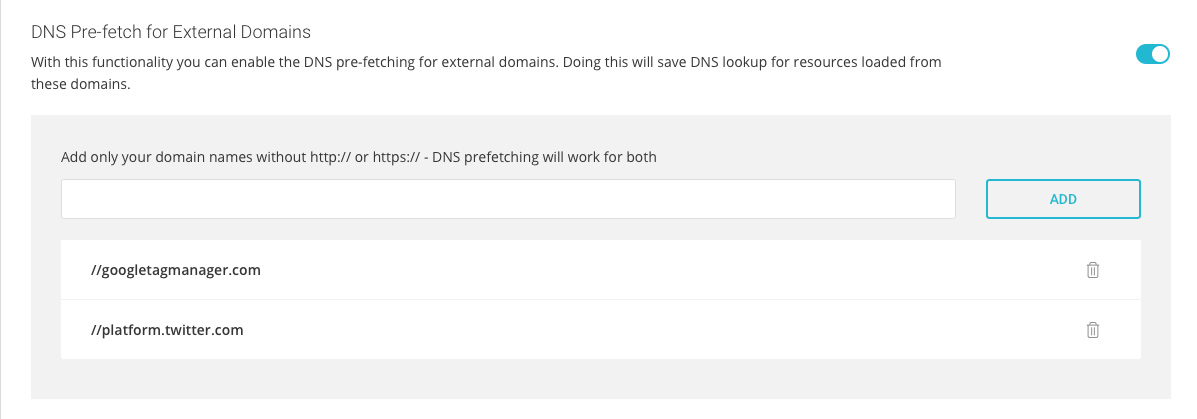
DNS Pre-fetch 

With this option, you can easily add all external domains that your site uses to serve external resources so your site can tell browsers to pre-fetch them and save time from resolving these domains each time they are used by a resource.

By default, browsers are pretty smart when it comes to domain resolution and pre-fetching all commonly used external domains. They manage to avoid resolving the same domain multiple times. But, their automatic pre-fetch doesn’t work at all times. For example, if you have external resources in your CSS and JS they won’t be automatically pre-fetched by the browser. That is why we added an option in the SiteGround Optimizer where you can list all external domains and thus make sure that the browsers will have those domains’ IP addresses ready for use. That feature helps reduce page loading times. 

Improved Memcached Integration

Memcached is a great optimization feature, but due to compulsory Memcached limits it works only for objects smaller than 1MB. That’s more than enough in 99% of the cases, but as more and more plugins and themes are dropping huge chunks of data into the options table, we have started to notice more attempts for using Memcached for bigger objects. That is why we have come up with a smart way to use Memcached in such cases too. We have added a self-learning mechanism that excludes the options with the biggest values from the object that needs to be cached, so it stays under 1MB. This way we manage to provide Memcached at least for a part of the initial big object. 

Deprecation of the PHP Switcher

In this version, we’ve decided to completely remove the functionality to switch the PHP version of a website. We took that decision for two main reasons – we wanted to avoid duplication of the functionality as that version control already exists in cPanel and Site Tools, where it logically belongs; and to alleviate the plugin so it takes less disk space and inodes.

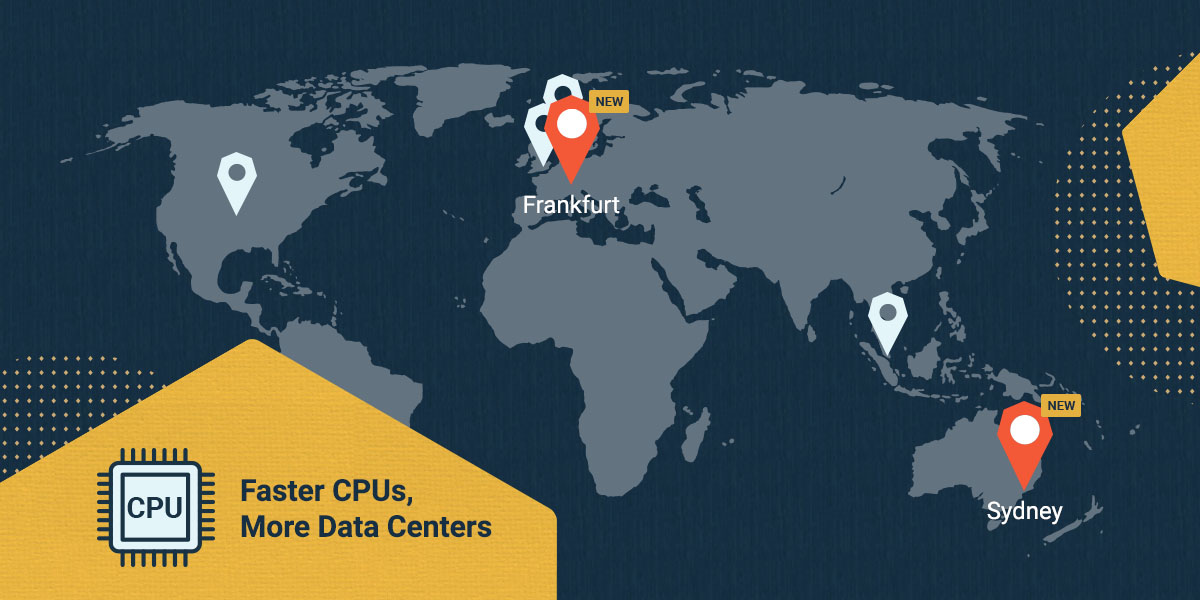
Faster CPUs, More Data Centers, Bigger GoGeek Plans

When we migrated our infrastructure to Google Cloud Platform a few months ago, we knew this was not just a one-time event but the base for continuous improvements for our customers. Today we are happy to announce that thanks to this move, we are able to perform a massive upgrade to faster CPUs, we have two more data center locations and our GoGeek plan offers more space than before. 

40% Faster Processors 

We will update all processors used to host our clients on the Google Cloud infrastructure. The new N2 CPUs perform roughly 40% faster than the ones we used previously. Both our shared and cloud customers will benefit from faster delivery of dynamic content due to more efficient script execution. With the upgrade, your site is expected to need less CPU seconds than before when serving the same type and number of visitor requests. This generally means more room for growth before you need a plan upgrade. Of course, the benefit for each individual site will be unique, based on its own code and database optimizations. 

The upgrade of our current CPUs will be done in the next few weeks. There will be a 24-hour notification about it in your Customer Area. The upgrade will involve minimal downtime due to a necessary reboot (roughly 15 minutes per server). Upgrades are scheduled to happen during the time of the day with historically least amount of traffic. Basically, that should happen very early in the morning, taking your data center local time into consideration. 

Two new data centers – Sydney and Frankfurt

Another great benefit of our migration to the Google Cloud Platform is that we can now add more data center locations around the world. It is a great advantage that we can now count on a single data center partner everywhere and benefit from their uniform high-quality service. We have been a host of choice for many Australians for the past 15 years and now we are extremely happy to provide a data center location on their own continent – in Sydney. 

A data center in Frankfurt, Germany is also available as a response to the numerous requests for German location by our customers. All new plans for customers from these locations are now activated in the new data centers. Existing hosting accounts can be relocated through the marketplace page in the customer area.

More space for GoGeek hosting plan

Our GoGeek hosting plan is often chosen by people reselling hosting service or hosting multiple sites of their own customers. After the move to Google Cloud platform, we are now able to increase one of the resources our resellers need most — the webspace, without changing the plan price. The GoGeek plans have been upgraded with 10 GB, and now include 40 GB disk space. Existing GoGeek plans have also received this upgrade completely free of charge.

[subscribe_cta]