In a world where technology is constantly evolving, people remain our most valuable asset. Education is the key to a successful future for our society and economy. At SiteGround, we believe that investing in education is the foundation of any successful society.
Our strongest example is always personal. In our team, we believe that everything starts with us!
SiteGround People Supporting Education
A Personal Example – Ivo Tzenov
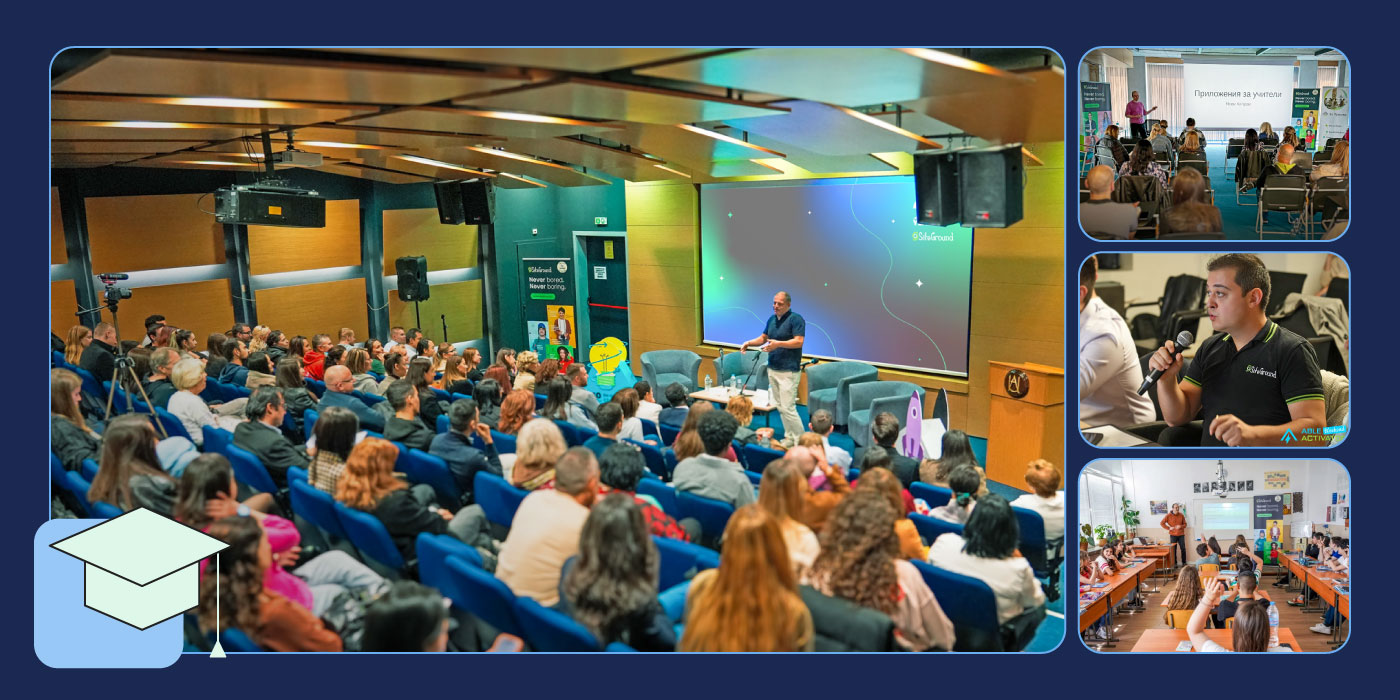
Our founder, Ivo Tzenov, himself a graduate of the American University in Blagoevgrad, returned to share his inspiring journey with the new generation. In his motivational lecture, he talked about how the idea for SiteGround was born, the challenges he faced, and the lessons he learned on the road to global success. Ivo emphasized the importance of adaptability and the pursuit of learning and continuous development in a rapidly changing world. His advice was a truly inspiring spark for students who dream of building their careers.
Ivo was joined by colleagues Valentina Kozhuharova, HR Manager, and Dorothea Hadjigeorgieva from the company’s investment department. Valentina shared more about the development of SiteGround’s culture, while Doroteya gave examples of the company’s investment strategies that respond to current trends with a focus on current global challenges such as climate change and sustainable production.
Teacher Training
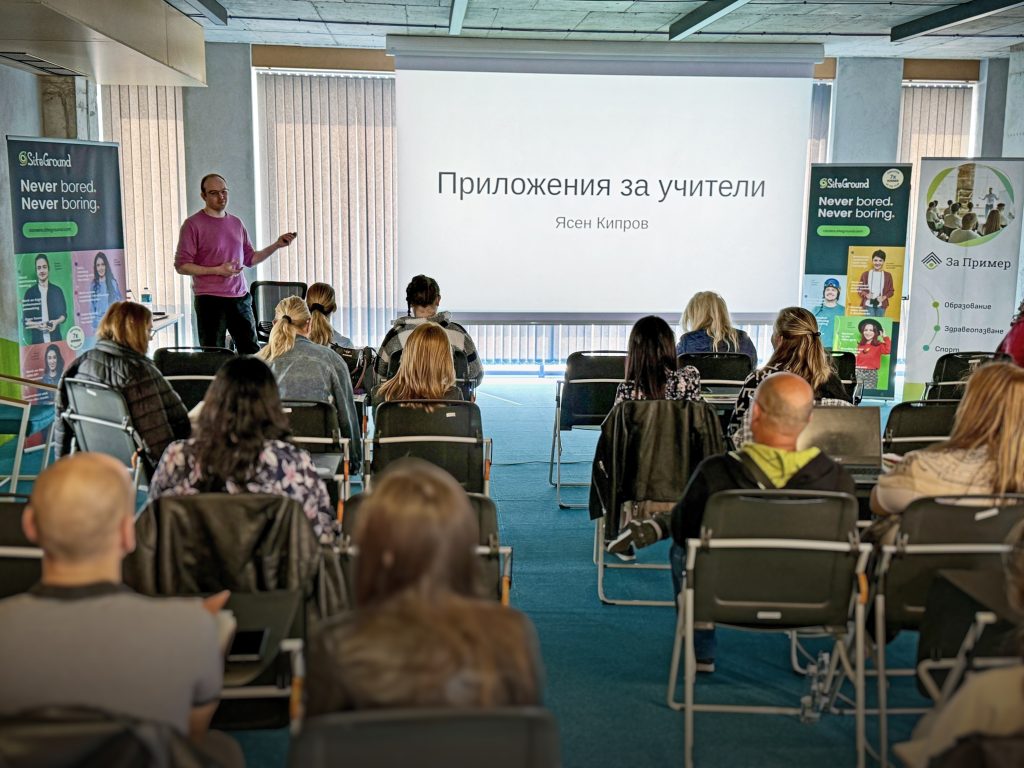
We believe that quality education starts with teachers. That’s why, in partnership with our “Lead by Example” foundation, we organize practical workshops called “Artificial Intelligence in the Classroom. This year, we reached nearly 100 teachers in Sofia, Plovdiv, and Stara Zagora, teaching them how to integrate artificial intelligence into their teaching. Studies show that only 1/3 of teachers in Bulgaria are familiar with these technologies and many are still skeptical. Our workshops aim to change this by providing teachers with new skills and tools that can make learning more engaging and effective.
Support for Students
We don’t forget about the students either. With our leading AI expert, Yassen Kiprov, we conducted the first of a series of inspiring lectures for seventh-grade students. Yassen discussed the various applications of artificial intelligence and shared personal experiences from his professional journey. He emphasized the importance of continuous learning and adaptation to new technologies, which is crucial for success in the modern work environment. At the end of the lecture, he offered practical AI tools that students can use for educational purposes.
In addition to school visits, we are transforming our office into a knowledge hub. This summer, 15 third-grade students from the “Kocho Chestimenски” Primary School in the village of Dinka, Pazardzhik, immersed themselves in the world of technology and learned how to navigate their future educational choices during an exciting visit to us. Three lecturers from our company participated in the training.
SiteGrounder for 3 Days
Summer is not just for vacation – we also organized our summer academy “SiteGround-er for 3 Days.” This initiative provided the children of our employees with a unique opportunity to get acquainted with the business and develop new skills. For three days, 13 children aged between 15 and 20 participated in practical workshops, learned the basics of online business, and received career guidance from our specialists. We included a module on socially responsible behavior to highlight the importance of philanthropy in business.
Ecosystem
There is an old saying that it takes a village to raise a child. This is also true for education. We know that we cannot do it alone, which is why we have found our allies, whom we support sustainably and with whom we bring about change every day. We work on developing teacher potential, digitizing the educational process, and encouraging entrepreneurial thinking among youth, and we are developing a partnership with INSAIT.
Our commitment to education goes beyond the training for teachers and children that we organize ourselves. It is part of our activities and support for Teach for Bulgaria Foundation, the largest non-governmental organization in Bulgaria focused on transforming the educational system and processes for the better. Our investment over three years is €150,000, and together we launched the “Model Schools” program, which has already reached over 100 schools and 44,000 students, focusing on modernizing their management and teaching practices aimed at academic progress and the well-being of every student.
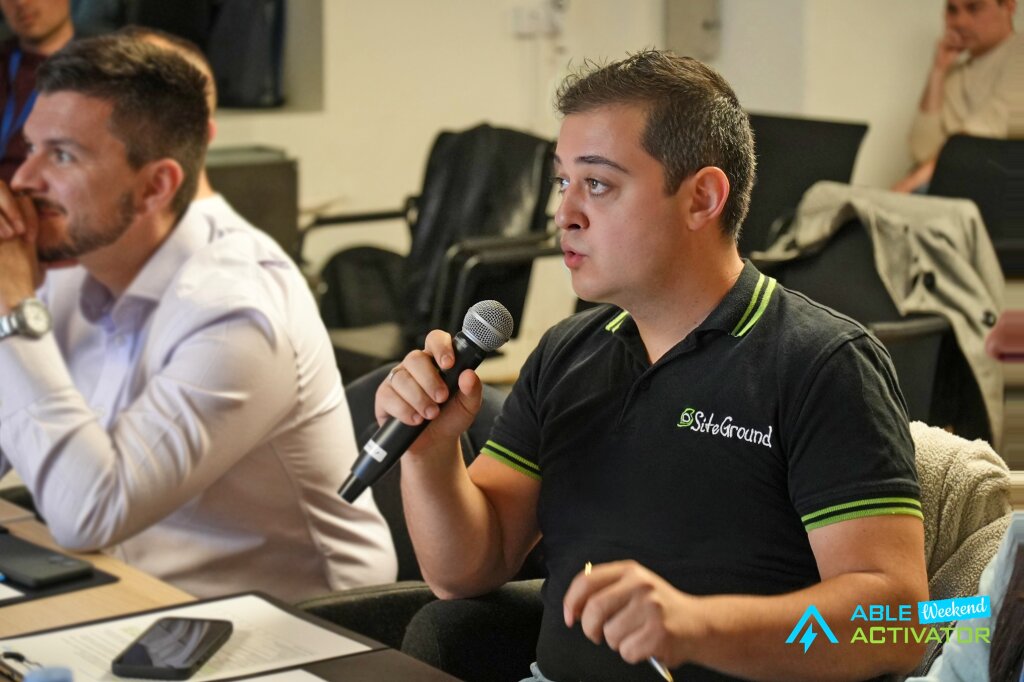
We recognize that education does not stop in the classroom. That’s why we invest in programs like ABLE, which offers youth from across the country the opportunity to develop entrepreneurial thinking and real business ideas. Additionally, our support for the Institute for Computer Science, Artificial Intelligence, and Technologies (INSAIT) is a strategic investment in the future of the Bulgarian education system. With up to €6 million over five years, we aim to attract world-renowned experts to train the new generation of specialists.
Education is a process that requires effort from all of us. We believe that together we can create a better future for the next generations. Let us be the modern enlighteners who change the world!
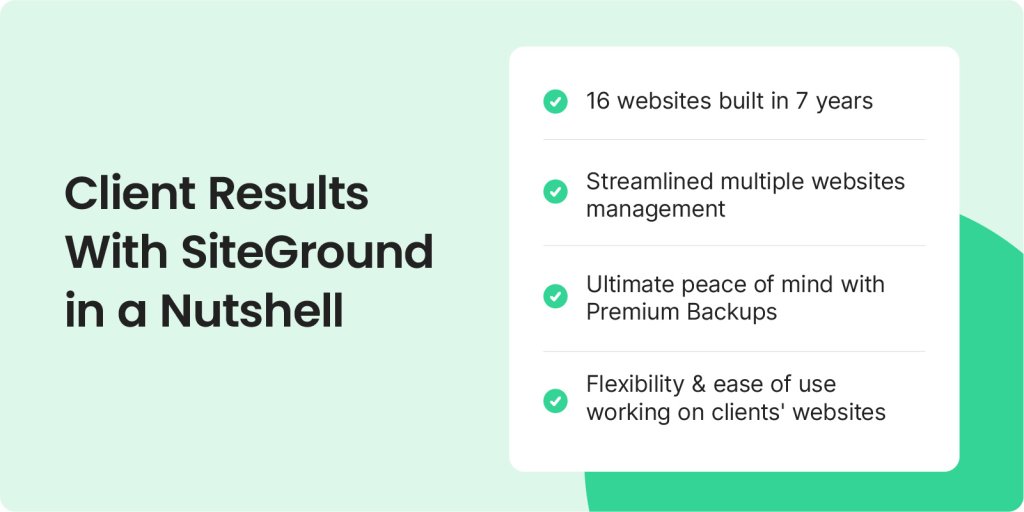
Managing multiple websites while turning a passion for travel into a business, our client Sean Hodge and his wife faced the typical challenges of maintaining and growing an online business. When starting out, as a relatively new business, they were constantly evaluating expenses and needed a hosting solution that offered flexibility and reliability without compromising on quality, making SiteGround’s GoGeek plan a non-negotiable investment for them.
Sean Hodge embarked on his digital adventure ten years ago, and just three years later he discovered SiteGround while shopping for reliable hosting solutions. Since then, SiteGround has become an essential component of his business, enabling him to grow and easily manage his websites.
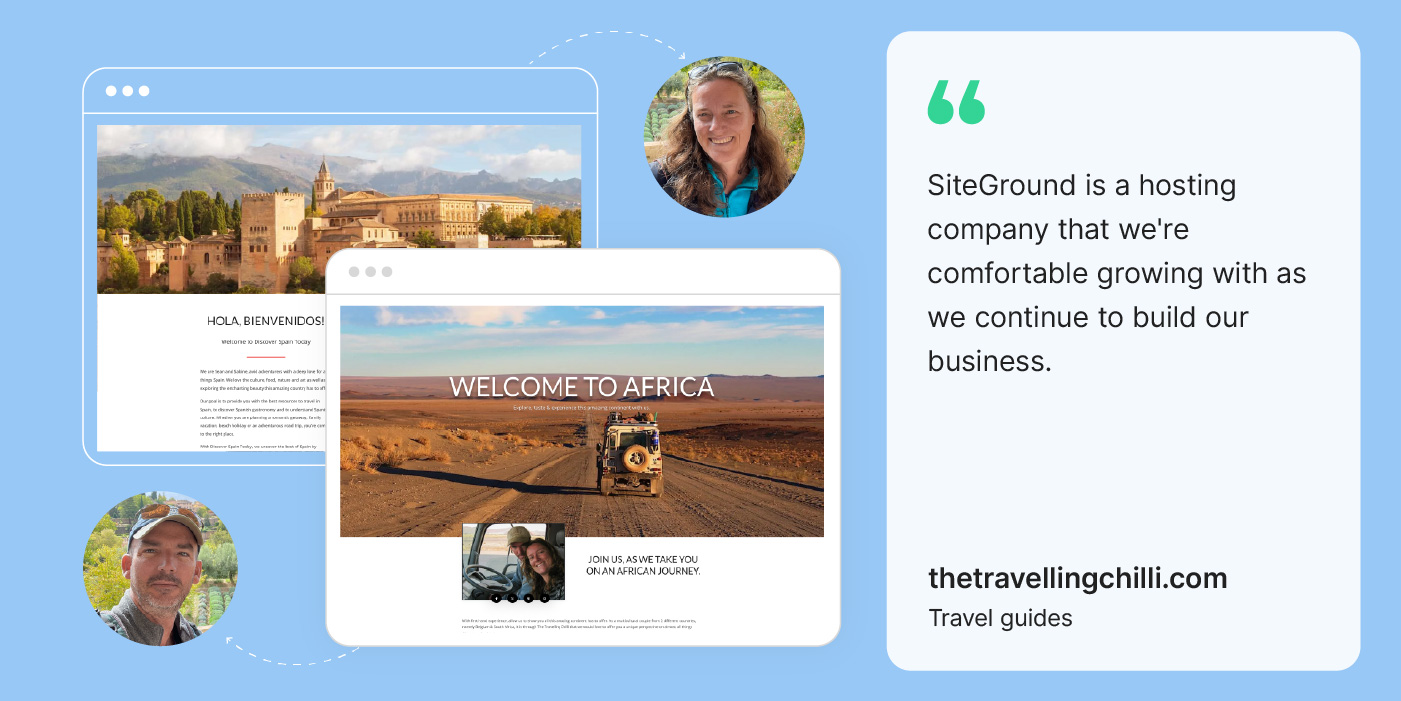
“SiteGround is a hosting company that we’re comfortable growing with as we continue to build our business.”
“We’ve got a lot on our plate right now, but fortunately SiteGround takes a lot of the load off of website maintenance and allows us to focus on the job at hand which is developing and growing our websites.”
The Game-changer: SiteGround Premium Backups
SiteGround’s suite of powerful hosting and website tools transformed how Sean managed his websites. But it was our Premium Backup service that stood out in particular, especially in the case of a recent website incident, causing Sean to delete a website component by mistake while working on another new site hosted with SiteGround.
“We use it not just to protect ourselves from hacking, but to protect us from our own mistakes.“
One such slip-up nearly turned a productive day into a digital disaster. Sean accidentally erased an entire day’s worth of hard work. However, with SiteGround’s reliable Premium Backup service, he was able to restore his lost data in mere seconds:
“I didn’t know what I was doing, never worked with e-commerce before, so I went and deleted something by mistake. It was an entire day’s work. But I had the SiteGround backups running! So I just went to Site Tools and restored the database in a few seconds! And then I just said to myself, okay, let’s not do that again.“
How to Have Ultimate Peace of Mind with SiteGround
Hourly Backups
SiteGround’s Premium Backup service truly saved the day for Sean. When he accidentally deleted all his work, he was relieved to discover a backup from just 5 minutes earlier. This quick recovery meant he hadn’t erased hours of effort, and his hard work was safe, thanks to the reliable hourly backups.
On-Demand Backups
Sean found on-demand backups especially useful, as they provided an extra layer of security, allowing him to focus on growing his business without worrying about losing crucial data. He also noted that while on-demand backups are important for him, they are even more critical for busy e-commerce stores, where the pace is fast and the consequences are significant.
“If you’re a busy commerce shop, selling hundreds or thousands of products, all day every day or a forum with hundreds of posts every day, then you probably want hourly backups to run all year round.”
What Sean finds most useful, however, are on-demand backups. They provide peace of mind after extensive time working on his website, knowing he can secure his progress at the end of the day, and ensure everything is safe.
Resource Еfficiency
Unlike third-party plugins that consume extra resources, SiteGround’s in-house backup service offers seamless integration, enabling Sean to manage backups effortlessly without the need for additional tools or hassle.
“Not having to use a third-party backup service is a plus, since all these other platforms use account resources, whereas SiteGround backups do not.”
Reliability, Ease of use, and Flexibility
The ability to manage backups within the hosting platform simplifies his website operations, providing Sean with a convenient and efficient way to safeguard his data.
Having the experience of managing several personal websites, Sean started helping out and building websites for friends and business partners. That’s when he found SiteGround’s free Collaborator feature invaluable! An unfortunate case with malicious code injection – intentional or accidental – highlighted the importance of controlled access.
“When you take your car to a mechanic, you trust them to do the job. You don’t work on your car in their workshop and it’s the same with hosting account access.”
With SiteGround’s Website Collaborators feature, you can safely add team members as collaborators and manage their permissions to still allow controlled access to the website, without the risk of compromising its security.
1-click Website Ownership Transfer for Quick and Easy Site Handover
Having built several websites for others now, Sean also emphasizes the ease of SiteGround’s 1-click Website Ownership Transfer feature. A recent example is a social community website he was building for a friend in Greece. He had to transfer the ownership to a new owner in Belgium – and did that seamlessly by simply entering their email address in SiteGround’s Site Tools website management panel. The transfer was nearly instantaneous and remained within the same data center, ensuring no changes to the IP address or other settings.
“That’s actually something that wouldn’t be possible with cPanel – to split websites within the same account to new owners and across data centers. It’s amazing how your system administrators have put this together.“
Sean appreciates this capability, noting that it allows for easy ownership changes without the hassle of moving websites across data centers, all while keeping everything intact.
Expert Care for Professional Website Assistance
Confident in SiteGround’s unmatched team expertise, Sean also tried our Expert Care services, which allow clients to ask for help with tricky website issues that go beyond the regular hosting scope of support.
He was facing issues with a website, which had been moved across several hosting providers. Due to numerous mistakes in uploading photos, the website media library unexpectedly expanded to 7,000 images instead of the intended 1,200. Looking for a solution, Sean turned to our Expert Care team. Their valuable guidance helped him identify the root of the problem and pointed him to a fix.
The Journey Ahead
SiteGround has become more than just a hosting provider for Sean Hodge; it’s a partner in his growth journey. Sean finds it easy to manage his websites on the SiteGround platform, praising the tools as super seamless to work with.
“So it’s been seven years and we’ve seen a lot of great changes along the way, first the migration to Google Cloud platform and then Site Tools. I can’t imagine using any other hosting provider.”
With SiteGround by his side, Sean confidently grows his business, knowing his hosting provider is truly invested in his success. You can too!
Every Summer at SiteGround for the past eight years has been invariably marked by the anticipation of our biggest internal event – our very own SiteGround Festival. We’ve been organizing it ourselves from start to finish since 2016, with a one-year Covid-induced pause that made us appreciate it even more. It’s an epic two-day outdoor get-together complete with various daytime hands-on workshops, sports tournaments, and group activities that our team members not only get to choose from, but some of them even get to lead themselves. The goal is for everyone to try out a new skill, showcase a talent, get crafty, get creative, or get moving, all while seeing the people you work with every day in a different light.
In the past we’ve had a craft beer brewing workshop hosted by a Software Engineer team lead, a DIY natural cosmetics workshop by a member of our Project Management team, a morning workout session by a passionate gym enthusiast from HR, a DIY dreamcatcher workshop with our Head Office Manager, a coffee brewing and tasting session with our barista-at-heart Video Content Editor, a locksmithing session with our DevOps team lead, where we learned how to secure a lock just as well as how to bulletproof a server – and so much more!
Here are 10 more things that you could try out at the SiteGround Team Festival this year. Hopefully, the list alone is enough to inspire you to build something, share, or learn a new skill yourself.
Pottery
You will usually find us crafting client interfaces on a workday, but this one was different. Similar to what we normally do with code, and html and css, this time we tried building a physical tool from scratch! We got to spin pottery wheels and get hands-on for real. Turns out it’s way harder when you don’t have an Undo button, or a backup to revert from – but all the more satisfying!
Screen-Printing
Changing up the glow of the laptop screen for the colors of live screen-printing! There was a constant line to make your own t-shirt or a tote-bag, and even add some extra ones to bring as a gift home – or to a colleague who had to miss the SiteGround festival this year.
Upcycling
We usually shiver when we hear the word “redesign”, but not this time! “Reduce. Reuse. Recycle.” is not only our motto when it comes to our office culture, but a way of life, too. Here we redesigned and repurposed old clothes into practical new items like shopping bags, handy clutches, or chef aprons with a twist!
Cooking like an Italian
Having Italian team members is the best – they double as a local guide on your Marketing mini-teambuilding, teach you the craft of Italian hand gestures on a Zoom call, and police you that it’s illegal to have a cappuccino after 12 pm. But this year things got even more serious than spaghetti code – we got our Marketing Manager for Italy to co-lead our cooking workshop. The result: pitch-perfect Tiramisu and Margherita!
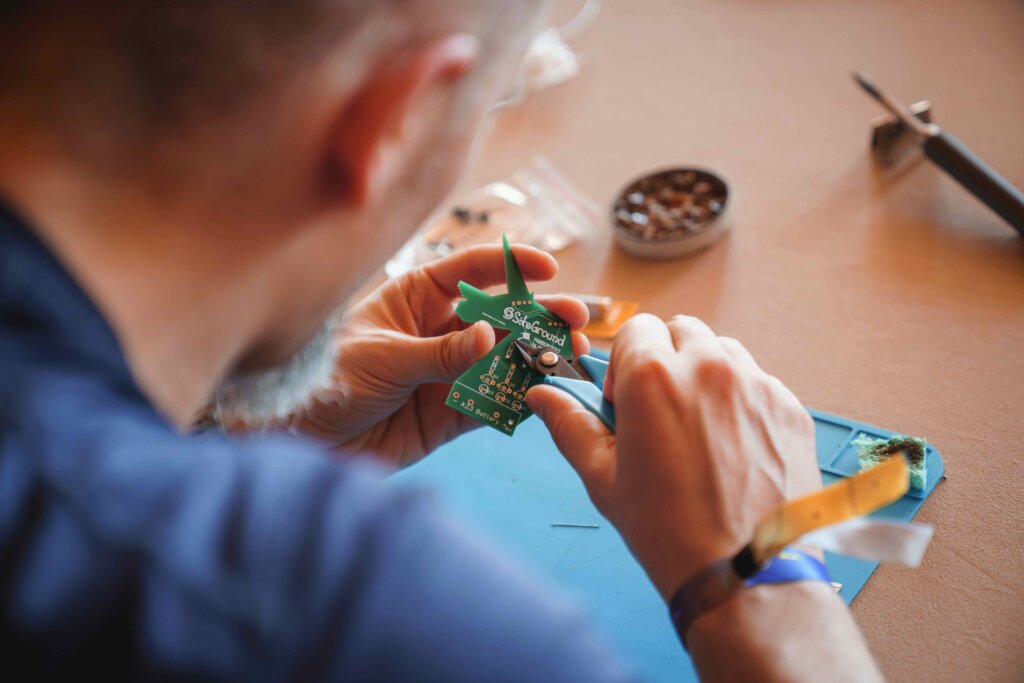
Here is where we really got into the nitty-gritty! Can you put together your own SiteGround circuit board correctly, so that it lights up in the end? It’s child’s play – so we got back to school with this Uni4kids workshop.
Floristry
How hard can it be, putting flowers in a vase, I thought. Well, just look at the faces of the people who got to answer this question in a two-hour workshop. It’s definitely not as easy as sprinkling emojis in your email subject lines!
Digital Photography
In the AI era, upping your digital photography game is a must! Our aficionado-turned-pro photographers from our Web Design and Motion graphics team, together with a member from no other than our Finance team worked with over 60 (!) enthusiasts, sharing tips and tricks. Then they put it all into practice thanks to our colleague-turned-model for a day. Now with even one look at the profile pictures in our company Slack, you can tell who visited this workshop!
Candle-Making
This candle-making workshop sure looked like anything but. Who thought candles could look so delicious?!
FPV Planes
Building an airplane while flying it is a tactic we left in the first years of our 20-year history as a company, but we still know how to do it. And this workshop proved it. Once built, we flew our FPV planes to get some stunning views from the skies!
Sumo Wrestling (Even If You Don’t Have the Physique for It)
It’s important to always have someone to do the heavy lifting for you – such as our technical support team! Here, they had to literally step up. After years of battling countless website misconfigurations, database optimizations, and tough-nut cases that they crack in a blink of an eye on a daily basis, now they added inflatable sumo under their belt.
Bonus: Stage-Diving
This we only recommend for seasoned professionals – such as our CEO. He was the one trademarking this move on our very first team festival. Eight years later, I guess nothing’s changed:
SiteGroundFestival2016SiteGroundFestival2024
These are just some of the activities that stood out to me, and I, for one, had never tried before. But if you ask anyone of the remaining 550 SiteGround festival go-ers, their list will look completely different. Some painted landscapes, some tried salsa dancing lessons, some played board games, tennis, volleyball, ping-pong, darts or football. Some did Pilates and crossfit workouts together every morning of the festival, while still others left at 8:30 am. on a hike to a 2,516 m. mountain peak on our last day. And still, others were working 24/7 – our customer service teams were tirelessly standing by from the comfort of our hotel and festival grounds – making sure our clients were happily taken care of without a hiccup.
That’s the beauty of being a team – everyone’s different, but together, you make something way greater, and more versatile, than the sum of your skills and talents.
At SiteGround, we proudly embrace our reputation as “security freaks” – we continually enhance our infrastructure, systems, and tools to protect our customers’ websites and information. Since launching our Site Scanner service, we’ve been inspired by your stories of how it has shielded your websites from potential security disasters. Now, we’re excited to take your protection to the next level with Site Scanner’s latest updates.
New in Site Scanner Basic: Automated Weekly File Scan
Our current Site Scanner Basic plan features an automated Daily URL Scan that checks your website’s URLs every day for any publicly detectable malware. However, when it came to File Scans, up until now you had to initiate that type of scan manually yourself.
We’ve rectified that with the addition of an automated Weekly File Scan, making our Site Scanner Basic plan even more convenient. Now your website’s files will be automatically scanned for malware every 7 days, ensuring regular and thorough protection without any extra effort on your part. Site Scanner Basic users can now enjoy enhanced security and peace of mind with our new weekly file scans!
New in Site Scanner Premium: Unlimited 1-Click Malware Cleanups
Our Site Scanner tool has been a favorite among our clients, but there was one feature you’ve been eagerly anticipating – Malware Cleaning. Until now, Site Scanner provided valuable timely information about potential malware threats found on your account. Now, we’re excited to offer not just insights and timely alerts, but also an easy resolution with our new 1-click Malware Cleanup feature, exclusively available for Site Scanner Premium users.
Here’s an overview of the two methods for using the malware cleanup feature:
Scenario 1: Malware is detected after a scan
Imagine malware is detected on your website. With Site Scanner on, you’ll receive an immediate notification via email. Your next step is to go to your Site Scanner interface in Site Tools. Here, you’ll see more information about the detected threat and have the option to remove the malicious code identified during the scan. Our Malware Cleanup feature now allows you to swiftly remove the malware from your site and eliminates the need for third-party solutions, saving you both time and money. You can initiate the cleanup with 1 click. The possible results will be:
Successful Cleanup: The malware is effectively removed, and a subsequent scan verifies that your site is clean.
Unsuccessful Cleanup: If the cleanup tool encounters issues, an automatic support ticket is created for further investigation by our support team experts.
In the CLEANUPS tab of your Site Scanner interface, you can access your history of all cleanups, with successful ones accompanied by a detailed report of the files that were cleaned.
And voila! Your site is malware-free again.
Scenario 2: Quarantine files
If you have your Site Scanner quarantine setting enabled and there is a malicious attempt to upload potentially harmful files to your site, these will be detected and not automatically published in your public website folder, but safely quarantined in a folder isolated from your website.
Now you have the option to use our automatic cleanup process for these files too. When initiated, our Malware Cleanup feature will automatically delete the content it considers malicious from the quarantine files and will safely move the cleaned files to the public folder.
For more detailed guidance on using the Site Scanner tool and how it protects your website, please refer to our Site Scanner Knowledge Base tutorial.
Activate or Upgrade Site Scanner for Unmatched Peace of Mind
With Site Scanner’s new automated Weekly File Scans in the Basic Plan and 1-click Malware Cleanup in the Premium Plan, along with many other site protection features, you can enjoy seamless defense against malware threats.
October 10th marks World Mental Health Day worldwide. At SiteGround, this topic is an essential part of our overall health and well-being. It affects not only how we work, but how we think, feel, and act. It also helps determine how we handle stress, relate to others, and make choices. Psychological support isn’t just about solving problems; it’s about increasing self-awareness, building coping skills, and fostering better relationships.
According to the World Happiness Report 2024, mental health is a key component of national happiness. Countries with higher levels of mental well-being tend to rank higher in happiness overall. This suggests that there is a strong link between mental health and happiness.
How to Lower Stress Levels?
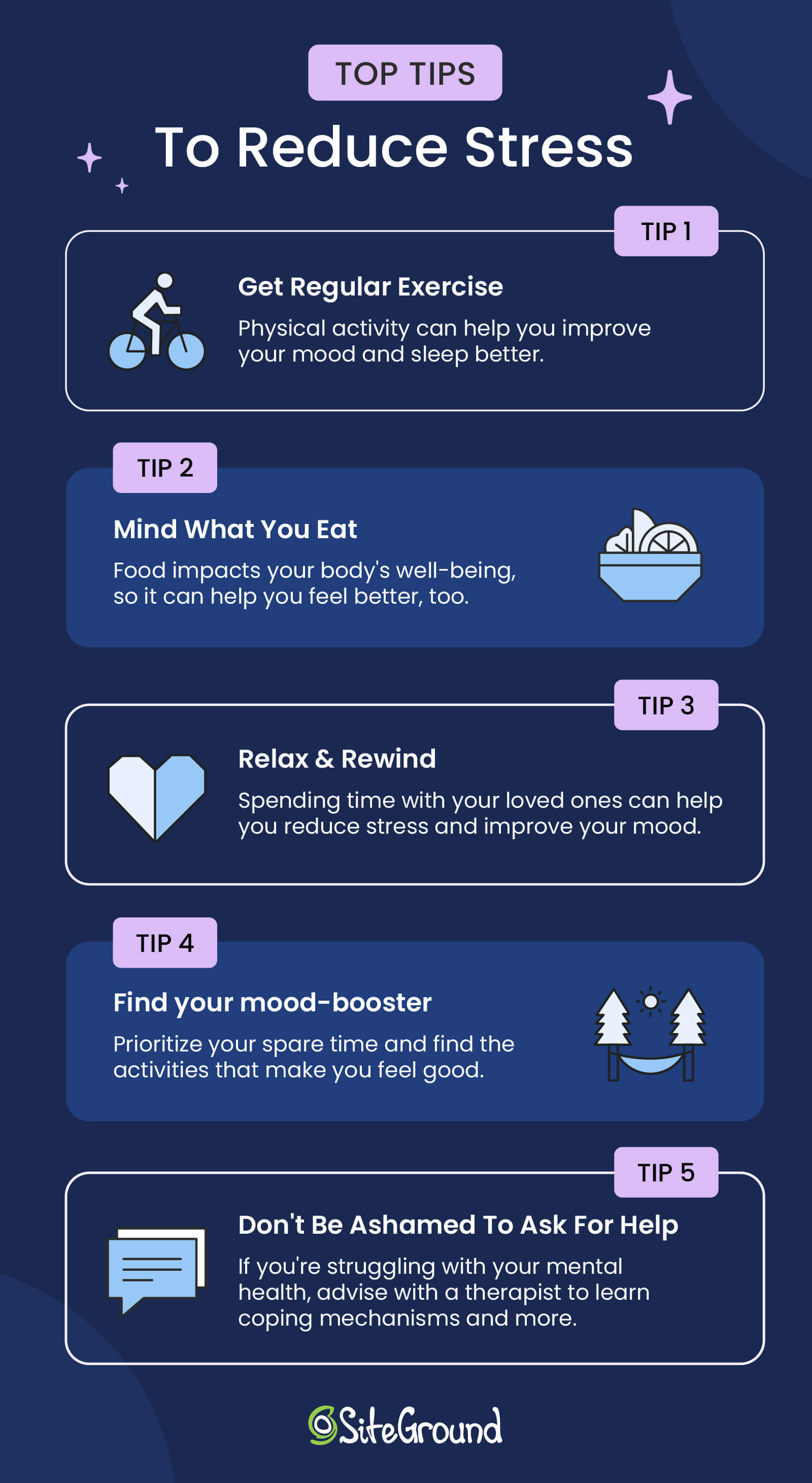
There are many things you can do to improve your mental health and lower your stress levels at the workplace or in general. Here are just a few practical tips that you can easily implement in your daily life whether you work alone, or in a team, from home or in the office:
Get regular exercise.
Exercise is a great way to improve your mood and reduce stress. Any type of exercise, such as brisk walking, or a stroll around the block every day can boost your mood, and even help you sleep better. Whether you’re counting steps, distance or minutes spent outdoors, every effort counts.
Physical activity is something we in SiteGround believe is a very important part of everyone’s stress-free lifestyle. That is why in our office in Sofia, we have our own fitness center where, in addition to access to an instructor, we have more than 10 sports group training sessions every week. As a consequence over 50% of our Sofia team trains in the office every weekday, and more than 50% of our colleagues from other offices actively use their company covered sport cards.
The sports initiatives in which our team is involved outside the office number more than 15 per year, and they are usually large events of a charitable nature. You can easily join some of those individually, such as Begach running club events, Legion Run, Bike and Run for Chepan, etc. For eight years now, we have had our own football team, which actively trains, of course, again with the financial support of the company, and often participates in charity matches.
A unifying expression of these internal policies is our annual Get Fit Challenge, which we have organized for our team for 7 years in a row. The goal is to challenge and stimulate more people to start playing sports, as well as to support various social causes with their participation. Many of our colleagues are motivated to start active sports precisely through this initiative and continue after that, and every year we see more and more new enthusiasts.
Mind what you eat.
Eating a healthy diet can help improve your overall health and well-being, including your mental health. You’ll be amazed what difference your eating choices can make and we’re not even talking about appearance, but overall disposition. A quick start would be to reduce over-processed or junk food, shop local veggies, eat food that is in season, and try to cook your own meals at least once a week. It’s easier than you think.
At SiteGround we provide healthy meals and snacks for our employees, in addition to encouraging them to participate in physical activities. Our free restaurant for employees in Sofia has been operating for several years now, as well as our catering program for the offices in the country.
In our restaurant we enjoy a rich and balanced menu prepared by seven fantastic chefs who prepare the food in the restaurant on site and with products from selected suppliers. Every day there is soup, two types of salad, two meat dishes (alternating with fish) and two vegetarian dishes, including a vegan one. For those who exercise and monitor the energy balance of their food, the main nutritional values of the healthy delicacies have even been calculated.
3. Relax & Rewind.
Spending time with loved ones can help reduce stress and improve your mood. A reason strong enough to make us implement reduced working time on Fridays. Our employees work shorter hours on Fridays, which gives them more time to relax and recharge.
This extra time they can spend with their loved ones or devote to developing themselves by learning new things or practicing their hobby is something the company believes in giving to make employees happier and more productive.
4. Find your mood-booster.
Have you heard the saying “Do what you love, and you’ll never have to work a day in your life work super hard with no separation or boundaries”? Loving your work is great, but try to prioritize your spare time and find other things that make you feel good. Skiing, mountain bike, board games, dancing, books, movies – if you can find other team members to practice your hobbies with, even better!
At SiteGround we have a club of interest for all of the above. Every winter we organize company-covered ski and snowboard days and lessons for all team members who would like to attend – yes, on a workday. We go on mountain bike weekends, team hikes, and the most exciting of all – SiteGround Team festival outdoors to unwind, relax and recharge together. Find your bunch of like-minded people, and unplug every once in a while. It will do you more good in the long run.
5. Seek professional help.
If you are struggling with your mental health, don’t be afraid to seek professional help. A therapist can help you overcome stress and anxiety, teach you coping mechanisms and help you develop a treatment plan.
At SiteGround we have a professional mental health help program in place, including free consultations with a psychologist from the hOUR THERAPY platform.
The consultations are company-covered, and completely anonymous, featuring a professional psychologist of personal choice. They can be held in person or online, while confidentiality and privacy are guaranteed. There is a stable interest among our team to this perk, and they have the confidence that they may rely on professional consultations and advice whenever they need it.
World Mental Health day may be just one day in the year, but the truth is, it’s how you spend every day that counts. By taking care of your mental health, you can improve not only your work, but your overall well-being and live a happier, more productive life! 🦄🎯
You asked, we delivered! At the heart of our latest release is our most wanted welcome email automation – but that’s not all. We have also rolled out double opt-in, view in browser functionality, and social media integration. With these new features, we’re serving up the perfect recipe for your email marketing success.
Create Automated Welcome Emails: Your First Step to Lasting Relationships
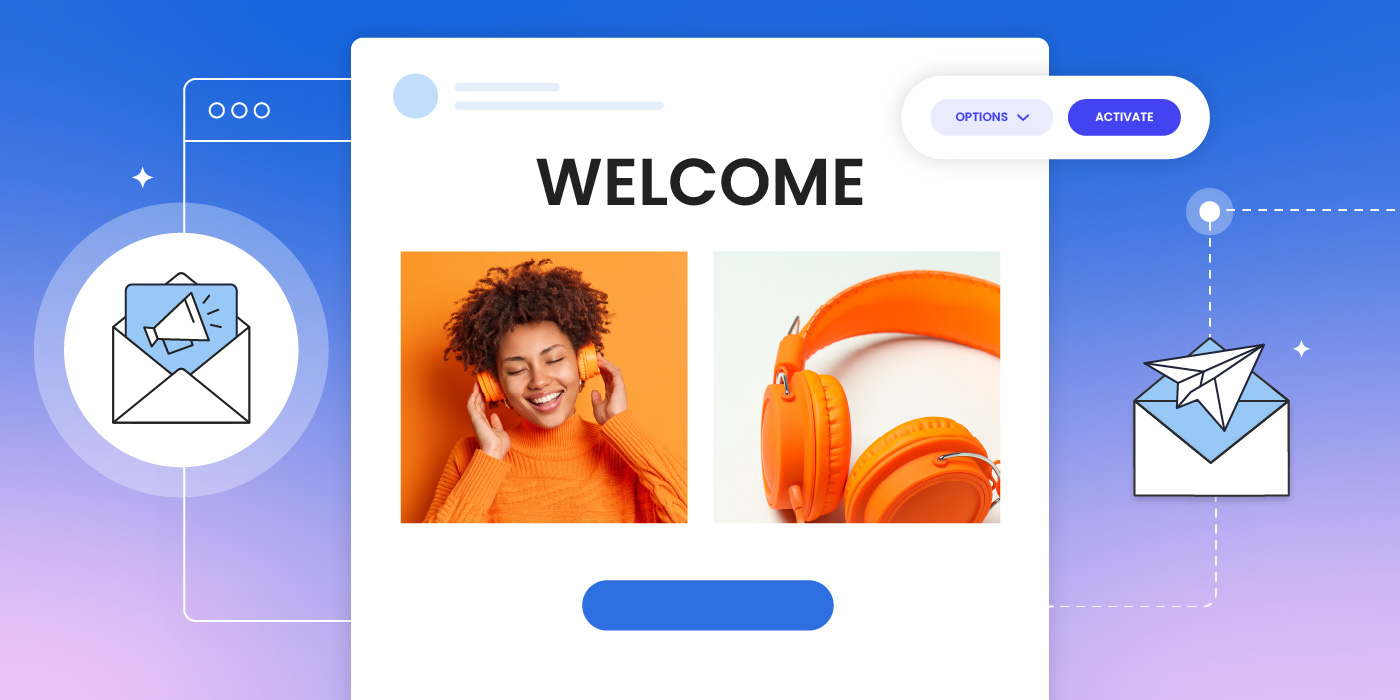
We’re excited to announce the launch of our Automated Welcome Emails feature, designed to make connecting with your new subscribers easier than ever.
So, what’s a welcome email? It’s the first email your new subscribers get, and it’s more than just a “hello.” You can use it to send a freebie, share a webinar link, or introduce them to your brand – all automatically. By getting this set up, you can build trust from the start, keep your audience engaged, and even drive sales from day one. And the best part? We’ve made it incredibly easy. Even if you’re new to this, you’ll be able to craft effective and engaging welcome emails in no time. Plus, with our selection of templates, you’ll find the perfect design to match your needs – whether you’re sending a freebie or simply greeting new subscribers.
Why does this matter for your business? A warm, well-timed welcome can set the tone for the entire customer relationship. With our easy setup, you’ll be able to welcome new subscribers instantly, build stronger connections, and boost your marketing results.
Ready to boost your subscriber relationships from day one? Log in to your SiteGround Email Marketing account now and start creating your automated welcome emails.
📚 Check out our welcome email guide, filled with helpful tips and examples to help you craft the perfect welcome emails.
More Tools to Enhance Your Email Marketing
Connect Your Email and Social Media Strategies with Integrated Icons
We’re excited to introduce social media icons in your emails. Now you can:
✅ Seamlessly connect your email and social media strategies
✅ Grow your social following through your email campaigns
✅ Provide subscribers with multiple ways to engage with your brand
Ensure Your Subscribers Are Genuinely Interested with Double Opt-In
Boost your email deliverability and ensure you’re reaching genuinely interested subscribers with our new double opt-in feature. This added layer of confirmation:
Make Your Emails Easily Shareable with View in Browser
“View in browser” is a powerful tool for increasing your reach through social sharing. Recipients can now easily share your email content on their social networks, expanding your audience beyond your subscriber list.
These new features work in harmony to grow your email marketing effectiveness. Picture this: A new subscriber joins your list. They immediately receive a personalized welcome email, confirm their interest through double opt-in, share your content using the ‘View in Browser’ feature, and connect with you on social media. This seamless process nurtures the relationship from the very beginning, creating engaged subscribers who are more likely to become loyal customers.
Start Exploring These New Features
These powerful new features are available now in your account. Log in today to start exploring.
If you’re not yet a customer, now’s an excellent time to discover what SiteGround Email Marketing can do for your business.
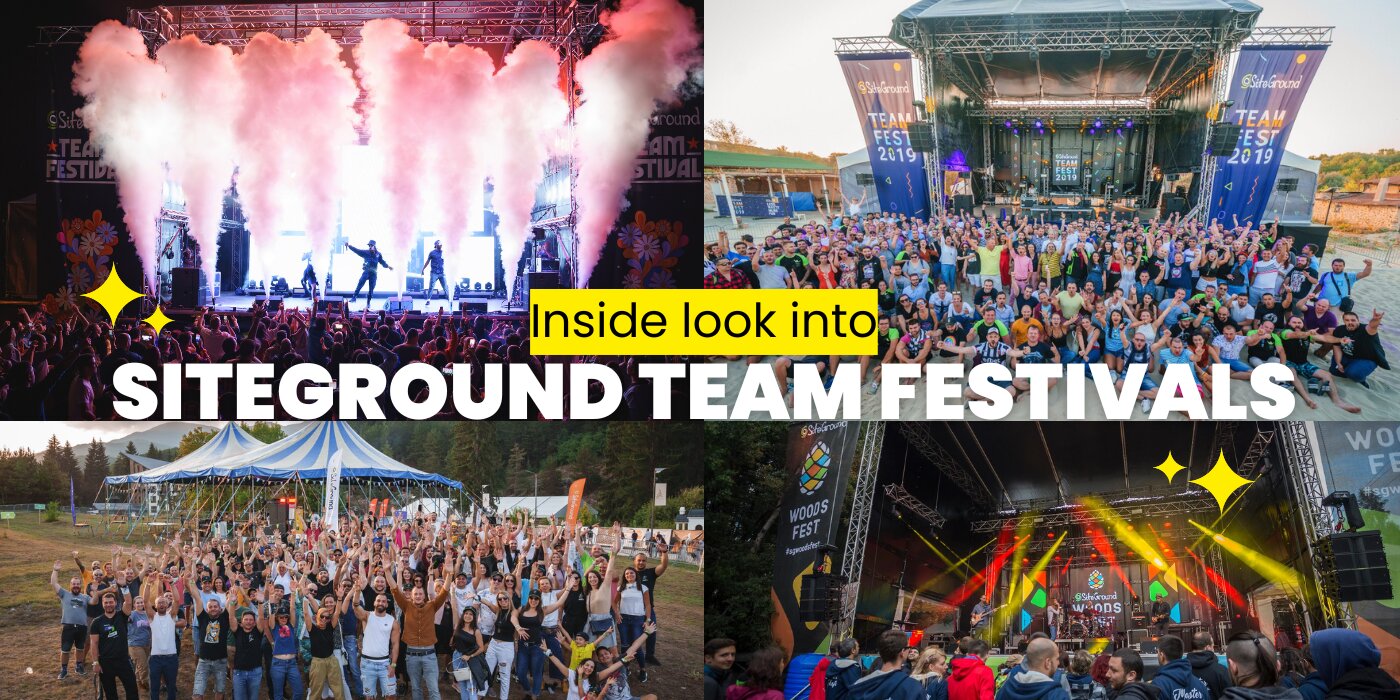
As the Summer festival season is coming to an end, there is one more major event on SiteGrounders’ work calendar: our Annual Team Festival. This is the 7th edition of the Sitegrounders-only event, which is even more special, since we’re also celebrating our team’s 20th anniversary! Curious what a day at the festival looks like? Here’s a sneak peek:
The story behind our team festival
We always go above and beyond – with our services, our products, and our technologies – and our team-building events are no exception. Each year we gather all of our 500+ employees in one place and celebrate our successes with a two-day full-swing crafts and music festival. But how did this epic fest idea come to life?
It all started back in 2015 when we realized our usual team gatherings just weren’t cutting it anymore. We had just grown to 300 team members spread across three different locations and we needed something fresh to bring us all together in celebration of our team efforts, all while keeping our 24/7 services running smoothly.
Our company culture has always been very people-driven, so we decided to ask our team to come up with their dream team-building idea. Each team had to come up with their own proposal and present it to everyone, who would then vote for the best proposal. That’s how the SiteGround camp festival idea was born – dreamed up, designed and run by our own team. We wanted it to be for us, by us, to highlight our team talents and values.
Since then, we’ve grown from 300 to 550 people, and so have our festivals through the years – without a single disruption in our 24/7 stellar work and services.
The Past Festivals
Here’s a quick trip down memory lane to show you just how far we’ve come.
The One When It All Started
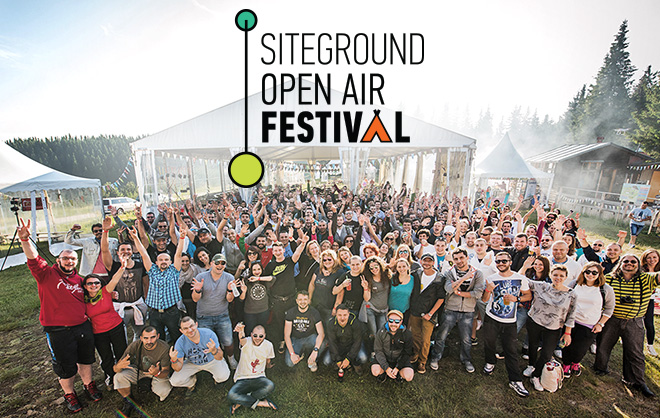
We created a SiteGround Camp with the theme “Share. Play. Enjoy.” The camp was set in a beautiful meadow with mountain views. That year also started another tradition: every year, a group of musicians from our own team opens the stage.
The One By The Sea
The second one was on a beautiful beach on the Northern Black Sea coast. Then, for the first time, we built our own stage with four amazing bands, who performed for the huge SiteGround family while we jumped, danced, and sang the night away.
The One In The Woods
For the next one, we took our 400+ team to the woods, and we focused even more on craftsmanship and fun. We added even more workshops to the program and welcomed even more music artists to the stage, opened by our own band, fittingly called “Technical Issues.”
Read on to find out how our 3rd team festival went, where we were and why we believe it represented our core values and company culture!
The One All About Recycling
For our 2019 edition, we returned to the seaside and crafted a festival program centered around the zero-waste idea and way of life—while keeping it fun, of course! If you think those two can’t mix, just check out the photos above and feel the energy of that year’s event.
The Most Epic One So Far
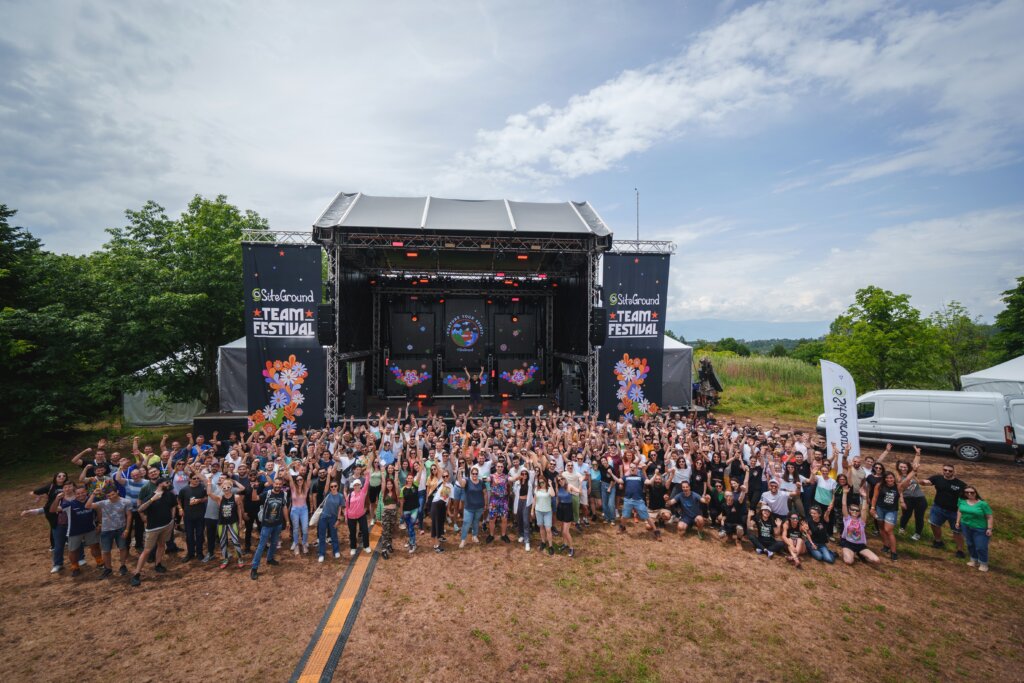
Our 2023 Team Festival was all about bringing back the “for us, from us” magic! We had over 10 awesome workshops, tons of sports activities, and an EPIC concert with Rudimental as our stage headliner to entertain our 500+ team.
This June marked the 5th SiteGround Team Festival, but for me it was the first one. It turned out to be more than a team building event – an experience.
Fast Forward to Today
This year’s extra special because we’re celebrating our 20th anniversary! We’re taking our festival’s concept to the next level. With over 5000 sq m. of festival grounds, we’ve packed in more workshops and activities for not one but TWO FULL FESTIVAL DAYS. This means DOUBLE the excitement. And even more, we’ve prepared not one but TWO epic concerts with international headliners, and of course, our own “Technical Issues” band will be kicking things off.
Oh, and here is the sneak peek into the backstage of building our own festival we promised you earlier.
We won’t say much more, because we want the event to speak for itself. For live updates straight from the Festival, follow us on Instagram and Facebook. And don’t miss the EPIC aftermovie coming soon!
The Stevie Awards are the world’s top honors for customer service, contact center, business development and sales professionals. This year’s awards had more than 3,600 nominations from organizations in 62 nations and territories and Stevie Award winners were determined through more than two months of judging by the average scores of more than 300 professionals worldwide.
SiteGround’s Bronze Stevie® Award is presented for the excellent work shown by the company Customer Care team and their exceptional results, also underlined in the honorable Jury evaluation: “It is impressive how SiteGround Hosting increased the number of positive reviews received from clients, from 11000 reviews (4.6 score) in January 2023 to above 16000 reviews (4.8/5.0 score).”
Our commitment to exceptional customer service is the cornerstone of SiteGround. By prioritizing customer care, meticulous attention to detail, and expert support, we’ve cultivated a loyal following and established ourselves as a global leader in the technology industry.
“Our pursuit of exceptional customer experiences is relentless. The dedication of our team, combined with the invaluable feedback from our customers, fuels our drive to continually improve and exceed expectations,” said Reneta Tsankova, Chief Operations Officer at SiteGround.
Details about The International Business Awards and the lists of Stevie Award 2024 winners are available at www.StevieAwards.com/IBA.
PHP 8.4 is now out of beta. The official release was announced on November 21th, 2024 and is fully available on SiteGround! Read our latest comprehensive article to learn more about the new features and how you can use it.
We are glad to announce that PHP 8.4 (Beta 3) is now available for testing on all SiteGround servers – way ahead of its scheduled official release date on November 21, 2024. Once again, we are among the first companies to provide PHP 8.4 (Beta 3) for testing on our hosting platform. Thanks to our unique PHP server setup, we are able to offer the latest PHP versions for our clients to test safely on their websites hosted with us.
Discover more about the new features that the latest PHP version brings to the table in the next section.
What’s new in PHP 8.4 (Beta 3)
This latest version introduces some very important new features that will improve the PHP development experience even further. Let’s dive into some of the biggest changes that PHP 8.4 (Beta 3) offers:
Property hooks
One of the new features in PHP 8.4 (Beta 3) includes the ability to define property hooks which will eliminate the need for a lot of boilerplate code. This is one of the biggest changes in PHP history. Property hooks will help remove a lot of getters and setters by allowing each property to define its own get and set hooks. What’s more, an exciting addition is that in PHP 8.4 (Beta 3) property hooks can be defined in interfaces.
We can take this pretty standard class for example:
<?php
declare(strict_types=1);

class Website
{
   private $domain;

   public function __construct(string $domain) {
       $this->domain = $domain;
   }

   public function getDomain(): string {
       return $this->domain;
   }

   public function setDomain(string $domain): void {
       if (strlen($domain) === 0) {
           throw new ValueError("Domain must be non-empty");
       }
       $this->domain = $domain;
   }
}
As of PHP8.4 (Beta 3) we can use Property Hooks to achieve the same result with the following syntax:
<?php
declare(strict_types=1);

class Website
{
   public string $domain {
       set {
           if (strlen($value) === 0) {
               throw new ValueError("Domain must be non-empty");
           }
           $this->domain = $value;
       }

       get => $this->domain;
   }

   public function __construct(string $domain) {
       $this->domain = $domain;
   }
}
newwithout additional parentheses
Another new feature that will save lots of boilerplate code is that you don’t have to wrap newly created objects within parentheses anymore in order to be able to chain methods on them.
What’s more, it works not only for methods – you can also chain properties, static methods, constants – basically whatever you want. Bottom line is that the new feature will simplify the syntax and make the code more concise and readable.
Example:
The “class member access on instantiation” feature was introduced in PHP 5.4.0. Since then constants, properties and methods can be accessed on a newly created instance without an intermediate variable, but only if the new expression is wrapped in parentheses:
class Website
{
   ...

   public function getDomain(): string {
       return $this->domain;
   }
}

// Valid syntax
$myDomain = (new Website('siteground.com'))->getDomain();

// Invalid syntax until PHP8.4
$myDomain = new Website('siteground.com')->getDomain();
New Array functions
Another notable change in PHP is the introduction of several new Array functions. PHP 8.4 introduced several new array functions with callback function:
array_find()
A function that returns the value of the first array element that matched the condition. If none of the elements matched the condition, the function will return `null`.
array_find_key()
Returns the key of the first element for which the callback was true. If none of the elements matched the condition, the function returns `null`.
array_all()
Checks if the callback returns true for all of the array elements
array_any()
Checks the callback returns true for any of the elements of an array.
These new functions make it easier to search and manipulate arrays based on custom conditions which in terms will lead to cleaner and easier to read code.
How to test PHP 8.4 (Beta 3) on SiteGround servers
As a SiteGround client, you can easily test PHP 8.4 (Beta 3) on your website. Simply log in to your Site Tools > Devs > PHP Manager section and you’ll be able to replace the current PHP version used by your site with PHP 8.4 (Beta 3) with a single click.
Please keep in mind that PHP 8.4 (Beta 3) is mostly available for testing purposes and as usual, we strongly advise you not to use it at your production site before its scheduled official release date (November 21, 2024).
If you need to test PHP 8.4 (Beta 3) with your existing site, we recommend that you create a new site for testing and clone your production site into it to test different things. For this purpose, you can use our WordPress Staging tool. While testing, make sure that nothing fails and check your log files to see if any warnings or errors appear. Once you are done testing, you can simply delete that site.
Wrap-up
At SiteGround, we are constantly working to introduce the newest PHP technology ahead of the others. That’s why we are excited to provide our clients with the latest PHP version which brings to the table some big improvements that could significantly enhance the PHP development experience. Take your time to test the new version before the official release date and stay tuned for more updates from the PHP community.
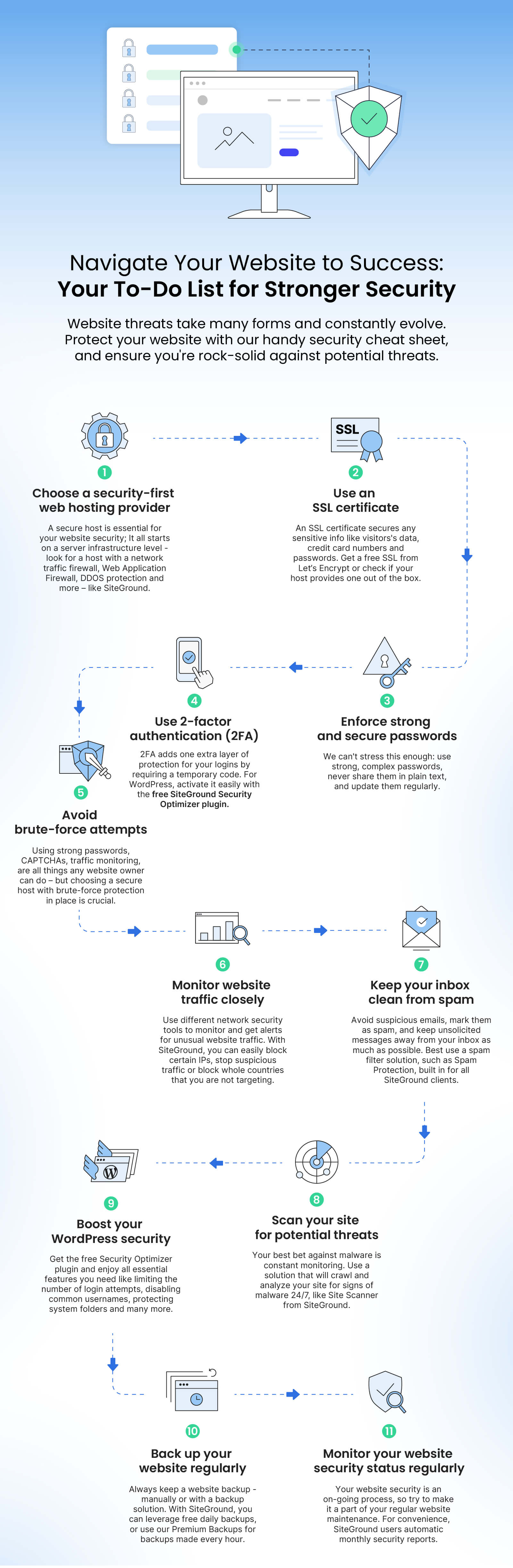
On your journey to a more successful online presence, there’s one essential step you should never neglect – website security. At SiteGround we’re constantly updating your security arsenal with out-of-the-box security technology and additional features. But there are a few extra steps you can take to protect your site so that when your online business gathers speed, you and your clients have ultimate peace of mind.
Your Ultimate Website Security Improvement To-do List:
Website threats take many forms and constantly evolve: phishing, malware, ransomware, DDoS attacks, identity theft, customer data leakage, and even human error. To protect your website on multiple levels, we’ve compiled an extensive but easy-to-follow list with actionable tips. Complete each step to make sure your website is rock-solid against potential threats.
1. Choose a hosting provider that safeguards server infrastructure
💡WHY: Choosing a secure web hosting provider is the first step towards a secure website. A good hosting provider would protect your website on various levels, starting with their servers’ infrastructure security. Some essential and effective security measures on server-level include a network traffic firewall, Web Application Firewall, DDOS protection and more. All these help filter bad traffic and block brute-force attacks, denial of service, malware injections, and others.
❓HOW: When choosing or switching to a new hosting provider, research their hosting infrastructure and security measures provided. Check their website for security tech info or better yet, contact them directly with specific questions.
At SiteGround, we not only provide all essential security measures, but we go the extra mile. Instead of making them operate stand-alone, we have built a Central Security System that ensures all our servers are protected at all times by constantly gathering and analyzing data from all individual server security systems, and distributing smart security rules, applied to all machines. At SiteGround, your website is safe with:
24/7 server monitoring system that checks the server status every 0.5 seconds, far more often than standard monitoring systems in our industry. On top of detecting and fixing current issues, it also foresees and prevents a variety of problems automatically.
Smart web application firewall system on server-level that monitors the traffic and prevents hackers from exploiting the most popular CMSs and their plugins. Our Security Team constantly creates new custom security rules and adds them to our smart WAF to protect sites hosted with us out-of-the-box.
Powerful AI anti-bot system that stops malicious traffic before it reaches our customers’ websites, blocking between 25 and 30 million brute-force attempts per hour across all our servers.
Daily geographically distributed backups, stored in a data center location, different from the one hosting the live account, and Premium Backup service that provides up to 60 additional backup copies of our clients’ websites and allows downloading all backups to our clients’ local machines.
The latest software versions, such as the default PHP 8.2 and the latest MySQL 8 that are used on all SiteGround servers. It’s important that your software is up-to-date at all times, because older software versions inevitably become vulnerable to hacker attacks with time.
2. Protect your data with an SSL certificate
💡WHY: Having an SSL certificate on your website is a must and an industry standard. Here are some of the main reasons why you should have one – an SSL certificate secures sensitive information, such as credit card numbers, IDs, passwords, messages, etc. by encryption; verifies your website’s identity; and ensures that your website meets the requirements of search engines which flag unsecured sites.
❓HOW: As a website owner, you can get a free SSL certificate from Let’s Encrypt, for example, or you can ask your hosting provider whether they offer SSL certificates. As a SiteGround client, you get free Standard and Wildcard SSL certificates with all our hosting plans, for all your websites. Мanage your active SSL certificates easily from your Site Tools control panel – just go to Site Tools > Security > SSL Manager. Once logged in, you can also switch from the free Standard SSL to the free Wildcard SSL (for medium-sized websites), or upgrade to the Premium Wildcard SSL (for large business websites).
3. Enforce strong and secure passwords
💡WHY: The password for logging in to your website admin panel is one of the first things that hackers will try to crack. If your password is weak, such as your name, or your date of birth, for example, hackers would need just a few attempts to guess it successfully and get access to all your website information. That’s why it’s crucial to use strong and secure passwords for your login.
❓HOW: To have a strong and secure password, make sure you use long passwords, with numbers, uppercase and lowercase letters, special characters, numbers, etc. Never write it down (neither physically, nor electronically), but keep it in a secure password vault management system. And remember to update them regularly, since if you use the same one over and over again, it will get vulnerable at some point.
4. Use 2-factor authentication
💡WHY: Even with the hardest to guess passwords, there’s still a possibility that it can be compromised. This could be due to a human error, or a brute-force attack, where hackers use different combinations to guess your password – on a huge scale, hundreds of thousands of attempts per hour, for example.
❓HOW: To further strengthen your login, implement 2-factor authentication (2FA). It requires one additional step to be completed before anyone can access your data. That’s one more layer of authentication – a temporary dynamically generated code on your phone or email. The 2-factor authentication feature is a click away in the free SiteGround Security Optimizer plugin for WordPress websites.
5. Stop brute-force attempts
💡WHY: Brute-force attacks by bots are a severe global issue for any website nowadays. They cover a huge scale of multiple websites on one or more servers, making it a very serious issue whether your site is big or small, business-critical or just an online portfolio. A brute-force attack is a hacking technique that uses trial and error to guess and crack your passwords, login credentials, and encryption keys, on a massive scale. A successful brute-force attack can cause huge financial losses; steal personal information, such as bank details, confidential medical information, etc.; and many other damages.
❓HOW: There are multiple measures that you can take in order to protect your site from brute-force attacks. These include having strong passwords, limiting the login attempts to your website admin panel, monitoring IP addresses for anomalous behavior, using CAPTCHAs, creating a unique login URL for your website admin panel, and others.
All of the above aside, your choice of web hosting provider plays a crucial role in securing your site against brute-force attempts. At SiteGround, we have developed a sophisticated AI anti-bot system that blocks millions of brute-force attempts per hour.After the system’s latest upgrade, it filters 95% more of the malicious queries by constantly learning from thousands of brute-force attempts per day and adding a traffic validation functionality that minimizes the number of brute-force attacks. SiteGround clients benefit from this advanced system by default, no action needed on their part.
6. Monitor your website traffic closely
💡WHY: As a website owner, you can sometimes notice specific patterns or suspicious traffic coming to your website. Imagine that you monitor abnormally high traffic from a country you’re not targeting, you receive too many spam comments on your blog from а specific location, or any other unusual behavior from a certain geographical region.
In such cases, it would be useful to be able to stop the traffic from that location, as many times it might turn out to be malicious. Stopping the traffic from a specific country could also benefit your business, if, for example, legal requirements prevent you from providing your service in that country, or there are heavy taxation requirements, and others.
❓HOW: To monitor your website traffic, you can use different network security tools that alert you of potential malicious activity in your network, or you can also set up alerts yourself, whenever you encounter login attempts or suspicious activity from certain IP addresses.
SiteGround clients can easily block specific IP addresses or whole countries and stop traffic from countries that are not relevant to your business or online presence. If you are a SiteGround client, control your website traffic in Site Tools > Security > Blocked Traffic.
7. Keep your inbox clean from spam messages
💡WHY: Dealing with multiple emails is part of our daily work routine nowadays. Yet, when there are a number of spam messages in your inbox by the hour, the task becomes even more tedious and annoying. You have to manually process each email and mark as spam those that sneaked into your inbox. But there’s more to spam than simply a cluttered inbox – it’s dangerous, because it can be the main source of phishing and other hacker attacks. It goes the other way round, too.
Spam messages can negatively affect not only the receiver, but the sender as well. If another user on your server has sent uncontrolled spam, then there’s a chance that your entire server address will get blacklisted. This will affect you when you try to send an otherwise legitimate email, which might not get to the recipient simply because it’s coming from an already compromised server address.
❓HOW: First and foremost, make sure to not delete spam messages from your inbox, but rather mark them as spam, so that your spam filter will know not to let any more messages from this address into your inbox. Second, if you can tell that the message is spam, even before opening it, then delete it without clicking on it, or downloading anything. Such messages can contain malicious software! Other rules to follow in order to avoid spam, include keeping your email address as private as possible, unsubscribing from email lists, or simply using a third-party spam filtering service.
SiteGround clients enjoy an in-house built Spam Protection solution that keeps both incoming and outgoing spam away. Our solution not only efficiently minimizes the amount of spam messages delivered to your inbox, but it also constantly learns from your email reading behavior and actions to add even more custom rules for spam messages. As a result, our system blocks 12 Million spam emails from even reaching your mailboxes every day, while 600,000 get filtered directly in the spam folder. It also extremely efficiently detects and stops outgoing spam messages from our servers, giving you an extra layer of security.
SiteGround clients have our built-in Spam Protection features enabled by default, but can also easily control them via an easy interface to allow and block senders. They simply need to go to Site Tools > Email > Spam Protection and directly tell the system how to treat a certain sender by adding an email address or an entire domain to their block/allow lists.
8. Scan your website for potential threats regularly
💡WHY: Hackers invent new and smarter ways to “hijack” websites, by the hour. Your website can get infected with malware in numerous ways – compromised login credentials, corrupted or outdated software, infected or fake plugins and themes, and many others. If your site gets infected with malware, this can have serious consequences on your whole business, not only on the website itself.
❓HOW: Your best bet against malware is constant monitoring. However, as a website owner, you have many other responsibilities in regard to your website. You simply cannot monitor it for suspicious behavior on your own 24/7. But your hosting provider can and should.
With SiteGround, our clients can activate Site Scanner – a security add-on that crawls your websites daily, warns you of potential malware and other security threats, and provides tools for reaction if your sites are under attack. Here’s how Site Scanner protects your websites.
9. Boost your WordPress security
💡WHY: WordPress is the most popular CMS platform in the world, and as such, it’s also a preferred target for hackers. Even though all of the above tips apply to WordPress as well, there are a few extra things you can do to make sure that your WordPress website is fully secured against malicious threats.
❓HOW: We have identified some important, yet easy-to-follow tips to help you take special security care of your WordPress website:
Keep your WordPress version and plugins up-to-date
It’s important to keep your WordPress version and plugins up-to-date with their latest possible versions, because hackers use any vulnerability or backdoor to get access to your website’s files, sensitive information, etc. Simply log in to your WordPress admin and go to Settings or plugins to check if there’s a newer version.
At SiteGround, we automatically update all WordPress sites hosted with us to the latest stable WordPress version, as well as the free plugins, depending on clients’ settings in their Site Tools > WordPress > Autoupdate.
Review your user roles and permissions
Make sure to review and clean up inactive users or limit access for certain users only to the information and resources they require for that specific role. For example, let the administrator level accounts only for the people responsible for the technical aspects of your site, but give edit access to your blog only to users that manage content or users on your site.
Avoid common usernames
Remember that your WordPress login consists of your username and password. However, all WordPress installations by default come with the user “Admin” which means that hackers already know one of the two pieces of your login information. That’s why it’s important to change your username to a custom one.
Limit login attempts
Another way a hacker would try to crack your username and/or password is to try and guess them on the login form with numerous consecutive attempts. What you can do is limit the number of consecutive unsuccessful login attempts by blocking their IP for a certain period of time after they reach a set amount of attempts. With the free Security Optimizer plugin by SiteGround, you can activate this feature with a click of a button.
Clean up unused or outdated plugins and themes
Unused or outdated plugins and themes, including deactivated ones, also open the backdoor for hackers to get to your website. To avoid that possibility, simply delete any unused plugins and themes on your website.
Add an extra layer of security with a trusted plugin
With the free Security Optimizer plugin available for all WordPress websites, you get all the security features you need to protect your WordPress website. Its user-friendly interface allows you to enable a variety of safety features with a few clicks – from hiding your WordPress version, locking and protecting system folders, to hardening different aspects of your login security, as well as monitoring visits, bots, etc. in a detailed activity log.
10. Back up your website regularly
💡WHY: Even if you’ve taken multiple security measures, unexpected events still happen – an update might go wrong, you can accidentally break something on your site, or any other unforeseen circumstances can require you to revert to an older version of your website. Just like an UNDO button in real life. That’s why it’s a must to keep several backup copies of your website in order to revert any mishaps in due time.
❓HOW: There are two main ways to back up your website – manually and with a third-party backup service. If you want to back up your site yourself, you need to log in to your web hosting account, locate the directory with your website’s files, use an FTP client to download this directory on your local computer and store it in a safe place. This is useful but can be impractical because you never know when mistakes will happen – so having an automated backup is crucial.
At SiteGround, we know how often backups can save an emergency situation with your website. That’s why we have a sophisticated system for creating and keeping backups of your website automatically. We generate a backup of your website every day and store each for up to 30 days. What’s more, we keep these backups in a data center location different from the one hosting the live account, which is an extra layer of security for your data, in case something affects your whole data center. SiteGround clients can easily manage backups from Site Tools > Security > Backups.
For the ultimate peace of mind of our clients, we have recently launched our new Premium Backup service that provides clients with automatic backups made every hour, on-demand backups for a full backup of their sites (whenever they need it), 7 additional automated daily backups on top of the ones included in their plan, and allows for downloading all backups to their local machine.
11. Keep an eye on your website security status regularly
💡WHY: Even if your site is secured and backed up, you still need to check its security status regularly. It’s important to know how secure your site is and whether the security level has changed – keep an eye on how many attacks have been mitigated, or find new ways to further protect your site from incidents.
❓HOW: To check your website security status, you can use a free open-source web security testing tool. There are many such tools available online. If you’re using WordPress, you can also run a security scan with various free plugins to scan your website and detect vulnerabilities. After you check the status of your website security, it’s important to analyze the results and take measures where necessary.
SiteGround clients receive free monthly security reports, delivered straight into their inboxes. In these reports, they get a summary result of their site’s security check, along with actionable advice on how to reduce the risk of malicious attacks, if there are any weak areas identified. All this information is compiled in a user-friendly format, and the feature is enabled by default for all our clients. To manage their preferences for the reports for any of their websites, they simply need to go to their Client Area > Click on User Avatar > Notification Preferences and click the pencil icon next to Monthly Security Reports.
Wrap-up
A website is the most important and valuable digital asset you have, so you would want to make sure that it’s as secure as possible, time after time. By constantly reviewing and implementing new security measures, you ensure your site’s at maximum security level. This way your business, your visitors’ information, and your reputation will be safe during any business season.