

Most web agency owners don’t think about hosting until something goes wrong. Jesmond Darmanin thought about it for two weeks straight: during a “holiday” in Greece, on his phone, with 85 client websites to move.
Jesmond Darmanin has been running the web design and branding agency Storm Design since he was 17. Twenty-five years later, it’s one of Malta’s most established digital agencies. For years, he managed his own servers through cloud providers. It worked, until it didn’t.
That was enough. He moved everything to SiteGround, and the hosting emergencies that used to be a regular part of his life simply stopped. But it wasn’t always that way.
What self-managed hosting really costs you
For a technically capable team, managing your own cloud server seems like the smart, cost-effective choice. Full control, low monthly bill. But what it comes down to is that every security gap is yours to catch, including the ones introduced by a routine software update.
The hack that took 85 sites offline
A dreaded update had opened a vulnerability. One hour before his flight to Greece, Jesmond got the notification: his server had been compromised. Eighty-five client websites were down or barely loading.
- Emergency remote cleanup by an external company: €1,000
- Server back online for only two days
- Then compromised again, through a backdoor the cleanup had missed
The maintenance problem
The emergencies were just part of it. Every software update required a server restart, and every restart meant downtime. With clients in different time zones, there was no safe window to take things offline. Complaints accumulated.
“I did lose clients because of the downtime. They told me we’re going to have to switch hosts.”
The client cost
Hosting issues were costing Storm Design somewhere between 5–10% of its client base every year. When other businesses depend on you to keep their websites running, that’s not just lost revenue. It’s trust you don’t get back easily.
The checklist that led to SiteGround
With 85 sites needing an immediate new home, Jesmond wasn’t shopping casually. He needed something specific:
- Security handled at the hosting level, not by his team
- Reliable, automated backups
- One back-end for managing all client sites
- A migration process that didn’t require moving databases by hand
SiteGround wasn’t a completely unfamiliar name. He’d worked inside a client’s account before and had seen the tools. When he cross-referenced it against other well-known providers, the reputation held up, and he decided to give it a go.
What followed was not the relaxing Greek holiday he’d planned. He completed most of the migration from his phone, on buses and trains, while the trip carried on around him.
The tools that cut hours from the weekly workload
The improvements Jesmond noticed after switching went beyond traffic and rankings. They showed up in the day-to-day work of managing a growing portfolio of client websites.
Tools that previously required third-party plugins or manual setup were now built into SiteGround’s backend:
- SSL certificates installed in a click
- Automatic backups
- Built-in image optimization
- Staging environments for testing changes before they touched live sites
One-click WordPress login, no individual site logins needed
“The option to simply go into the account and click WordPress login and not have to manually log into the websites: that was a huge time-saving.”
Team access got simpler too. He could set up accounts for colleagues and limit each person to only the sites they were working on: a small thing that makes a big difference when you’re managing multiple clients across a shared environment.
Security handled at the platform level
On the security side, the difference became very real when a client’s site was recently compromised due to a weak password. SiteGround Site Scanner caught the malicious files and blocked them before any damage was done, and Jesmond got an immediate notification.
“Getting a notification about malicious files right away — that’s not something I would have been able to do myself.”
For anyone managing sites on behalf of clients (especially ecommerce) that kind of automated catch is the difference between a minor incident and a very bad phone call.
Coderick AI: Jesmond’s new favourite tool
Beyond the day-to-day tools, Jesmond found an unexpected favorite in SiteGround’s Coderick AI. He’d been looking for a task management tool that could handle client requests and integrate project costing: something he couldn’t find off the shelf. So he built it himself.
“I described what I needed, and let’s say we’re 80% there. It’s already open on my second screen. It became one of my favorite tools very quickly.”
The tool he built lets clients submit change requests directly, which then feed into his to-do list. He can add costs, send approval links to clients, and once approved, tasks move automatically into an in-progress table. He’s now waiting on his next round of credits to keep building.
“I got into the idea of always looking: how can I build something new? It’s a fun tool to work with.”
A year with zero support calls
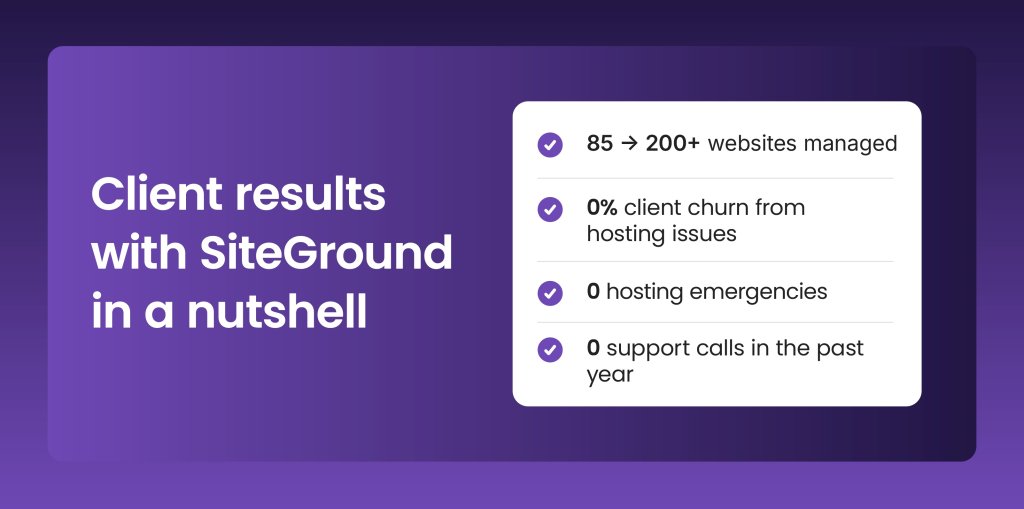
When a hosting platform is working the way it should, you stop noticing it. No alerts, no emergency calls from clients, no late-night troubleshooting. For Jesmond, that’s exactly what happened: he hasn’t needed to contact support in over a year.
The client retention picture changed just as completely. The downtime complaints that had been a regular part of the job stopped. Some of the clients who had walked away came back.
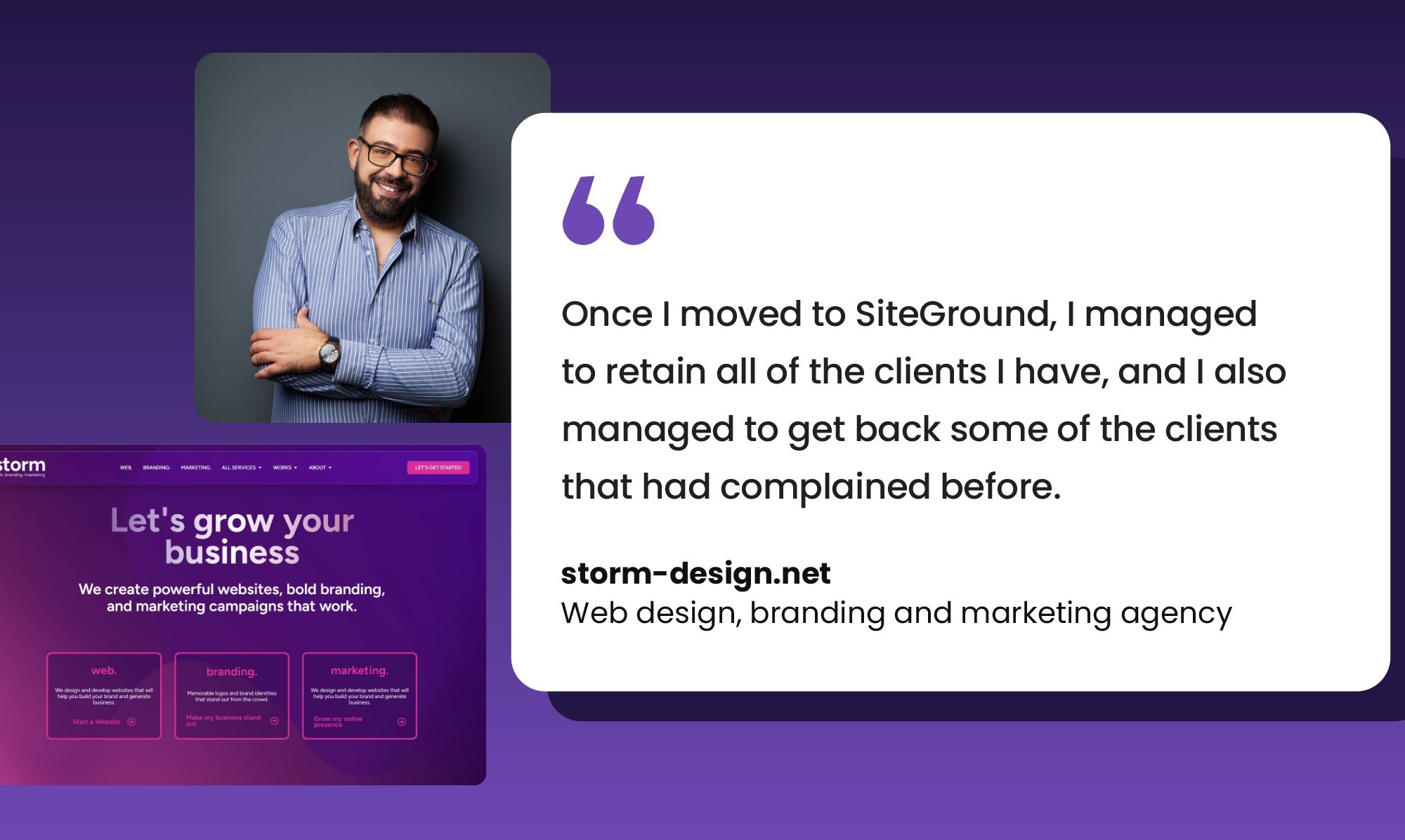
“Once I moved to SiteGround, I managed to retain all of the clients I have, and I also managed to get back some of the clients that had complained before.”
Of course, some businesses closed down along the way (that’s the reality of working with startups), but hosting hasn’t been the reason anyone walked away.
Storm Design now manages over 200 websites. Jesmond travels without a knot in his stomach about what might break while he’s offline: something that anyone who’s ever managed a client portfolio remotely will recognise as no small thing.
“I don’t want to deal with this anymore. That peace of mind was a very, very big one. Compromising on hosting is not a mistake I want to make again.”
Reliable hosting = clients retained
The lesson Jesmond carries from the Greece incident isn’t just about hosting. It’s about what happens when other people’s businesses depend on your infrastructure choices.
“You cannot live a type of life where you’re constantly thinking: is the server okay? Am I getting hacked? That kind of stress, especially once your client base starts to grow, is something no business owner should underestimate.”
The monthly invoice might look cheaper with a self-managed setup. But when hosting issues start costing you clients year after year, the math stops working in your favour. SiteGround ends up paying for itself. Not in traffic spikes or overnight transformations, but in the clients you keep and the emergencies that never happen.
[86]