

Website Challenges 2020: Have You Addressed Them Yet?

In our annual survey, we asked our clients what the biggest website challenges they foresaw encountering in 2020 were, wondering what we could do to help you overcome them. Now that the year is almost halfway through, it’s time to revisit what we’ve done so far to address those challenges and share some insights on how we help you tackle them, as well as tip you what to do about them on your own.  

Cybersecurity is The Biggest Challenge

The majority of our respondents (54%) saw keeping their sites secure as the biggest technical challenge in 2020. And we totally agree with you! Cybersecurity is an ongoing process that should be at the top of the mind of any Internet user, professional or otherwise. 

From the perspective of a web hosting company, here at SiteGround, we know that keeping our sites and users safe is a never-ending task. Hackers and all sorts of web criminals are getting smarter by the day and the constant and rapid evolution of technology leaves many doors open for software exploits. Keeping the software on our servers (like Apache, Nginx, PHP, MySQL, etc.) up to date is the first and most basic line of defense, but nearly not enough.

That is why we have a special team of security specialists whose main responsibility is to keep track of security reports and monitor for potential and unannounced yet exploits. Once they get a confirmation for a new vulnerability, they rapidly act to write custom firewall rules that patch it on day zero and protect the websites we host.

Then there’s keeping up with the latest technologies we can integrate. Take the encryption protocols that guarantee a secure connection between your browser and the server delivering the content. We make sure we always have the most recent one available for our clients to use – we were among the first to deploy HTTP/2, QUIC and HTTP/3, and more.  

At the same time, one of the most frequent threats against any website are the DDOS attacks, which are getting more fierce and prolonged as server resources are getting cheaper over time. That is why our system administrators monitor our servers’ health 24/7 and take immediate actions to divert the bad traffic through software and hardware devices. 

Then, there are brute-force attacks, one of the most common ways to hack a website by guessing their login details. We extend our server-level protection with an in-house AI-powered anti-bot software that monitors for malicious traffic and blocks from 500,000 to 2 million brute-force attempts per day. 

All the security work we do as your host should give you peace of mind, but it would work even better if you follow a few security guidelines yourself: 

  • Use complex passwords and do not share them with anyone. It’s recommended to use a preferably meaningless combination of letters and numbers about 8 symbols long to make sure that guessing or brute-forcing your password is extremely hard.
  • Install an SSL certificate. In case of a security breach, the encryption of the connection will keep your data safe (we offer the Let’s Encrypt certificate for free ).
  • Use two-factor authentication to log into your apps and more specifically your SiteGround Client Area. This will make it quite hard for anyone to log in even if they know your username and password. Read here how you can enable the two-factor authentication
  • Make sure you run on the latest stable version of PHP and WordPress or any other CMS you may be using for your site. Many clients postpone PHP updates, and even the more simple WordPress updates, out of fear that they may break their site and they will need to pay a developer to fix it. But believe us, when we say this – it’s a lot more expensive to fix a hacked website than the few broken queries potentially resulting from a version update. Additionally, we offer Managed WordPress auto-updates and a Managed PHP service, enabled by default for all new accounts, and which means that we will automatically upgrade your PHP and WordPress, so you don’t have to. 
  • We recommend installing a malware scanner as well, directly on your site so you can get an alert in case of a breach and act quickly. You can use a plugin, if it’s a WordPress installation, or use an external feature, like the popular anti-malware scanner we offer.

To find more on the best practices on WordPress Security, we highly recommend to check out our ebook 21 Tips to Keep Your WordPress Secure.

Improving Website Speed is The Second Biggest Challenge

Improving website speed is the second biggest challenge for webmasters, coming at 48% of all respondents mentioning it. There are a lot of things that could be done to improve website performance and just like security, it’s a never-ending task. As a website host, we’ve done a lot of things to boost the speed of websites on our servers, but we’ll focus on some of the more recent ones. 

We have been working on a complete WordPress performance solution built in our SiteGround Optimizer plugin. The plugin makes a connection with the host server to allow sites to take advantage of the caching capacity and also integrates a wide array of front-end performance features, which you can read more about here. 

An even bigger step for our performance-boost this year was the migration to Google Cloud infrastructure, which allows us to use their extremely fast network, high redundancy, and powerful N2 CPUs which offer nearly 40% faster performance

Additionally, with the launch of our new Site Tools, we replaced the Static Cache with a new NGINX Direct Delivery. We no longer serve images, CSS, JS files, and other static content from the server memory, but we use NGINX for direct loading of these files from the SSD instead. This improves browser caching for your site and also makes CDN usage easier and more efficient. Most importantly, NGINX Direct Delivery allows more RAM space to be used for dynamic content caching, without compromising on static content loading speed. Read more here.

Since website speed is such a critical factor, there are some additional things you can do yourself in order to improve performance:

  • Use the SiteGround Optimizer plugin and turn the dynamic caching ON. By default all our sites on all plans have the standard cache (Nginx direct delivery) turned on and it helps tremendously to the majority of the sites. But more dynamic sites also need dynamic caching and even Memcached turned on as well.
  • Turn the SiteGround Optimizer front-end performance features – image compression, using WebP format and lazy loading, minifying CSS and javascript, these may have smaller impact individually, but when added up together, the effect on the page loading speed is spectacular.
  • Use a CDN (Content Delivery Network). CDNs speed up sites immensely by caching up and delivering static content from the closest to the user location, saving precious fractions of time. Keep in mind that a CDN also blocks malicious traffic and even reduces SPAM, so there are other advantages in using one.

If you want to read additional tips on how to speed up your WordPress site, make sure to check the free ebook 21 Expert Tips for an Ultra-Fast WordPress Website eBook

Handling Site Growth is Also In the Top 3 Challenges

About 32% of all our users said that handling the growth of their website was a challenge they expected to experience in 2020. There are two types of traffic that we should consider – expected and unexpected. In the era of Internet virality, you never know when your site will become popular on Reddit or other media and get bombarded with traffic. At the same time, you can reasonably well predict the Black Friday growth and other seasonalities. So here’s how we approach the site growth issue:

Monitor your site’s normal growth

The more your business grows, the more traffic you will get, the more orders will be processed and hence the busier your website will be. There are two indications that your site is growing and you need to evaluate its performance: slow loading of pages and errors on the website (site becomes unavailable occasionally). 

  1. The first thing you should do is try to optimize your site – have a developer review your code, plugins, database queries, and structure and suggest improvements. Starting with simple things like removing old and unused plugins, reducing the number of plugins, activating cache, and going into more complex ones like re-writing some of the code, there are a lot of things that can help at this stage, which are also good for the long-term health of your site.
  2. Once you are sure you have optimized everything you could and you still experience issues, consider upgrading your hosting platform. If you started on shared hosting, maybe it’s time to move to a cloud and configure precisely the RAM, CPU, and space that you need.

Be Prepared For the Unexpected

This is trickier as obviously there isn’t much that you can do for things that you don’t expect, but there are 3 things that can help:

  1. Turn caching on – again, caching is awesome not only because it speeds up your site, but also because it saves server resources, especially RAM, by using the NGINX to load files from the SSD directly. Saving resources means that you will be able to process more visitors at the same time.
  2. Activate CDN – acts the same way as caching, because the CDN caches your content and stores it on many servers worldwide, then delivers it from the closest server to your visitor. Thus it does not use server resources to deliver the information and again your site is capable of processing a lot more visits simultaneously.
  3. Activate autoscaling on cloud – the option automatically and instantly increases your cloud’s CPU and/or RAM resources in times of need, preventing downtimes in crucial moments, such as Black Friday or Christmas shopping.

We hope that we have both given you a report on what we, as your website host, do to help you with your top 3 website challenges this year, as well as ideas on what more you can do yourself to tackle them.

[subscribe_cta]

Faster CPUs, More Data Centers, Bigger GoGeek Plans

When we migrated our infrastructure to Google Cloud Platform a few months ago, we knew this was not just a one-time event but the base for continuous improvements for our customers. Today we are happy to announce that thanks to this move, we are able to perform a massive upgrade to faster CPUs, we have two more data center locations and our GoGeek plan offers more space than before. 

40% Faster Processors 

We will update all processors used to host our clients on the Google Cloud infrastructure. The new N2 CPUs perform roughly 40% faster than the ones we used previously. Both our shared and cloud customers will benefit from faster delivery of dynamic content due to more efficient script execution. With the upgrade, your site is expected to need less CPU seconds than before when serving the same type and number of visitor requests. This generally means more room for growth before you need a plan upgrade. Of course, the benefit for each individual site will be unique, based on its own code and database optimizations. 

The upgrade of our current CPUs will be done in the next few weeks. There will be a 24-hour notification about it in your Customer Area. The upgrade will involve minimal downtime due to a necessary reboot (roughly 15 minutes per server). Upgrades are scheduled to happen during the time of the day with historically least amount of traffic. Basically, that should happen very early in the morning, taking your data center local time into consideration. 

Two new data centers – Sydney and Frankfurt

Another great benefit of our migration to the Google Cloud Platform is that we can now add more data center locations around the world. It is a great advantage that we can now count on a single data center partner everywhere and benefit from their uniform high-quality service. We have been a host of choice for many Australians for the past 15 years and now we are extremely happy to provide a data center location on their own continent – in Sydney. 

A data center in Frankfurt, Germany is also available as a response to the numerous requests for German location by our customers. All new plans for customers from these locations are now activated in the new data centers. Existing hosting accounts can be relocated through the marketplace page in the customer area.

More space for GoGeek hosting plan

Our GoGeek hosting plan is often chosen by people reselling hosting service or hosting multiple sites of their own customers. After the move to Google Cloud platform, we are now able to increase one of the resources our resellers need most — the webspace, without changing the plan price. The GoGeek plans have been upgraded with 10 GB, and now include 40 GB disk space. Existing GoGeek plans have also received this upgrade completely free of charge.

[subscribe_cta]

Even faster WordPress sites with our Speed Optimizer plugin (formerly SiteGround Optimizer)

Even faster WordPress sites with our SiteGround Optimizer plugin

During the past few years, the SiteGround Optimizer plugin has become an essential part of the SiteGround WordPress hosting product. We’re constantly adding new features and improving existing functionality to make your WordPress sites faster. Now, we would like to tell you more about the most exciting changes we have introduced with the latest versions of our plugin. Read below to find out about the most recent front end and media optimizations in the plugin and how to test your site speed easily through your site backend using our cool integration of the Google PageSpeed test.  

Stop render-blocking JavaScripts from slowing down your site

Very often JavaScripts in the site header do not allow the rendering of the rest of your web page until they are fully loaded. With our new feature you can defer render-blocking JS and load the rest of the page without waiting. Thus, your visitors will see a fully loaded page faster. We are aware that some scripts should always remain render-blocking. For example, like in the case of the jQuery script, there might be other scripts that rely on them. To accommodate such scripts, we’ve created an easy-to-use functionality to exclude specific scripts from being deferred. You can find and manage this new option in the Front End tab of the SiteGround Optimizer plugin.

Stop render-blocking JavaScripts from slowing down your site

Avoid unnecessary video loading with our new lazy load options

Lazy load of images has been available in the SiteGround Optimizer for quite some time. When enabled, it stops images from loading until they are scrolled to in the browser. Thus the first visible part of your page is loaded faster without waiting for images, that may never be reached by the visitor, to load at the background. Now you can use lazy load for iframes (YouTube, Vimeo & other embeds) and directly imported videos too. Another new feature allows you to select whether you want to lazy load your site on mobile devices or not.

Avoid unnecessary video loading with our new lazy load options

Use the latest and fastest web image format – WebP

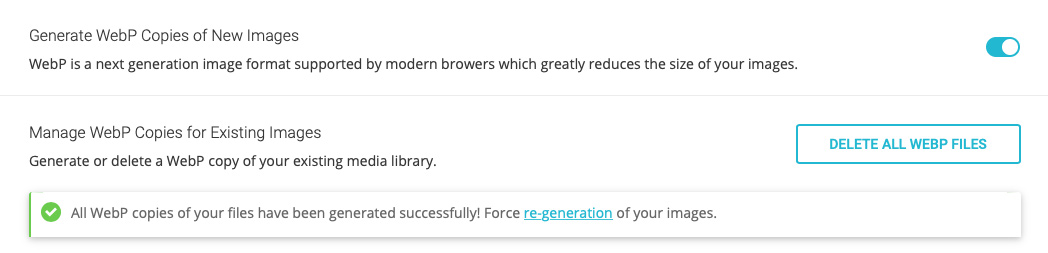
WebP is the newest, extremely exciting image format that has a great potential to optimize loading speed of all images on the web. This format may decrease the size of your images between 25% and 35%. The SiteGround Optimizer now allows you to create webP versions of all the images from your WordPress site with a click. Once you do that, we will load these smaller and faster images for browsers that support this format.

Use the latest and fastest web image format - WebP

IMPORTANT: WebP support is available for websites hosted at SiteGround using our Site Tools. 

Load Google Fonts without slowing down your website

Using multiple fonts, weights and languages from an outside source like Google can easily add up a lot to the number of site requests and slow it down if those requests are done in a render-blocking way. To tackle this, we’ve developed a mechanism to catch loaded fonts, parse them and load them in-line asynchronously. This method proved to be the fastest way to handle Google fonts, the most commonly used font sets online. Once they get cached by your browser, the effect they have on your page speed is reduced to zero.

Load Google Fonts without slowing down your website

Test your site speed with Google Pagespeed 

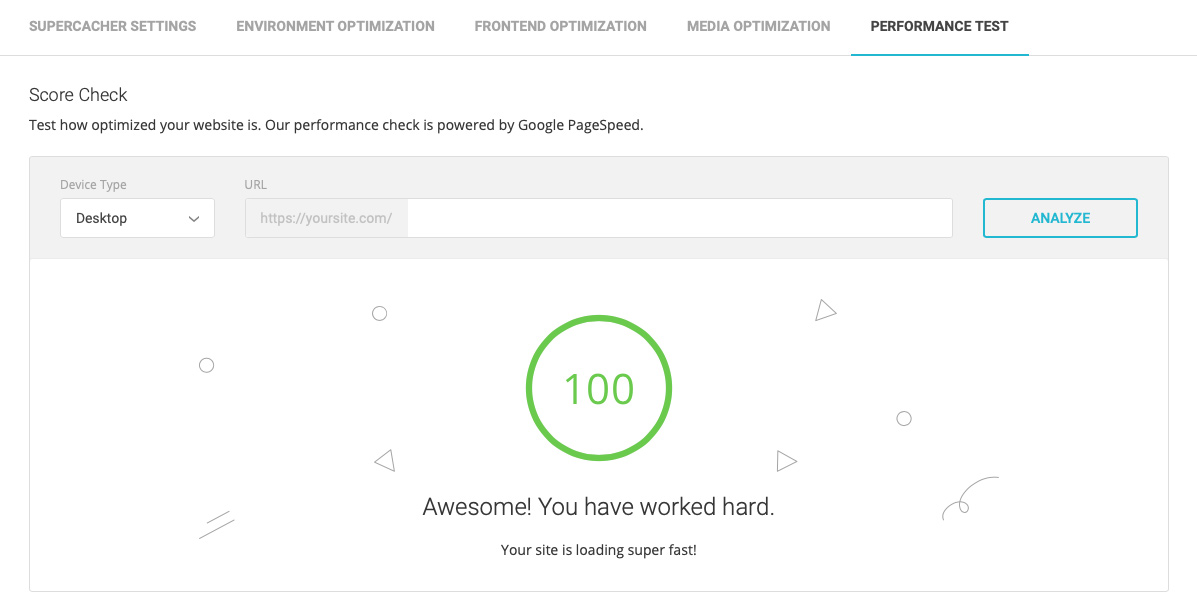
Another great functionality we’ve added to the plugin is the ability to test your site speed using the Google Pagespeed test right from the SiteGround Optimizer interface. Not only that, but we’ve linked each performance recommendation to a specific functionality in the plugin to guide you how to better optimize your site and achieve top performance!

Test your site speed with Google Pagespeed

Although we believe that the plugin now is the best optimization solution for every WordPress site on a SiteGround server, there are still things that we want to implement and will introduce with upcoming updates. Our roadmap is full of awesome new ideas that will soon become available to you. So keep an eye on our blog and the SiteGround Optimizer change log!

[subscribe_cta]

Moving to Google Cloud

We are excited to announce that we have started using the Google Cloud platform to host part of our infrastructure.  We are constantly researching possible new data center options so that we can offer the newest technologies and the highest level of speed and reliability at convenient geographical locations to our clients. During the last year, we have explored services provided by the biggest cloud providers to evaluate who could meet our needs best and the Google Cloud platform stood out. The first Google Cloud locations, which we already use, are in Iowa, USA; Eemshaven, Netherlands; London, UK; and Singapore. All of our new customers get activated in these locations and we have started to move some of the existing US and European customers too.  

Continue reading “Moving to Google Cloud”

We moved from Static Cache to NGINX Direct Delivery

With the launch of our new Site Tools-based infrastructure we have opened a wide range of opportunities to further improve the loading speed of the websites hosted on our servers. The first change we have already introduced to everyone using Site Tools is the replacement of the Static Cache with a new NGINX Direct Delivery. We no longer serve images, CSS, JS files, and other static content from the server memory, but we use NGINX for direct loading of these files from the SSD instead. This improves browser caching for your site and also makes CDN usage easier and more efficient. Most importantly, NGINX Direct Delivery allows more RAM space to be used for dynamic content caching, without compromising on static content loading speed.

Continue reading “We moved from Static Cache to NGINX Direct Delivery”

The Technologies Behind Our New Client Area and Site Tools

We recently announced the launch of our new Client Area and Site Tools. Our COO spoke about it from a business perspective and how important this project is for our future growth. I would like to give you the technical perspective and why we see these new interfaces to be also a technical milestone for SiteGround. 

SiteGround has always been first and foremost a service company. However, for many years, our business growth has been tightly correlated with our technical evolution. The more software we developed in-house, the more the quality of our service was rising and the more our reputation was growing. Not only that, but we have grown the self-confidence of a high-tech company that produces powerful and smart software solutions and is always among the first to implement the most innovative technologies. 

So, when we realized that many of our business ideas were slowed down or made impossible by the limitations of our currently-used underlying platform, we had the courage to think bigger than what’s available on the market and dared to re-create everything from the ground up.

Continue reading “The Technologies Behind Our New Client Area and Site Tools”

SiteGround Now Has QUIC to Make Sites Fast Even When the Internet is Slow

UPDATE

Update: Since the migration to Site Tools we have temporarily disabled the QUIC support on our servers. QUIC has evolved into HTTP/3 and we are currently working on implementing HTTP/3 and adding support for it to our build of Nginx. Once the HTTP/3 support for NGINX reaches a stable version, we will apply it immediately and publish a new blog post with more details on it!

This is a picture of Coron Island in the Philippines, definitely one of the most beautiful places I have ever been to. I truly love it, but their super slow Internet connectivity was the one thing that kept me from going back. It is painful to see how slowly sites load there, considering how much effort we put into optimizing our website technology both on the server and application level. But now, SiteGround has QUIC on our servers and Coron may make it into my travel plans again.

QUIC considerably increases site loading speed when you have poor connectivity. It’s the base for the next generation of Internet protocol coming: the HTTP/3.  And, as usual, we are among the first hosting companies to provide this hot speed technology to all our customers.

Continue reading “SiteGround Now Has QUIC to Make Sites Fast Even When the Internet is Slow”

The New Version of Our SiteGround Optimizer Plugin Is a Game Changer for Your WordPress Performance

SiteGround Optimizer 5.0

Early versions of our SiteGround Optimizer plugin had one single purpose: to connect WordPress with the reverse proxy caching system set up on our servers. Over the years, we have added multiple features like PHP and HTTPS management options that allow even more control over SiteGround’s server environment right from the WordPress backend.

With the new release, not only have we greatly enhanced the existing functionalities, but we’ve also included some of the most popular application-based performance optimizations. Now, our plugin is an all-inclusive performance solution for WordPress sites hosted on our platform.

Our SiteGround Optimizer has always been an invaluable tool in boosting site performance and now we’ve pushed its capabilities even further. Internal speed tests of the new version show an additional 20-30% performance improvement even for well-optimized sites. And when you use the plugin on a site that runs on an old PHP version and/or has poorly-optimized content, the benefit can easily go up to 500%!

Continue reading “The New Version of Our SiteGround Optimizer Plugin Is a Game Changer for Your WordPress Performance”

TLS 1.3 and OCSP Stapling -Two Ways to Make HTTPS Sites Faster

For the last few years, the trend of moving towards encrypted browsing through HTTPS has been one of the most important developments on the Internet. With the free SSL certificates by Let’s Encrypt and Google openly promoting HTTPS protocol over the more widespread, but unsecure HTTP one, more and more sites have started to use SSL certificates.

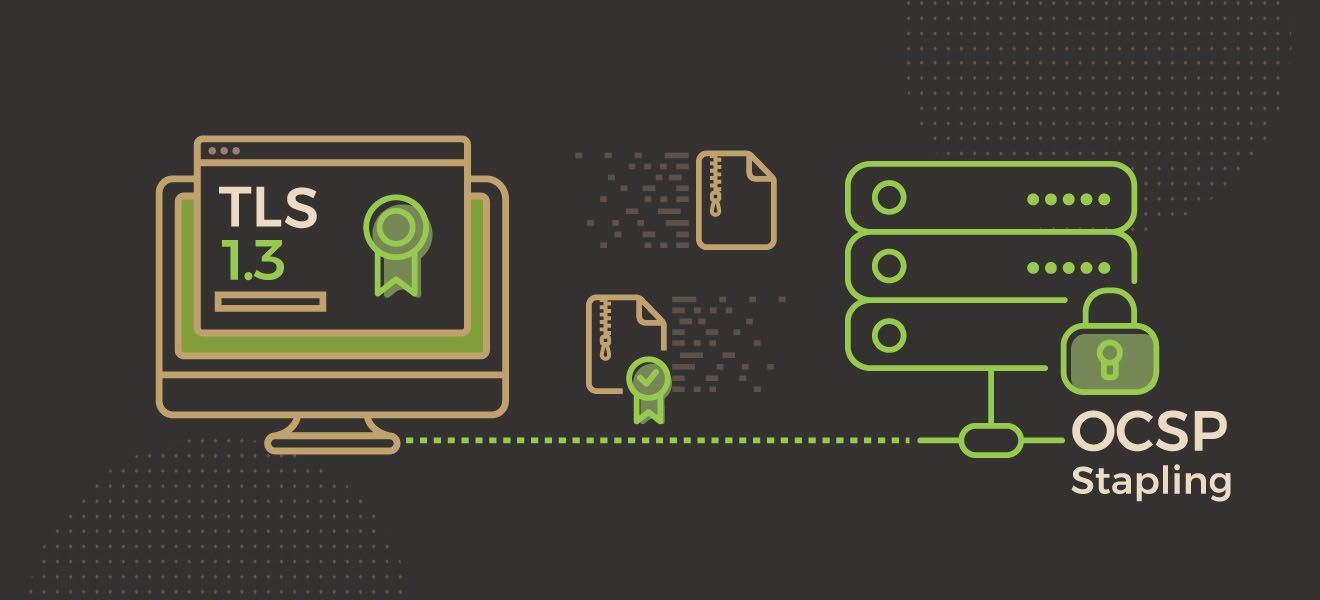
We, at SiteGround, are very excited to announce that two recent developments in this area – TLS 1.3 and OCSP Stapling, which will make HTTPS sites faster, are already available on all our servers. Read below to learn how people using SSL will benefit from these innovations.

Continue reading “TLS 1.3 and OCSP Stapling -Two Ways to Make HTTPS Sites Faster”