SG Site Scanner powered by Sucuri

The service has been gone through multiple upgrades since its launch and is no longer powered by SUCURI. Current information about it can be found on its sales page in Client Area: https://my.siteground.com/marketplace/hosting/sitescanner.

Having a website regularly scanned for security issues is something we have always highly recommended to our customers. Our site scanning service (known as HackAlert until recently) has always been among the best sellers and is used by thousands of our customers to check their websites and inform them in case of malware. Today, we are happy to announce that we have introduced a number of improvements to these services. It is now called SG Site Scanner, it is powered by one of the most prominent web security experts – Sucuri.net, and it is simply awesome!

Why Sucuri?

There are several reasons to change our scan partner from Armorize to Sucuri. First, Sucuri is one of the most respected companies in the website security field. In addition, we have been working in partnership with them for several years. We have relied on their expertise for solving numerous complex security issues. And last, but not least, many of our clients’ websites have also been cleaned by Sucuri from malicious code over the years. That is why it was only natural that we extend this already successful partnership and make it cover the daily site scans too.

What is so good about SG Site Scanner?

More efficient scanning and reporting

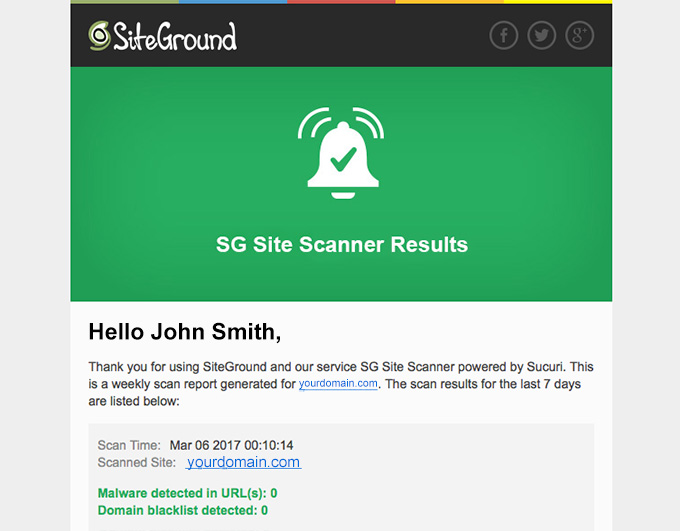
We now scan all the pages that are linked on your website homepage (or any other page of your choice) on a daily basis. This has proven to work more efficiently than the previous system of scanning a limited number of 10 random pages. If any issue is detected, the site owner immediately receives a notification email.

More convenient interface

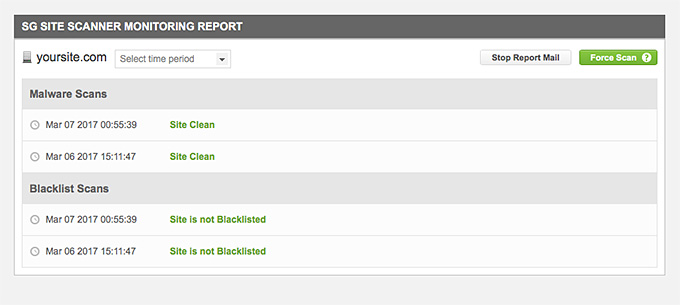
The SG Site Scanner report page is part of your SiteGround Customer Area now. It is no longer needed to log into another interface to access information on the security status of your site. In case of an issue all infected URLs and/or blacklists are conveniently listed in the interface. It also allows you to push an unscheduled scan with a click and you can easily switch on and off the weekly email status reports.

If you already have HackAlert, no action is required on your part — it has already been replaced with the SG Site Scanner. If you are still not using any regular scanning service, we strongly recommend that you start today. You can order the SG Site Scanner for any domain of your choice in your Customer Area.

[subscribe_cta]

Cloudflare HTTPS and WAF Update

UPDATE

Since the launch of our own in-house built Content Delivery Network – SiteGround CDN, we are no longer providing Cloudflare services as part of our hosting plans.

Since we launched our integration with Cloudflare in 2012 we have seen thousands of our customers benefit from its CDN and the site security functionalities. Today we are happy to announce two improvements in the Cloudflare packages we provide. First, the SSL is now supported in the free plan of the service. Second, we have included a very cool security feature – the Cloudflare Web Application Firewall, in our Plus plan.

Continue reading “Cloudflare HTTPS and WAF Update”

Our Affiliate Program in 2016 – Founded on Product Quality and Trust


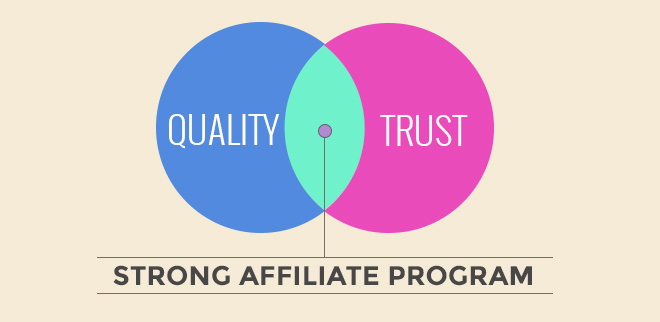
2016 was the most successful in the history of SiteGround. We kept growing in terms of clients and employees and we worked on many new projects that improved further the quality of our service. One of the key factors for our success is the relationship with our affiliate partners. During the past year, we welcomed 63% more affiliates and witnessed a 60% increase in the number of affiliate sales. We have distributed nearly $6 million in commissions.

Continue reading “Our Affiliate Program in 2016 – Founded on Product Quality and Trust”

2016: See Our Recap of Another Great Year!


2016 marked another great year for us – our 12th in the hosting business. We kept growing our team, became a distributed company, upgraded our platform for even more security and stability and did a bunch of other great things! We gathered it all in our annual recap to share our moments of hard work, achievement, and joy with all of you. Join us in celebrating our milestones of 2016!

See our year in review

[subscribe_cta]

Happy HTTPS 2017 to you!

Last year we made a big step towards making the SSL certificates more widely used. We backed financially the super cool open SSL project Let’s Encrypt and we provided an easy cPanel interface, from where all our users can issue free Let’s Encrypt certificates with a single click. This has resulted in more than 40 thousand new SSL installations on our servers. However, there is still a long way to go before we see HTTPS protocol completely replace the insecure HTTP.  Now, in the very beginning of 2017, we are happy to announce that we have taken the next big step in this direction — we have started to automatically issue Let’s Encrypt certificates for every domain that is hosted on our shared servers.

Continue reading “Happy HTTPS 2017 to you!”

2016 Client Survey Results Are Out!

At the end of 2016, we ran our traditional client survey to take a snapshot of the current profile of our users and to measure their satisfaction levels with our service. When we received the first results we were quite excited, but at the same time, we opened them with little fear. After all, we doubled our client base in 2016 and we were eager to see if we have managed to keep the high satisfaction rates of the previous years.

Continue reading “2016 Client Survey Results Are Out!”

PHP 7.0 is Now Default on SiteGround Servers

Last December we were among the first hosting companies to make PHP 7.0 available on our entire infrastructure. Thanks to our system which allows multiple PHPs to be used on one server, anyone could have switched to PHP 7.0 since its zero-day release, while we still kept an older and well-tested PHP version as the global default setting. Now, an year later we believe it’s time for the next step – setting PHP 7.0 as default for all new accounts.

Continue reading “PHP 7.0 is Now Default on SiteGround Servers”

PHP 7.1 Already Available on Our Servers


We are thrilled to announce that one more time SiteGround has made the latest PHP version (PHP 7.1) available on most of its servers just minutes after it was officially released. PHP 7.1 comes with exciting new features for developers. However, it also reintroduces incompatible changes and migrations from 7.0 to 7.1 should be performed with great caution.

In this blog post we would like to:

Continue reading “PHP 7.1 Already Available on Our Servers”

3 Things You Probably Don’t Know About SiteGround Clouds

siteground-cloud

We introduced our new cloud platform built on Linux containers almost 2 years ago. Since then and especially during 2016, we have seen a very dynamic development in this service. There has been a sharp increase in the number of new cloud hosting accounts opened with SiteGround, as well as a threefold increase in the upgrade activity within existing cloud servers. So, we recently took time to analyze our users behavior and we have some interesting findings that we would like to share.
Continue reading “3 Things You Probably Don’t Know About SiteGround Clouds”

When Your CMS Reaches End of Life

End of Life (EOL) in the CMS world refers to the point in time when an older version stops being supported by the company or community that has built it, and all efforts are focused on current and future versions. No support means performance, and more importantly, security issues, which nobody wants.

As a web host, we see our fair share of EOL CMS usage. While we often make our own patches to keep outdated client websites secure and in other cases we notify them about issues, it really is the application’s responsibility. We can’t possibly keep track of every outdated software we host and every security vulnerability that comes with it. Hence, here is more about what to do when your application becomes outdated and no longer supported.

Continue reading “When Your CMS Reaches End of Life”