

How We Won 12(!) Employer Awards in 2020

SiteGround Won 12 Employer Awards in 2020

To put it mildly, 2020 has been an unusual year. Life at SiteGround made no exception, and we had to make lots of hard decisions and changes in the way we work, live, and do business ever since the COVID-19 pandemic turned the world upside-down. In the midst of all that, we were surprised and humbled to receive 12 awards in total for our efforts to create an amazing workplace for our employees and contribute to causes that we believe in.

We won our first two awards for the year from the Employer of Choice Awards – the COVID-19 People’s Choice Award and Best Office and Working Environment, and later on another 10 awards from Career Show 2020, which is the highest number of trophies among all the 326 applications! Here is a bit of background on how we got here, and why it means so much to us, especially now.

Our Company Culture

Ever since the beginning of the SiteGround team in 2004, we set out to build a workplace where people feel they belong. One of our core values has always been to invest in our team’s wellbeing, comfort, and happiness. We kept building on that through the years, going out of our way to take care of our team members in every possible way: working conditions and office environment, health and wellbeing, work-life balance, company benefits and perks, and more.

In 2019, we invested in constructing a new HQ building in Sofia, which is among the most technological and green offices in Bulgaria. Covering an area of nearly 10,000 sq. meters, the new SiteGround HQ is built in accordance with all requirements of the Leadership in Energy and Environmental Design (LEED) certification – the most widely used system for assessing ecological construction in the world. In addition to our carefully crafted office spaces with focus on environmental design, we try to provide our team with all means to keep an essential work-life balance and sustainable life. Those include children’s playgrounds at the office, where colleagues can take their kids, electric cars, free charging stations, and bicycles, shorter working hours on Friday, extra paid days off for volunteering, and more.

In March this year, just before the lock-down, we had just opened our company restaurant with our own chef team, who would cook savoury breakfast and lunch for all our employees in our HQ every workday for free. In all our offices, you could see our teammates having breakfast or lunch together in our kitchens, playing sports in the play rooms, or arguing for their life over some board game. We were also just about to announce the fifth edition of the annual SiteGround Team Festival – an epic 3-day event with our own music stage and international guest bands, open-air festival grounds with lots of workshops and activities, which is the most anticipated event of the year for most SiteGrounders.

Keeping Our Company Spirit During the COVID-19 Pandemic

But then, the Covid-19 crisis started getting worse and worse very fast. We decided to close all our offices indefinitely almost overnight, because of the safety of our team and their close ones. This became a new challenge for us because even though our work happens mostly online, we have never been an online or remote company. We had to act as fast as this sweeping pandemic was developing, and learn to adapt to the new realities on the go.

We cancelled all business travel for our team, and started taking extra safety measures in all our offices since the beginning of February, when the COVID-19 situation started getting serious worldwide. In the beginning of March, we decided to switch to remote work entirely, for our employees and their families’ safety. We encouraged everyone from our team to create comfortable working conditions at home by providing them with all essentials from our offices such as additional work laptops, large monitors, ergonomic work chairs, even desks when needed.

Ensure Our Community Wellbeing

We had to find a way to adapt most of the benefits that we were offering to our team in our offices, to a remote environment. Instead of closing down our newly-opened company restaurant and laying off our entire chef team, we decided to keep it operational under strict safety measures. We launched the SiteGround Home Meals program and continued to provide daily fresh food deliveries to our teammates and their families in Sofia, Plovdiv, and Stara Zagora for free. If you’re a working parent and have to work from home, homeschool your kids, and think about the daily menu every day, this is just one extra thing that we take off your plate to make sure you can work from home more comfortably. 

In order to keep taking care of the wellbeing of our team members, even when we are apart, we launched the SiteGround Online Wellbeing program. It started with an all-team GetFit challenge, which included live streaming of workout routines with our office coach, and online yoga and pilates classes. We also launched online mental health workshops, including one-on-one online counseling with a psychologist, which are entirely covered by the company and strictly confidential. To make sure we keep adding useful online workshops to our wellbeing program, we started doing regular team surveys to ask what topics they were most interested in in these unusual times. Personal finance and online cooking classes were among the top choices, so we added these to the upcoming calendar as well.

Increase Team Communication

When working remotely, and especially in a situation like the COVID-19 crisis that nothing can prepare you for, it’s essential that we keep communicating, both on a one-on-one basis, and as a whole as a company. In addition to our Internal chat channels and online meetings, we started organising regular online games, quizzes, escape rooms, etc. to make sure our team members can still have multiple ways to interact with each other in and out of work, like we used to when we were still in our offices.

Our Founder and CEO started hosting all-team virtual meetings from their homes to discuss the latest company news, updates, and plans or just check in with everyone when we can’t see each other in person. To make sure the conversation was not one-way, we launched a Q&A form before the meetings, and encouraged team members to post questions, then vote for their favourite ones, and the most popular got answered during the SiteGround online Assembly meeting by our CEO and our Founder. Not surprisingly, the top two questions were “When are we coming back to the office?” followed by the paradoxical “Will we still be able to work from home when our offices reopen?”. I guess you can never please everyone.

Our HR team also took the initiative to set up Open Calendar days and encourage each and every one of our 600+ employees to book a call with them to provide feedback, make suggestions and proposals on what more we can do to make our remote work more pleasant and comfortable within the ever-changing situation.

Find New Ways to Make an Impact

In addition to taking care of our team members and their families, we wanted to find new ways to help others in need. SiteGround became one of the main donors of the major hospitals in the main cities of Bulgaria, like Sofia, Plovdiv and Stara Zagora. The total SiteGround donations to medical institutions exceed 545,000 BGN in financial support and medical equipment, including a 60,000 EUR donation to Madrid’s municipality, where we also have an office, to help their battle with COVID-19. We also wanted to engage our employees in our donation initiatives, so we launched an internal program for any team members who have friends, family members working for any medical institution in need anywhere in Bulgaria, we would donate up to 10 000 BGN based on their needs. With this employee-driven donations we managed to spread over 67 500 BGN to medical centres in smaller cities all over the countries.

For the past 9 months, we have added more than 180 new employees to various SiteGround teams, all trained entirely remotely. We can only imagine what it’s like to join a new company in these unusual circumstances and not have the chance to meet most of your team members in person. But hopefully, we live up to their expectations and even in the current situation we manage to show the SiteGround spirit, albeit online. A sweeping 70% of our team evaluated SiteGround’s company environment and our actions during the Covid-19 outbreak with the highest vote among all the 36 companies competing in the Employer of Choice Awards this year. For us, knowing how our team members truly feel and how they appreciate our efforts is the biggest award. It is also a never-ending process, so we hope we’re looking at what’s next together.

Becoming a Customer Care Employee at SiteGround

Employee Journey

It’s a known fact that the process of finding a new job can be particularly stressful. First, finding the right position and company that matches your own values and expectations. Second, going through all the interviews and the nervous-wrecking period of not knowing if it’s all going to work out. We’ve all been there. 

That’s why at SiteGround, we strive to make that experience as smooth as possible. From the first contact, the initial interview to the final round, we try to communicate with every candidate in an approachable and understanding way.

Our Interview Process

If you want a career in the IT sector, but you’re not a strictly technical person or a coder, our Customer Service team is a great place to start. However, you’ll need to bring your motivation and eagerness to learn.

The first thing we’re looking for is the candidate’s potential and language proficiency, not necessarily tech skills, because we know the IT sector, and web hosting in particular, is a pretty niche field. Once you submit your CV, you will be invited to fill out an application form, if we believe you have the potential to learn. The form helps us learn more about you as a person and your passions. After that, short-listed applicants will be invited for an interview with the HR team and our foreign-language supervisors. If you make the cut, the fun begins! 

Training bootcamp – first 2 weeks

Your SiteGround journey starts with a 2-week intensive initial training. We’ll cover everything you need to know about web hosting, our internal systems, communication with our clients, and our company. You’ll learn new things each day, take tests on them, and have homework. In short, back-to-school time! 

Hands-on practice – week 3-6

After the first 2 weeks of theory, it’s time to practice! You will be paired with a mentor, and start communicating with potential customers, one client at a time. By the end of your one-month hands-on training, you will be ready to continue on your own.

Your turn – week 7

After the first 6 weeks, you will continue your SiteGround journey more independently and be expected to start helping clients on your own. In case you have any questions or doubts, the supervisors and your experienced colleagues will be there.

Master Level – week 10-12

Around the 10-12th week, you will hit our Master level! You will start handling up to 3 chats at a time – the maximum number of clients that could be handled simultaneously. Hooray for you!

Upskill Training

Web hosting is a dynamic world. Expect that there will be something exciting and challenging to learn every day. We hold new training sessions regularly to help you be better at work.

Opportunities for Growth

Once you master our initial support channels, you’ll have plenty of opportunities for growth in other Customer Care teams. Just to name a few: Phone, Billing, Supervisors, Technical Support, or even entirely different company departments. Make your first step, and the rest will follow.

Check out our current open positions, and go for it: careers.siteground.com.

How to Organize Online Events – SiteGround’s Easy Guide

Easy guide to online events

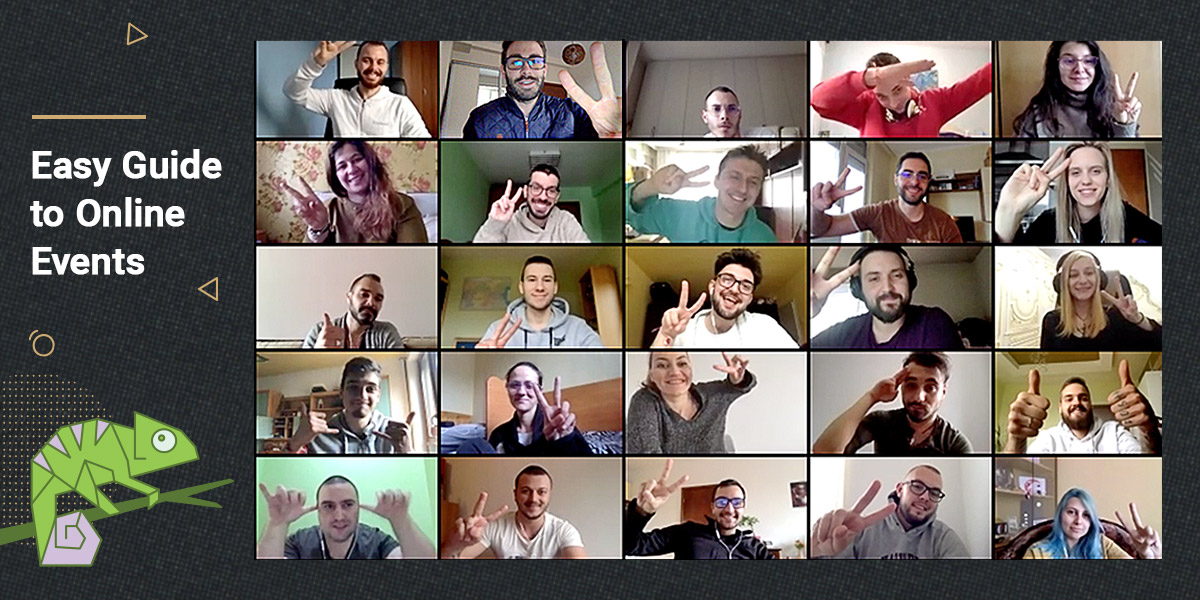
The world is in a difficult place right now, and the online communities aren’t an exception. Everywhere you look, events are being canceled, and for people who network online, this can be really unsettling, as we’re all close and we miss our gatherings. Luckily, we get to stay connected online, and especially now, when everyone is staying safely at home, taking your event online is a smart and easy move. We’ve put a short guide that will help you to organize an online conference in 4 easy and actionable steps, so without further ado, let’s discover them together!

1. Why you need an online event and how to promote it

Мany people find the idea of organizing an online event a little unsettling, but it’s actually not difficult at all. Keep in mind that right now people all over the world need to stay put, and will likely be way more willing to attend a virtual event and pay more attention, considering they are cut out from many of their regular outdoor activities and social circle.

While this is an unfortunate moment for everyone, it’s a good opportunity to strengthen the relationship with your peers and add new people to your local community.

What you need to focus on is promoting your event as much as possible.

Let’s see a few practical tips on how you can capture the attention of your audience:

  • You probably have an account at meetup.com, so newsletter to previous participants is certainly in order. If this is a WordCamp, mailing your visitors from the past events is absolutely fine as well, as long as you follow the Code of Conduct.
  • Make sure to post your announcement in all relevant Facebook groups – people are spending a lot of time on Facebook and other social media right now! You can also join the international ones if your event is in English. Use captivating creatives for your posts in order to get the attention of people browsing: pictures from your past events, bright colors, human faces, or animated videos (a 4-8 second animation will do just fine).
  • Instagram isn’t that big of a channel for WordPress-oriented stuff, but it doesn’t hurt to post there too and on Twitter usually, you will find several folks interested in this kind of events. For these two channels don’t be afraid to dive deep into the hashtag game!
  • You can ask your past and present speakers to spread the word amongst their audience – they usually are happy to do so on their own platform and channels.
  • Sites dedicated to events would be a great channel, especially if your event is in English. If that’s not the case, you can always go for local event promoting sites.

Overall, regular rules of thumb apply; hosting an online event requires as much noise as possible (just be careful not to come off as obnoxiously spammy!).

2. Get the right platform 

Let’s start with your most obvious need: when you’re wondering how to host your virtual event, your first thought is probably related to the streaming. We’ve posted below two of the best options you can use, though you’re not limited to that, of course.

  • Google Meet popularity is skyrocketing ever since Google made them into a business tool, and it’s a really amazing option for company meetings and virtual events.

Because of the Covid-19 situation, Google announced that the premium features of Google meet – typically available only for Enterprise users of G Suite – will be free until July 1st. Some of the most useful options of the platform include:

  • An increased participants limit from 100 to 250 per call
  • An increased audience limit for Live streaming up to 100,000 watchers per domain
  • Option to record the virtual events (online meetups) and upload the recording Google Drive

If you’ve never used the online platform, it’s a great time to test it out. Not only does it allow a huge number of potential viewers, but it also has a couple of features you won’t find anywhere else.

One of them is the option of creating instant captions; while the mechanism isn’ perfect, it’s still an excellent accessibility option for live virtual conferences. Another is the high-resolution streaming and pinch-to-zoom on a mobile app – a great feature for mobile participants. 

Also, it doesn’t require installation – you can join by opening the respective link in a browser, which makes things way more straightforward for potential viewers. Of course, classic options such as phone dial-in, presentations, and reporting are also available.

Overall, it’s a powerful yet incredibly clean solution for online events. We strongly recommend giving it a try!

  • Zoom.us seems to be another favorite option when it comes to hosting virtual events due to its good balance between useful features and cost. The platform’s Pro plan includes up to 100 participants, and it doesn’t have a minimum of host subscriptions (which is actually the case with their next plan). They have a great range of features which makes it the perfect platform for smaller virtual conferences and meetups. 
How to organize a virtual event
  • Great control of the session; you can mute and unmute participant yourself (as a host), you can invite other people to speak, you can quickly moderate when necessary etc.,
  • Chat and polls available (especially useful in live online events for making the experience more interactive)
  • Notifications and reminders (also handy)
  • CVS import 

You will probably find their interface clean and very easy to learn, which is another great thing about them. Overall, its effortless use and decent pricing makes it an excellent choice for small gatherings.

Oh, and there is also a replay option, in case you’re looking to offer that to your audience. If this isn’t quite what you wanted, there are many other great platforms, such as Crowdcast.io,  GoToWebinar, Livestorm, WebinarJam, etc.,

3. Prepare your presenters 

Speaking in front of many people can be genuinely frightening for many speakers, especially for the first few times. Believe it or not, speaking on an online event can be even more unsettling, because there is no option for you to see your audience reaction to your talk – not in the same way, at least.

The best way to avoid awkward moments is just the same as with normal events; rehearse! 

An essential part of our virtual events guide is the preparation of the speakers. Suggest them to rehearse in front of a webcam and record themselves. First of all, they’ll get used to the idea of staring into a device, instead of people. Secondly, they can see where things go south and correct themselves. Typically, they may discover the following problems:

  • Not looking directly into the camera
  • Not speaking clearly and using a lot of filler words (uh, um, er, ah etc.,)
  • Lack of voice modulation

These are all normal obstacles that most people experience. Kindly helping your speakers with potential issues will allow them to do their job better, which in turn can upgrade the experience and make your event way more successful.

4. Test technical settings 

Test your technical equipment and environment as early as possible. Conduct tests with your speakers too, and if anything comes up (and it usually does), you will have plenty of time to fix it.

It’s best if you use a checklist of anything that can go wrong when it comes to hosting your online event. Here is one to start off with: 

  • Volume/microphone issues (e.g., mics not working) Make sure you check the “Adjust microphone level” option upon joining
  • Low-quality image (e.g., camera isn’t good enough) If your device doesn’t provide good-quality image, try to borrow one or rent a studio room – they’re paid by the hour
  • Poor streaming quality (e.g., internet connection isn’t fast enough, that’s a pretty important one) Disable all other running services or downloads on your machine, use cable internet or search for a location with faster internet 
  • Noise disturbance (e.g., the location isn’t very sound-proof) warn people around you and minimize noise by using a headset or borrowing/buying a noise-canceling microphone
  • Presentation issues (e.g., text on the slides are too small for some resolutions) simply check this beforehand and apply the necessary fixes
  • Screen Sharing (e.g., your screen might not share properly) see if there is a visible obstacle and if not, try to contact technical support

You also need to think about all the little things that can get in the way. 

For example, how are you going to deal with reminding people about their time limit, if you don’t have a timekeeper? Interrupting them would probably seem rude, so explore alternative paths. How will you handle Q&A? Do you have different MCs, and how will you handle handing over the host position?

Finally, remember to have fun! Events have always been an amazing experience, so the best thing to do is keep it that way, even if the experience is slightly different.

We’re all in this together, so our hearts go to everybody that’s currently in a bad situation due to this global crisis. All we can do is stay connected and keep our spirit up with small gestures like online gatherings and events, even if just to see how your audience is doing. Stay home, stay safe and finger crossed that this situation will be soon over!

How to Work From Home – SiteGround’s Easy Guide

SiteGround's Team Guide for Full Remote Working

Given the current worldwide situation, where most of us had to quickly adapt to fully working from home, we’re posting our company’s guide to full remote work, particularly in a quarantine environment. Sharing is caring! If you have your own working from home tips, go ahead and share them in the comments!

🏡 Communication and efficiency when working from home

  • Check in with your manager and team. The main difference between remote and in-person teams is communication. Check in on each other daily on Slack or your internal chat system of choice, even if just to see how it’s going. For brainstorming, strategic conversations, one-on-one meetings, or all-team meetings, video chats work best, so be prepared to use Zoom, Meet, or any other video call software as well. At SiteGround, for example, we started having weekly all-hands video chats, hosted by our co-founder and CEO, that are mostly just to check in with everyone, not strictly work-related.
  • Set up team collaboration slack channels. If you don’t already have a channel dedicated to your own team, set one up. Ongoing chatter and sharing will become more important when everyone is WFH (work from home). 
  • Spend more time clarifying objectives and direction. Communication is often less understood over slack. Double-check that you understand any task you get and its requirements correctly. Specifically align with your manager on what their expectations are, and don’t be afraid to ask questions at any point until you feel certain you understand what’s needed. 
  • Over-communicate status updates. A lot of visibility is lost when you’re not together. Make up for this by over-communicating updates, even when you think it might not be necessary. 
  • Build trust, rapport and reliability. If you can’t deliver something on time or have doubts/issues, communicate early and proactively. 
  • Your time and attention is everything. In a situation where writing communication will increase, it’s important to set work rules and hours in which to focus on your own tasks. When you’re working remotely, communicating this in a clear manner is crucial: set the corresponding status in Slack (or any internal comms system that you use) or disable notifications altogether. For some things, quiet time is better. For brainstorming, strategic conversations, tough conversations, one-on-one meetings, or all-team meetings, video chats work best.

🤘 Keep rocking! (online)

  • Culture doesn’t build in the same way as in the office. Мake an effort to engage with your teammates online, as you would have done in the office, be proactive about suggesting online team or home activities to do at the same time – anything that you think would lift your team spirit.
  • Tone doesn’t always translate in writing. Working remotely oftentimes means 95% of your communication will be written, so whenever possible use emojis to help convey your tone and intent ?. A good GIF gives you double points.
  • Consider daily calls with your teammates. Get together online as a team more than you normally would. Have lunch or an afternoon coffee with a colleague using Zoom, Slack calls, or Google Hangout.
  • Stay active: get a bike, dance in your living room, take up yoga, or regular walks around the city or in the park. Move your body as much as you can, and your mind will thank you for it.

🧘 Wellness – combating isolation

  • Try to follow a regular work schedule. Part of maintaining your productivity when you’re working from home means keeping the same mindset as if you were going to the office. So don’t overwork, or stay late, and change out of those pyjamas!
  • Take 5: be sure to take clear breaks away from your working area during the day. Have a look outside, do a quick exercise routine or even a little dance! Setting aside some time to get fresh air and a bit of exercise can go a long way in keeping you focused and healthy!
  • Avoid constantly checking the news and only seek information to take practical steps to protect yourself and your loved ones. Set specific times just once or twice a day to check the news, the constant stream of information about an outbreak can cause you to feel worried or overwhelmed, and this does not help anyone.
  • Quarantine is not synonymous with isolation – while we encourage you to avoid congested areas and limit exposure, taking a walk in the park on your own, or even a brief cup of coffee on the balcony is still OK, as long as you don’t touch anything, and keep your distance from other people. 
  • Create and take advantage of online chat channels where you can just joke or blow off steam. A #watercooler channel is a good example. You could start or join a channel for all the #bookworms on your team. Why not even start a book club, like we have at SiteGround? You could also start sharing your home-made food masterpieces (or fails) in a #foodies channel, like we do on the SiteGround team. These are all great ways to stay connected and to get to know your awesome teammates better!
  • Your social circle is still there for you – call your friends, family, and relatives every day. Now you have no “it’s too busy at the office” excuse!

❤️ Remember to appreciate each other

SiteGround’s 16th Birthday is on March 22nd this year. Although we can’t celebrate with our team in the office, like we were going to, we wanted to take the time to acknowledge how lucky we are to have each other! We have seen troubles together before, even though not as tough as this time, but we can still stick together, even when we are apart, help each other, be kind, and learn from this. Stay home, stay safe, and we’ll get through this.

Meet Our Top Customer Care Rep for August

Our Top Customer Care representative for August is Alex who achieved the excellent 98% Happy Clients rating. If you ever happen to meet Alex, you won’t ever assume that he’s a web hosting pro, a true basketball fan, and a comic geek at heart. He has a classy and sophisticated style, as if he works for the stock market-as he says. Learn more about Alex and his favorite customer care moments in the interview below.

Continue reading “Meet Our Top Customer Care Rep for August”

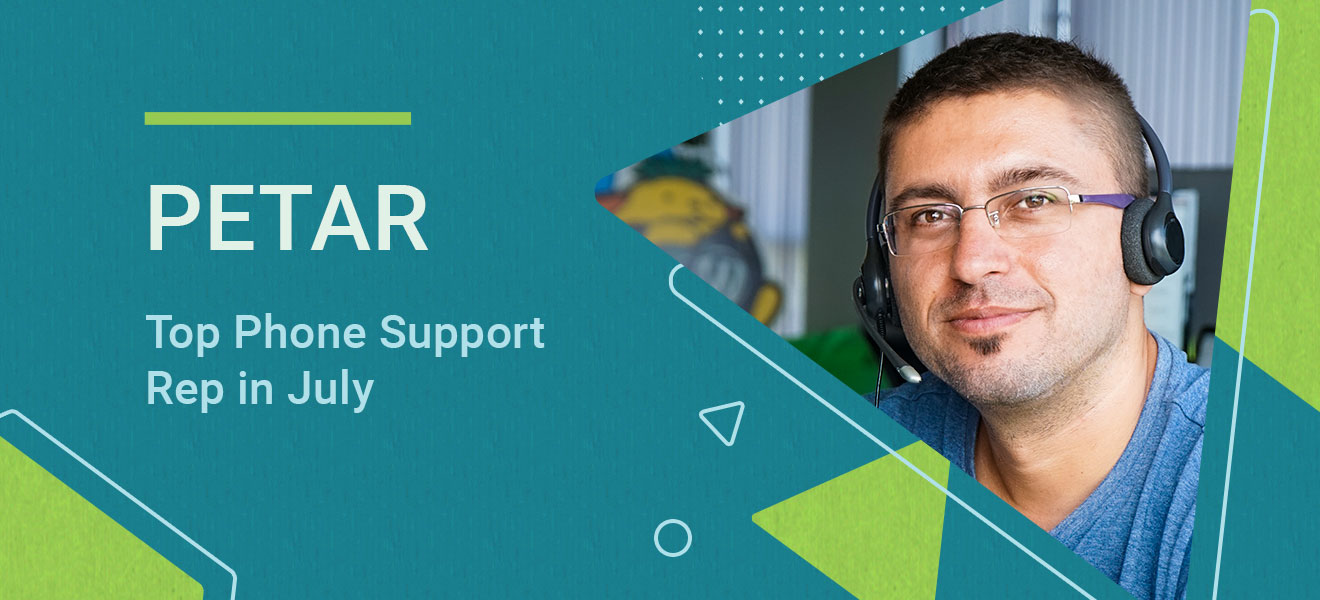
Meet Our Top Phone Support Rep for July

Peter SiteGround

We’re thrilled to introduce you to our top phone support representative for this month – Petar! He joined SiteGround almost ten years ago and is one of the most experienced members of our Phone Support team. Even though he had no idea what web hosting was when he first started, today Petar is a senior web hosting expert. He’s answered over 50,700 calls and helped thousands of clients! Learn more about him and some of his best tips below.

Continue reading “Meet Our Top Phone Support Rep for July”

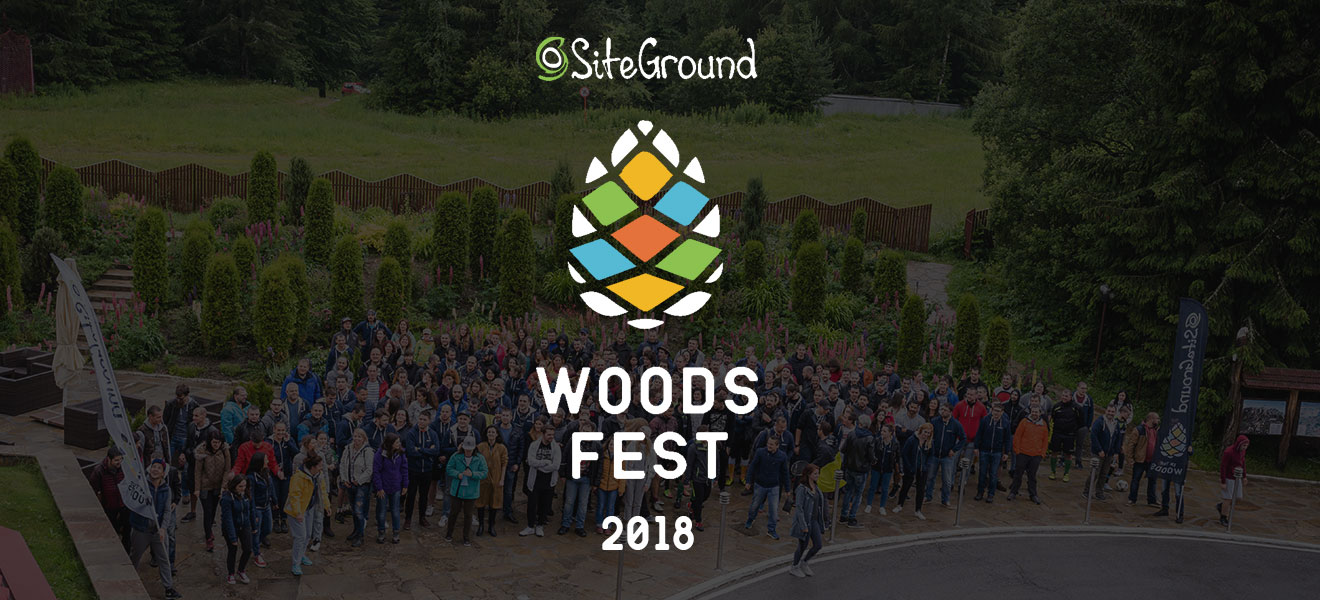
How our Team Festival Embodies our Values

At SiteGround, some people work from our offices, some from home, and some alternate between the two. We are a remote-friendly, but not entirely distributed team. It’s one of the things that makes us interesting.  

Our team of 500+ employees is scattered in four office locations and around the world. We usually communicate on Slack, Hangouts, and Zoom, but once a year, we try to get everyone together for our two-day SiteGround Team Festival. It’s our special way of creating bonds that last long after the event is over, and directly contribute to making us a better, stronger, and more productive team.

Like the two previous editions, our 3rd SiteGround Team Festival celebrated the things that unite us. Our company culture has always been influenced by the same core values ever since we started in 2004.

They continue to be the invisible thread keeping our team closer, however spread-out it might be. Some of these values are craftsmanship, care, empathy, mutual support, and having fun along the way. Our team lives by these values, but we work by them too. We’re building services that we believe in, improving how our clients experience making and growing their websites. We know there is real value in sharing skills and knowhow, doing what you love, and being happy at work. And this all starts with our own people.

Continue reading “How our Team Festival Embodies our Values”

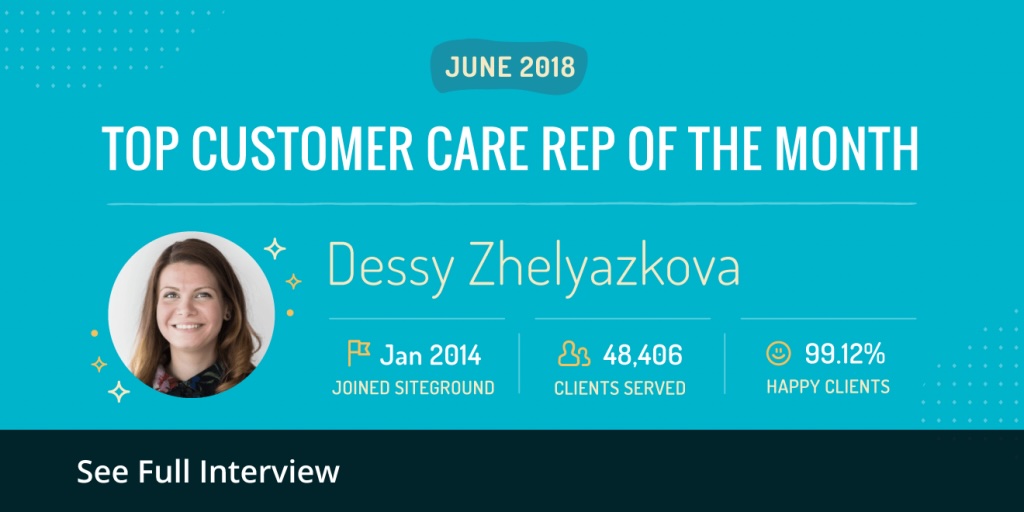
Meet Dessy, our Top Customer Care Rep in June

Since joining SiteGround in 2014, Dessy has become a highly valued member of our team, thanks to her compassionate and supportive attitude. Three years ago, she was awarded Customer Care Representative of the Year, and it’s obvious that Dessy continues to rock her title since she got exceptional all-round 5-star ratings this month! Apart from being excellent at her work, Dessy is an awesome mom and a vegetarian for 23 years now! Learn more interesting facts about Dessy, along with some great tips for website owners below.

Continue reading “Meet Dessy, our Top Customer Care Rep in June”

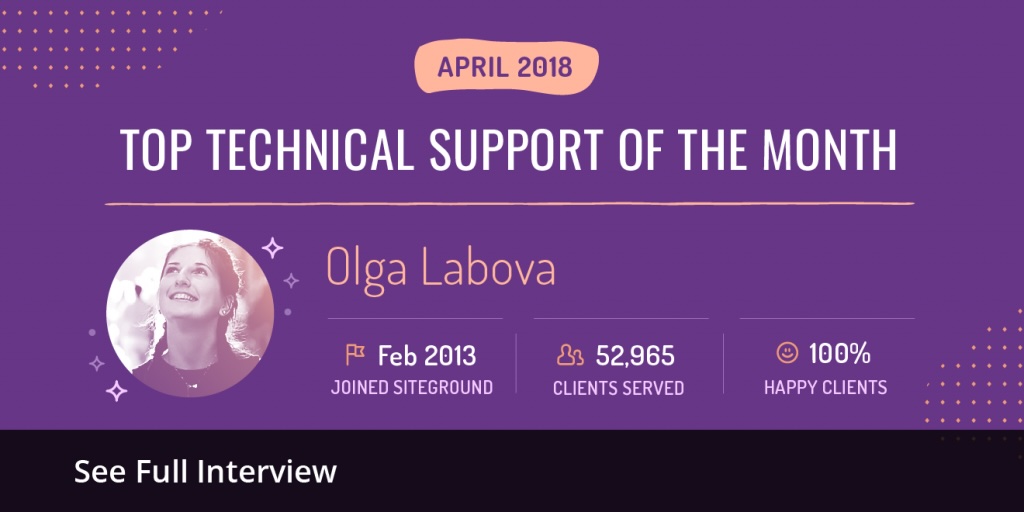
Our Top Technical Support Rep in April

Our Top Technical Support Representative for April is Olga who managed to receive 100% excellent ratings from our happy clients. She is friendly, empathetic, and dedicated to continuously improving her skills. From learning new languages,  exploring the world of photography to enjoying her favorite rock bands, Olga takes great interest in a variety of different hobbies. Read more about her in our interview below.

Continue reading “Our Top Technical Support Rep in April”

Meet Stefan, our Top Customer Care Rep in March

Stefan SiteGround

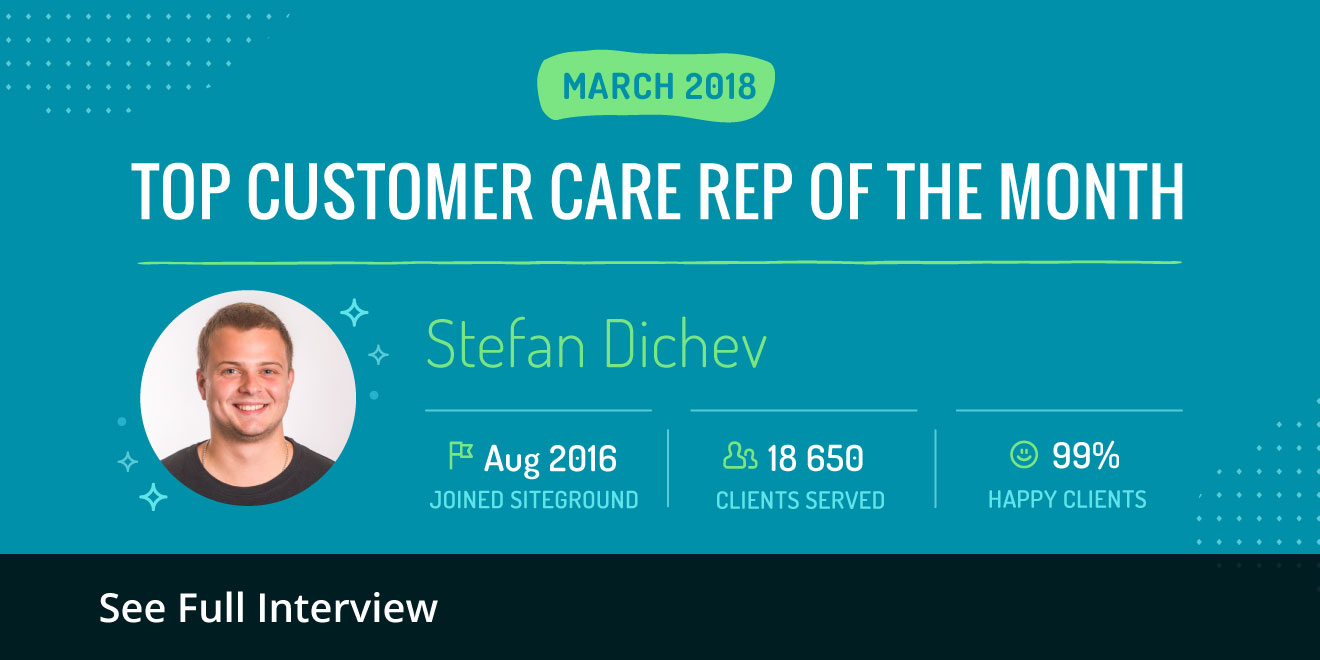
Even though Stefan is an IT geek and loves helping customers with their hosting questions, he is also very artistic and has quite a flair for electronic music. He is a compassionate and reliable team-player, and this month he got amazing results of 99% happy clients and many excellent customer reviews. Find out more about Stefan and his interesting client stories in the interview below.

Continue reading “Meet Stefan, our Top Customer Care Rep in March”