
What’s New in WordPress 5.5 (+ Screenshots and Tips)

what's new in WordPress 5.5

It’s that time again! WordPress 5.5 will be out today if everything goes as planned. I feel quite excited about this new version. I had the chance to be part of the magic that happened behind the scenes of this WordPress release as a mentor and  I would love to share the most important WordPress 5.5 features and improvements that will soon come your way. Our customers will receive the new version shortly after its official release, as always depending on the individual settings in the WordPress auto-updater for each of their installations.

Security Improvements

Easy Control of Plugins and Themes Automatic updates

Since WordPress 3.7 users have been able to turn on/off WordPress native auto-update for their plugins and themes through their wp-config file. Now with WordPress 5.5 turning on/off plugin and themes, auto-updates can be done much easier by clicking a link in the admin interface. 

Plugin Auto-updates

Most of the massive attacks on WordPress websites happen through outdated vulnerable plugins. That is why making the option for plugin auto-update so accessible to all users in the interface has the potential to greatly improve WordPress security. 

To review the Plugins auto-update feature in WordPress 5.5 when it rolls out, go to “All Plugins”, and you will see a new column “Automatic Updates”. We highly recommend that you keep plugin auto-updates ON for all your plugins, as this is the easiest way to receive security updates as soon as possible and keep your site safe. 
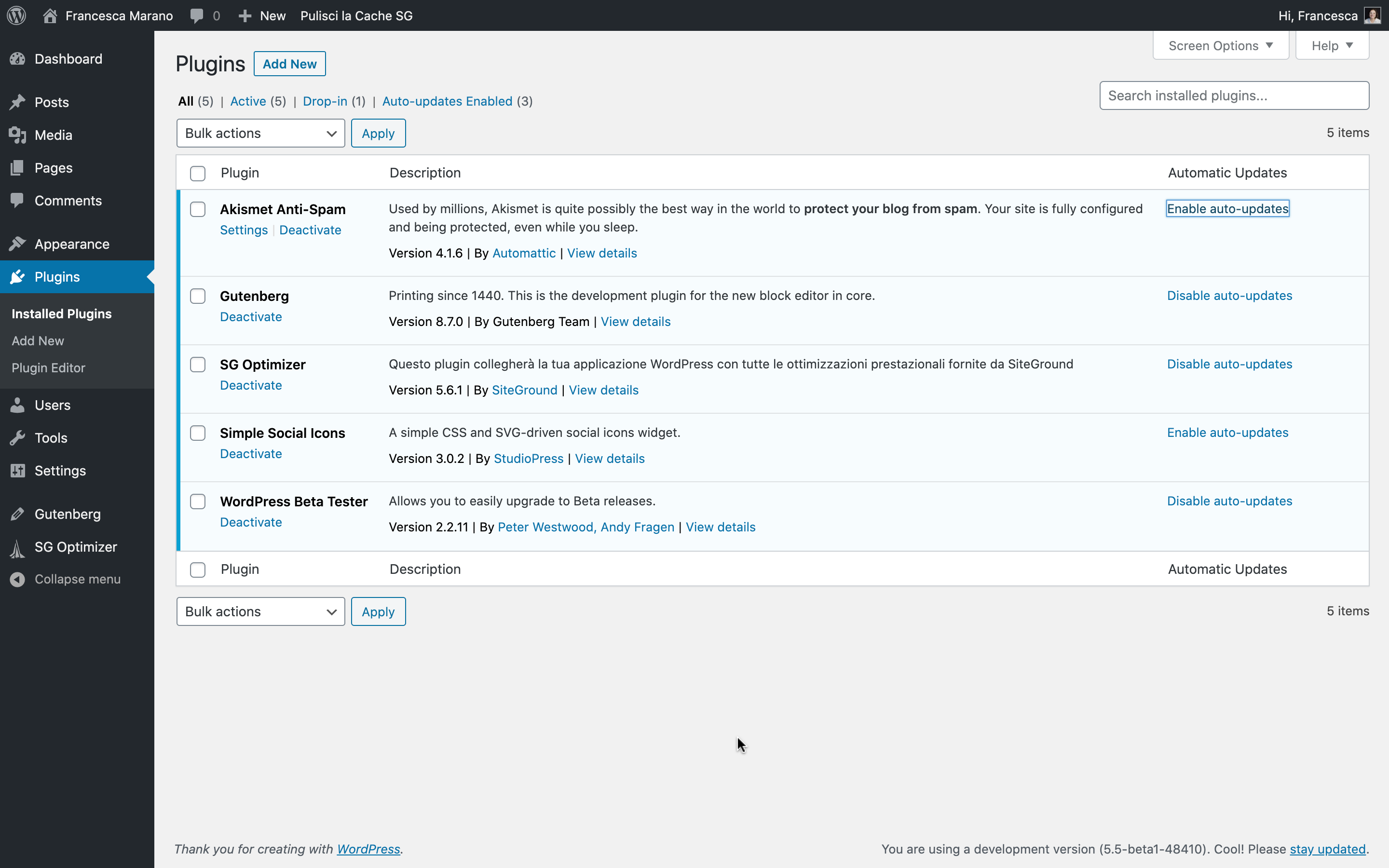
plugin auto-update in WordPress 5.5

The SiteGround auto-updater also provides an option for plugin updates in its interface. We check for new versions of your plugins when we do core WordPress auto-updates and we do automatic backups of your WP installation right before the upgrade begins to guarantee a safe failover in case anything goes wrong. Choosing which plugin auto-update option to use is up to you: if you want to get your plugins updated as soon as a new version gets out, make sure you enable the new WordPress feature. It will work fine, regardless of the plugin auto-update setting in our own auto-updater. If you feel you better wait and get a backup before any update, you may rely only on our system. 

Themes Auto-updates

Based on our experience, auto-updating themes can be a trickier process than auto-updating plugins. That is why we have not included such an option so far in SiteGround WordPress auto-updater. After all, changing something in the theme can change the outlook of your website and you may not want this to happen automatically without being pre-viewed by you. 

Still, we believe it is a good idea to keep your themes up-to-date from a security point of view. The best way is to create a staging copy of your site when there is a theme update, check how your site with the updated theme there, and if everything is OK, update the theme on your production installation. 

If you none-the-less want to switch on the themes auto-updates, you need to click on each theme you have installed and enable the option from the theme screen.
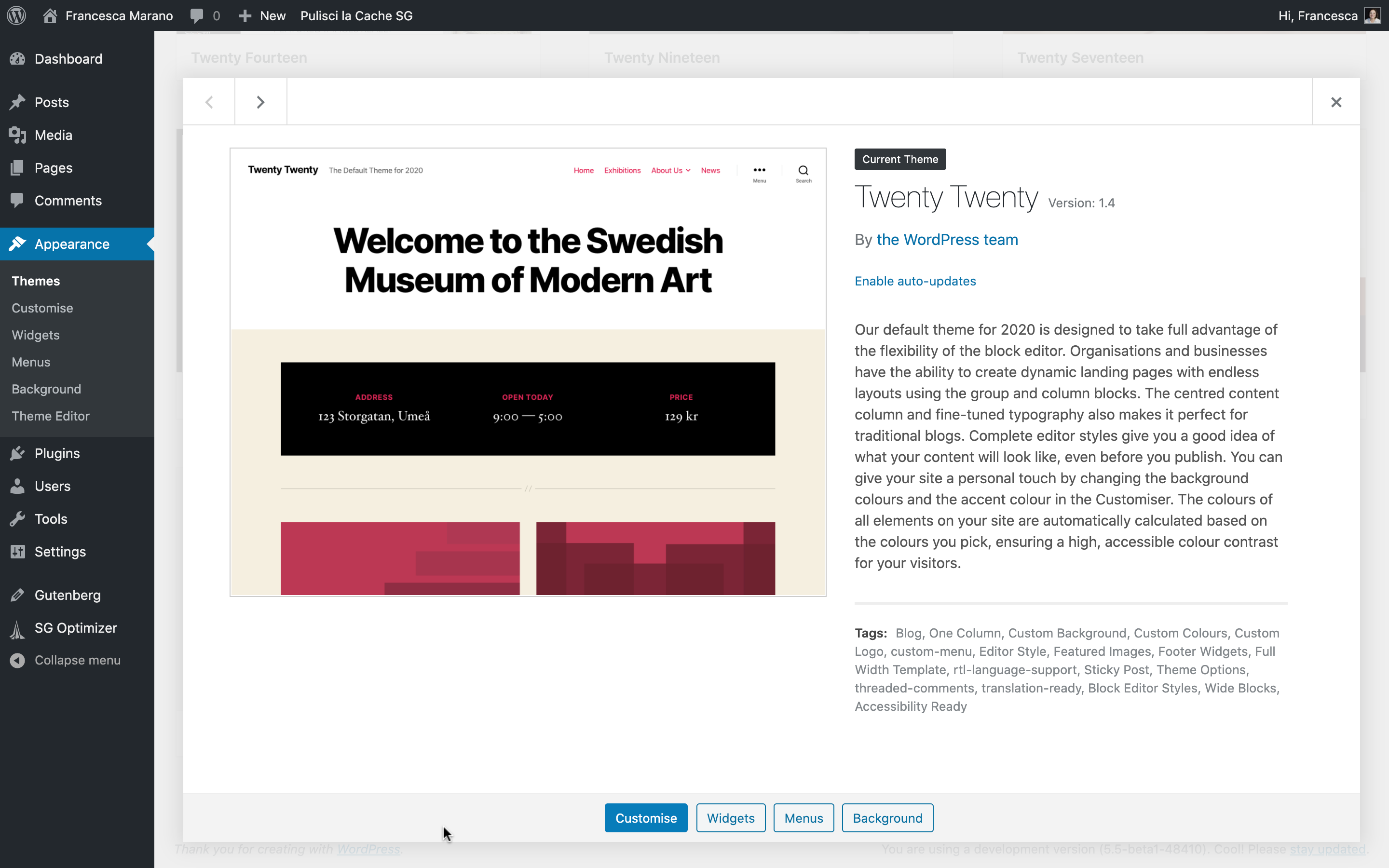
theme auto-update in WordPress 5.5

Speed Improvements

There are a lot of factors that determine the performance of your website. However, images are one of the main culprits when it comes to slow web pages. WordPress 5.5 introduces image Lazy loading as a default feature in the WordPress core. This is a great optimization that stops images from loading in bulk when you open a web page and load them gradually instead as you scroll through. 

At SiteGround we have been big fans of Lazy Load for a long time. It is a feature we provide to our users through of SiteGround Optimizer plugin since 2018. Since we initially launched the Lazy Loading optimization we have been actively developing it adding support for iframes, videos, WooCommerce products, shortcodes, and much more. At this point, Lazy load options in the SiteGround Optimizer are more advanced than what is introduced in the WordPress core. That is why, for people that have Lazy load enabled through the SiteGround Optimizer, we will disable the native Lazy load. 

SEO Improvements

Search engine optimization is always evolving and writing unique, useful content that responds to people’s search intents is still the main differentiator between websites that rank well and those that rank poorly. 

However, on top of meaningful copywriting, you should also help your SEO standing by using some more technical tools, like XML Sitemaps for example. XML sitemaps make it easier for search engines to crawl all content elements included in your site and more likely for them to be indexed and shown in searches.

Starting with WordPress 5.5 you will be able to get an XML sitemap generated directly from your WordPress installation without relying on third-party plugins to achieve this.
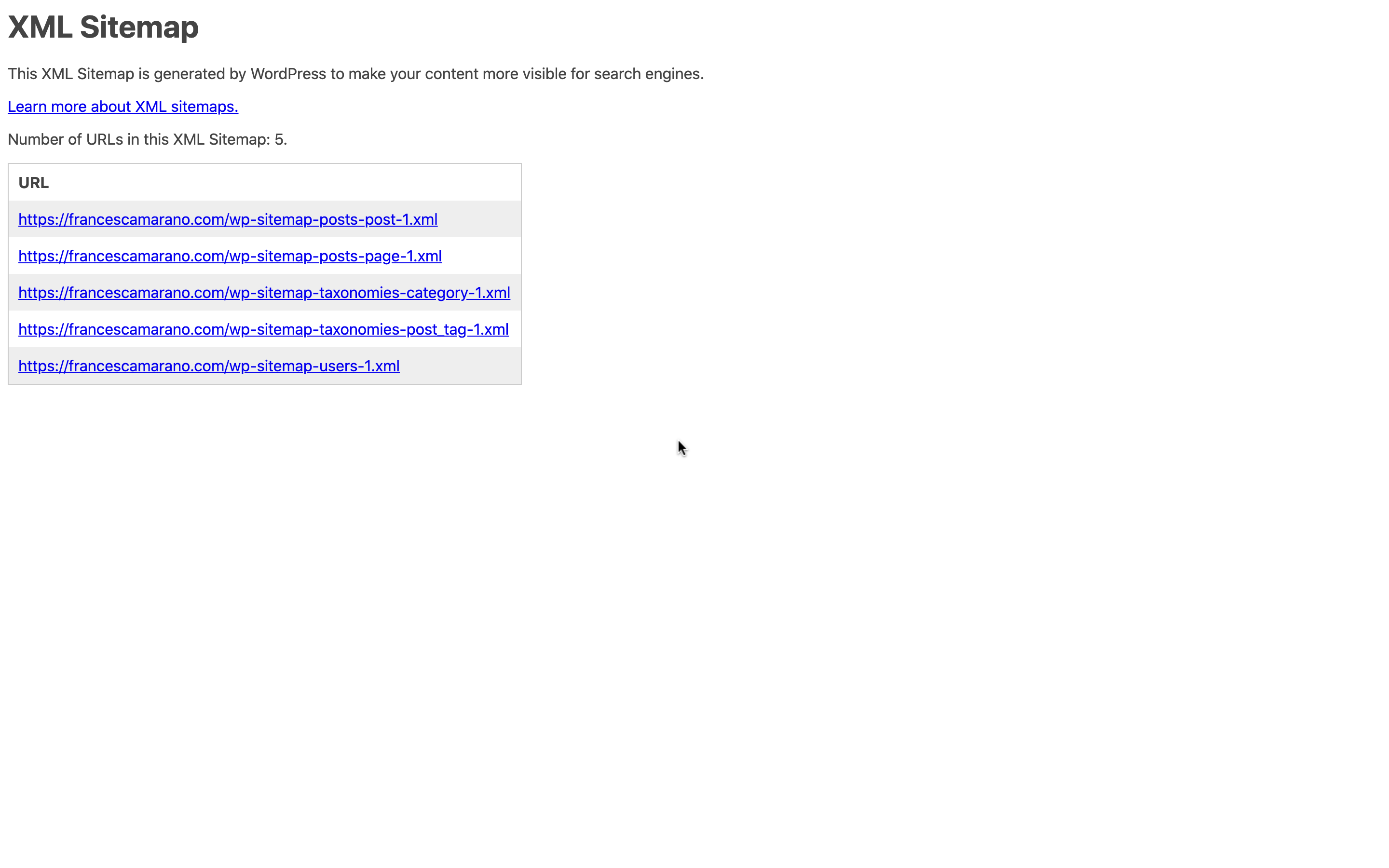
native sitemaps in WordPress 5.5

This native option is great if you want a map that will list:

  • Pages
  • Posts
  • Categories
  • Tags
  • Users

If you want a more complex sitemap, that includes images, news, and videos, you’ll still need to rely on a third party plugin but I think this is definitely a great option for website owners that don’t want to add plugins.

If you want to dig deeper into more practical SEO tips, check out our series of articles from guest author and SEO expert Rebecca Gill.

Gutenberg UI and functionality

The block editor got a major UI overhaul, as well. Eleven versions of the Gutenberg plugin have been merged into WordPress 5.5, bringing with them new functionality, speed improvements, and a changed UI. 

New Block Editor UI

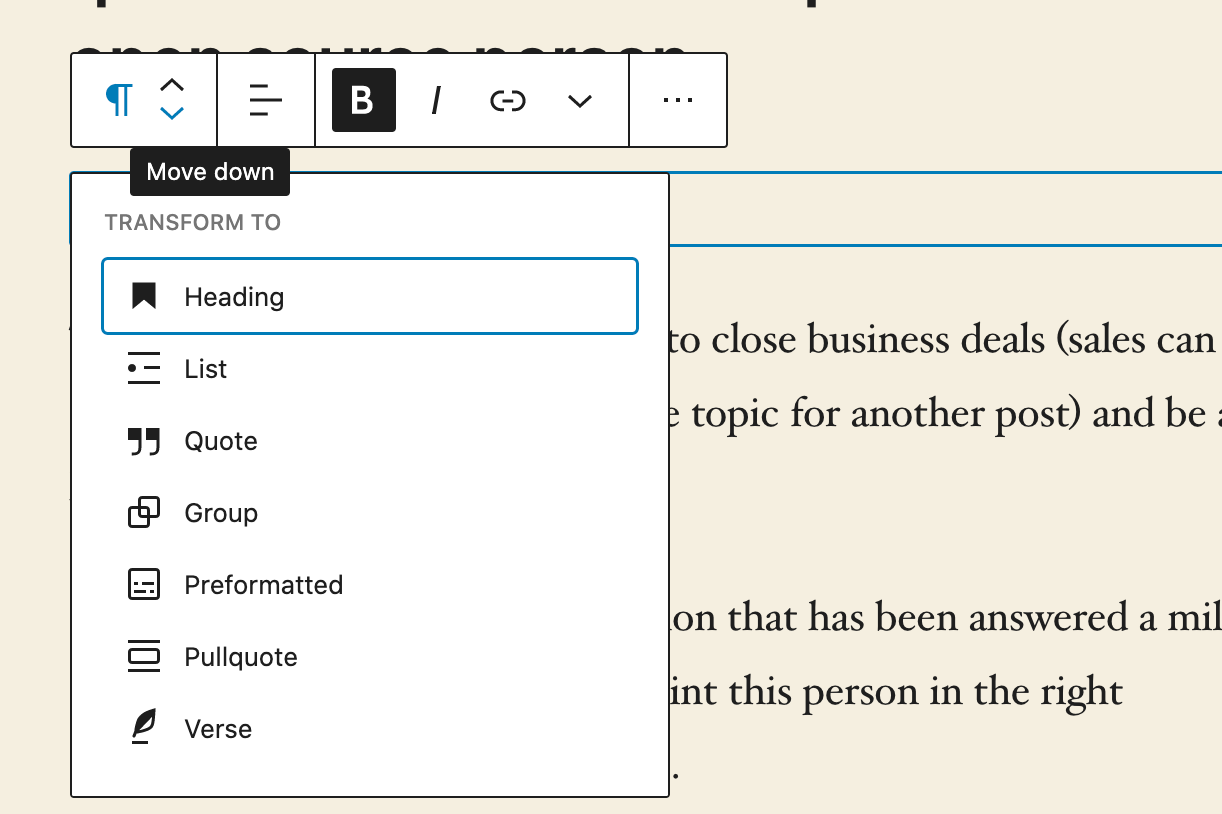
You will immediately notice how the modal bar that appears when you click into a block is bigger, with more contrast and more compact. The options are still there, and more!
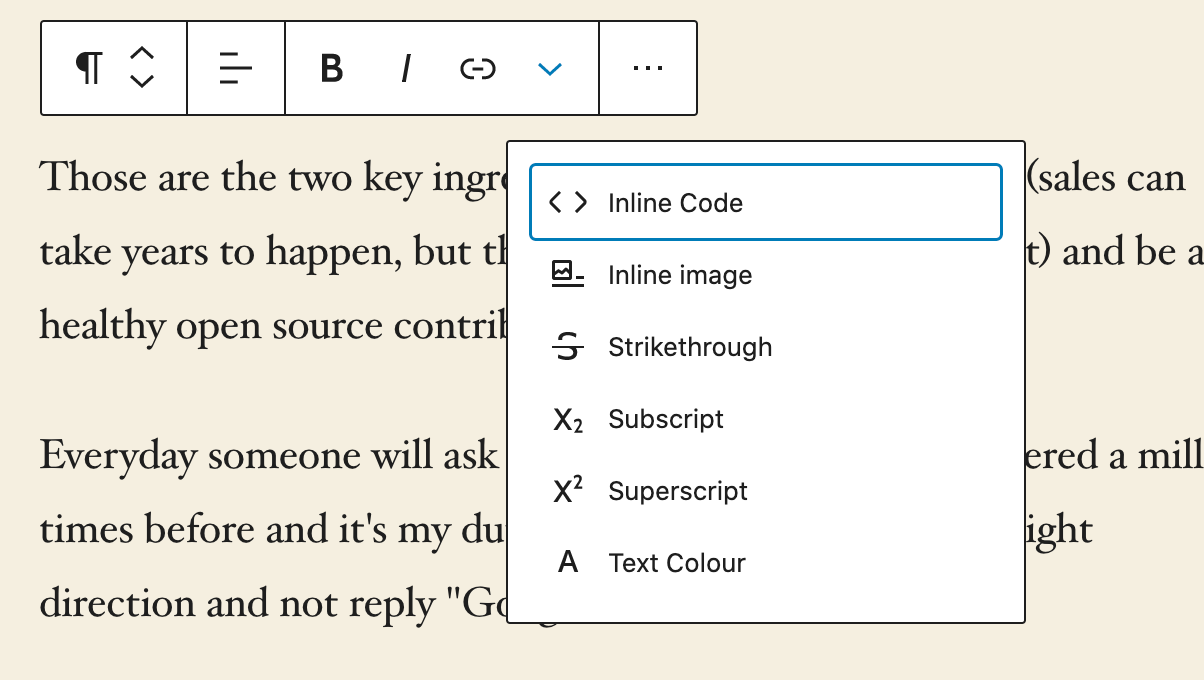
new gutenberg features in wordpress 5.5
improvements gutenberg in wordpress 5.5

New Block Patterns

You will be able to add block patterns, which are combinations of blocks commonly used together. Text and media, two or three buttons in a row, headers with text, you name it. This is a great way to save time when you write your blog posts and an encouragement to be more creative with your content design.
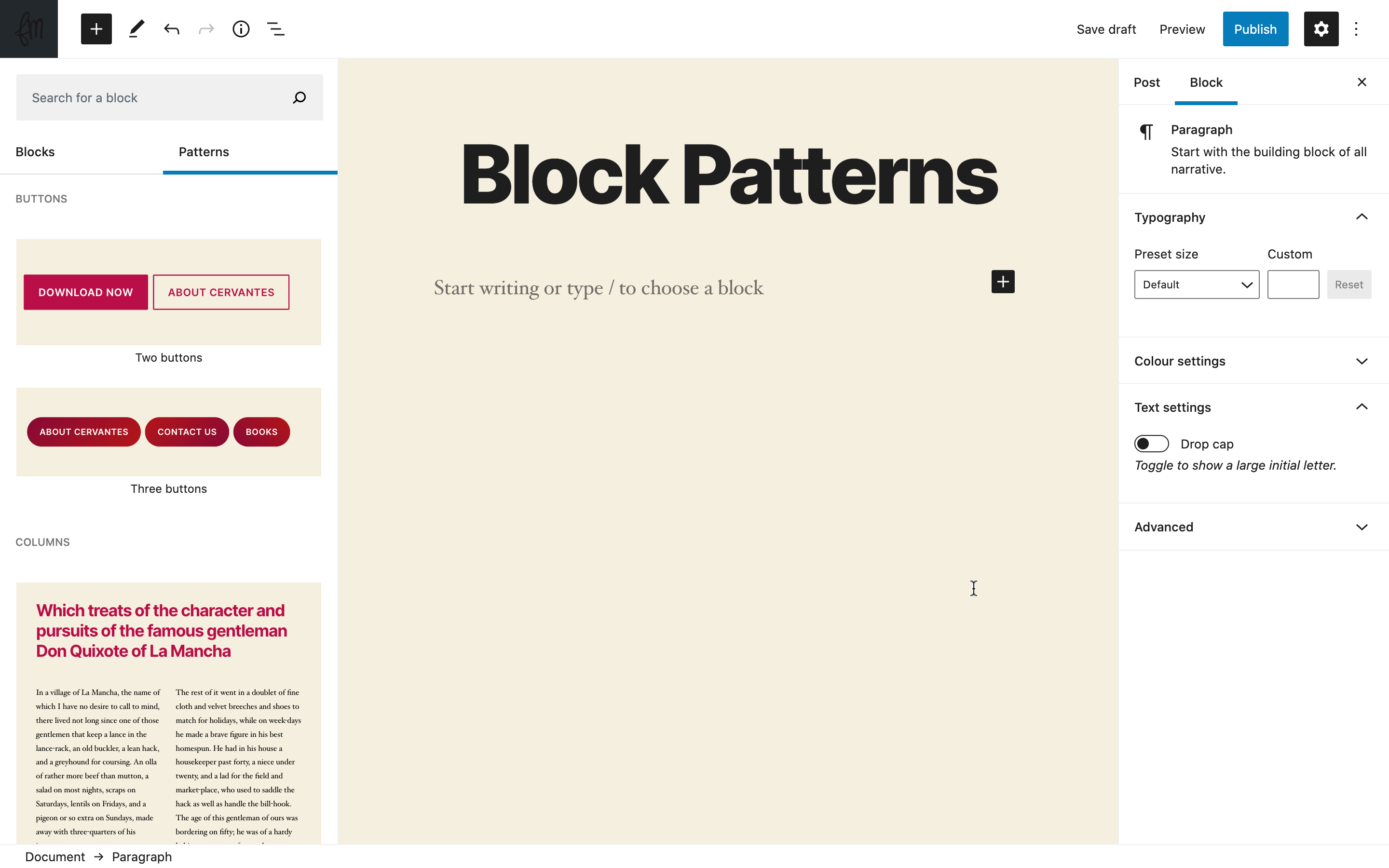
block patterns in WordPress 5.5

Inline Image Editing

During WordCamp Europe 2020 Online, Matt Mullenweg, co-founder of WordPress.org and Matias Ventura, one of the leading engineers of the Gutenberg project, gave a demo of this new feature. You can now zoom, crop, and rotate images directly into the block image. You can see it for yourself in the video recording of the conversation and think about how this can also speed up and improve your editorial workflow. 

And much more

With eleven versions of Gutenberg going into WordPress 5.5 as you can imagine there are a lot more exciting features included. To see them all in detail, you can check out the release posts in the Core blog.

Accessibility Changes

No WordPress major release would be complete without some Accessibility improvements and 5.5 is no different. In this release a number of changes were introduced, with these being the most notable:

  • The first iteration of alternative view modes for list tables
  • Link-list widgets can now be converted to HTML5 navigation blocks.
  • Primary buttons actually look disabled when they are disabled
  • Meta boxes can now be moved with the keyboard.

Pro Tips For Developers

There are a lot of changes under the hood as well, which will be especially interesting for our developer customers. Don’t forget to check the Field Guide with all the Dev Notes related to major changes. I would also recommend you sign up for the Core blog: it’s very active and it’s the best way to keep up to date with changes that might affect your code. The more time you have to test changes, the better… don’t wait for release day to discover that something broke.

Over to you

Have you tried some of the things mentioned above, maybe through the Beta Tester plugin or the Gutenberg plugin? Even if you haven’t tried anything yet, what are you excited and curious to try?

[subscribe_cta]
Webinar On Building a Website with WordPress

How to build a WordPress website

Last week we had the webinar “Building a Website with WordPress” where we explained how to easily set up a WordPress site with SiteGround. We received many questions and below, you can see answers to those we didn’t have time for during the webinar.

Also, if you’d like to watch the recording, here’s the video of the webinar session.

Questions about WordPress site setup

Q: Before this webinar, we tried to build the site without instruction. We had moderate success but would like to start over from square one. Is there an easy way to reset this and start from scratch?

A: The easiest way to do this is to delete your current website and then add a completely new one from your Client Area. First, go to Websites > Manage (next to the desired site), click on the kebab menu on the right, and select Delete. Then, again from the Websites list, click the New Website button. You will be prompted to select a hosting plan and after that, the Add New Website page will appear. 

If you don’t want to decide on a domain name at that moment, you can use the temporary domain option and change it afterward. On the second step of adding the new website, you will be able to choose WordPress as an application for your site, and it will be automatically installed for you. On the third step, you will be able to add some extra functionality to your site. When ready, click Finish and your new site will be up in a minute. 

Q: Will I need to purchase a separate domain to launch a new website? Is there any drag and drop application to build the frontend of the website?

A: To start a new website, you may use a temporary domain (free option available upon site creation), or use an existing domain, no matter where that domain is registered. You can change the primary domain of your site at any time from User Area > Websites > Manage website > Change Domain

If you wish to use WordPress as the backbone of your site, you may add a page builder like Elementor, or choose a theme with in-built drag and drop editor functionalities. When logging in your WordPress installation on SiteGround, you will first see a WordPress Wizard that helps you select a theme and plugins, which then get automatically installed for you. During that wizard setup, you will have the choice of adding Elementor as your page builder. 

Q: In the time I build my site, what happens with the index page?

A:
If you do not want visitors to see your new website while you are developing it, there are several methods you can use to restrict access to the website and make it visible only to yourself. For example, you can password-protect the website, set a coming soon or under maintenance page with the help of a maintenance plugin, or allow only your IP to have access to the site. Read more about these methods in this article

Q: Can I use WordPress to make mobile apps?

A: No, WordPress is a Content Management System, designed to be used to build websites. You can use WordPress plugins to build and customize a mobile version of your website though.

Questions about security 

Q: Is using Captcha good for security, which one is the best and secure Captcha to use?

A:
Using Captcha is good for security. If you choose to use a CAPTCHA on your website, the most popular one is Google’s reCAPTCHA. Alternatively, you can use the Wordfence plugin, which protects from brute force attacks by limiting login attempts.

Q: I have a main domain that is working ok with the free SSL certificate. I have also set up a subdomain. Can the SSL work with the subdomain as well?

A: The standard free  Let’s Encrypt SSL certificates cover only the domain name and the www subdomain. If you want to have an SSL certificate for another subdomain name as well, you can issue a new, free SSL certificate for the subdomain. Alternatively, you can use a free Let’s Encrypt WildCard SSL certificate for the main domain, which will cover any subdomains too.

Q: How to make sure WordPress is secure? I find Sucuri too complicated. Any tips on how to set up a security plugin without understanding what it does?

A: Security is a very important part of every website and you could check out our previous webinar where we explained the key security “layers” which every WordPress website should have, or our podcast episode “Is My Website Safe” .

Questions about plugins and themes

Q: I’m looking to create a virtual online debating arena or hall for my video hosting site uunitedtube.com that is on the way. What plugins are good for me to use to allow two separate located debating speakers and over 100s of audiences to all video streaming simultaneously, despite all their different IP addresses?

A:
The setup you describe is quite an advanced one and requires lots of customization so it would be best to hire a professional programmer to develop the necessary functionalities for your website.

Q: What themes are best for service-based businesses and ministries?

A:
ThemeForest is a trusted marketplace for WordPress themes and they have several ministry-oriented themes that you can choose from.

Q: Which plugin should I use to get a contact address?

A: Contact Form 7 is the most popular WordPress plugin for creating contact sections or pages on your website.

Q: Can you have multiple pages/titles and run a blog in each page?

A: With WordPress, you can create a custom template that renders your blogroll. Then, on the pages you want to have different blogs, simply set the Title and URL you want and configure them to use your custom template.

Questions about posts, pages

Q: Instead of creating a blog post, if I have created a page as a blog page using the Astra template, how do I create an index of blogs on that page and create a link to open a new webpage for my new blog posts, instead of just scrolling down ?

A: This is a question specific to the functionality of the Astra theme and it is best if you contact the official provider of that theme for guidance.

Q: Can you please tell me how to display recent posts anywhere I like on a WordPress website, pages as well as posts?

A: The WordPress editor (Gutenberg) has a built-in block interface for displaying your recent posts that can be easily added to any of your pages. To do this, log into your WordPress admin dashboard, go to the desired page, navigate to the part where you want your recent posts to appear, and click the “+” icon on the left. Then, from the Widgets drop-down menu, select Latest posts, and click the Update button on the top right.

Questions about transfers

Q: Is there anybody who could tell me how to transfer a full website to a new domain if I have the same WordPress id?

A: You can transfer your WordPress to a new domain name using our WordPress Migrator plugin. You can find detailed instructions on how to use it here.

Q: How can I move a site from wordpress.com to wordpress.org?

A: There is no easy way to migrate a website from the wordpress.com platform without losing elements of the look and feel, unfortunately. Here is a tutorial we prepared about this type of migration.

Q: Any tips on how to move WordPress websites with emails to SiteGround from another host, e.g. Webfaction?

A: To transfer your WordPress website you can use our Automatic Migrator plugin. For transferring your emails, you can follow the step-by-step instructions here.

Miscellaneous questions

Q: How do you add an opt-in list (to start an email list) to your website?

A:
You can use a plugin like Newsletter

Q: I have copyrighted science-based material that is for my site. Concerned about copying. Can WordPress protect my work? 23 years of research.

A: WordPress is a very well-maintained and secure software, but whether a malicious hacker would be able to hack your website depends on a combination of factors that go beyond WordPress. If you wish to store your material on your website, assumingly without allowing access of visitors to that content, we suggest that you password protect any URL containing sensitive information on your website from Site Tools > Security > Protected URLs. The tool allows you to limit access to the URLs you want, or allow access only to specific users. Also, it is extremely important to protect your admin login form with a plugin like Wordfence, or else that would stop possible brute force attacks. And, make sure you use very long and complex passwords, which you change frequently.

Q: How to encrypt the embedded video link in WordPress so that all view the video but can’t download it?

A: The embed itself can’t protect your video from being downloaded. You should rely on the video streaming service for such functionality. Note, however, that there isn’t a 100% protection against such downloads if the content is public.

Q: I want to add a captcha to my forum. How can I do it?

A:
You can use a plugin to add a CAPTCHA functionality to your WordPress. One of the most popular CAPTCHA WordPress plugins is this one.

Q: How do I link my site to social media?

A: You can use a plugin to add a “Share” button for various social network sites. One of the most popular plugins that provide this functionality is this one.

Q: What is the limit of web pages I can have on the GrowBig plan on SiteGround?

A: There are no limits on the number of pages you can add to your WordPress website on any of our plans.

Q: Hi, where should I place the Google search console code?

A: It would be best to add the code to the header of your website. To do that you can use a plugin like Insert Headers and Footers. Once you install the plugin, go to Settings > Insert Headers and Footers page and paste the Google HTML tag code you copied earlier inside the “Scripts in Header” box.

Q: How to make WordPress + Woo instant load. My web takes 10secs, and that’s bad.

A: The problem you describe is specific to the unique characteristics of your website. It may result from a multitude of factors starting with simple ones like a bad combination of plugins and getting to issues like poor scripts added to the site, It is best if you hire a specialist to examine the website and suggest optimizations. 

Q: How do you get rid of the little “Edit” word under the “Home” heading?

A:
The “Edit” button is a quick and easy way to get to your WordPress admin interface where you can edit the respective page of your website. It is only visible to you, not to your website visitors.

[subscribe_cta]

What’s New in WordPress 5.4

What's New In WordPress 5.4

On March 31st, the latest version of WordPress was released, number 5.4 and named after Nat Adderley, an American trumpet player, continuing the tradition of naming WordPress releases after jazz players.

I had the honor to be involved once again as the release co-lead, in the role of coordinator. This was possible with the support of SiteGround, donating my hours to the project.

By now, depending on the settings of your auto-update function in the SiteGround user area, your version of WordPress should be updated to 5.4, so let’s check the most exciting new features from the WordPress end-user perspective. 

Two new blocks

You can now add social media widgets in your post. By clicking on each icon you can add your link and show them inside a post.

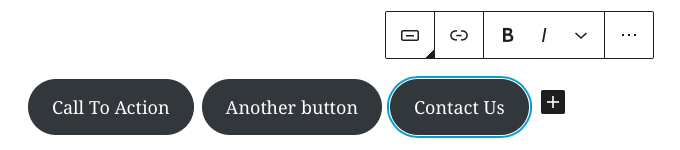
The second one is the button block: now you don’t have to fiddle around with CSS to create your own buttons to use in those Call to Actions at the end of your sales page. Just add the button, or the buttons, you can have multiple inside the same block, adjust the settings (background color, text color, border width, link) and hit publish!

More Coloring options 

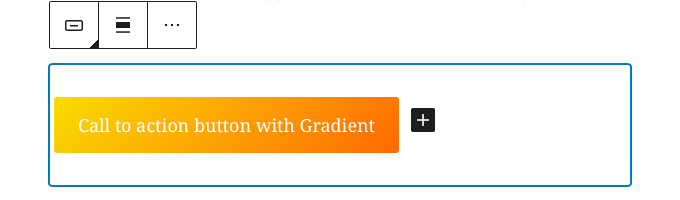
You can now selectively color parts of a text within a block. Gradients were added to the button and cover blocks and you can now apply color options to  Group and Columns blocks.

Fullscreen Editing 

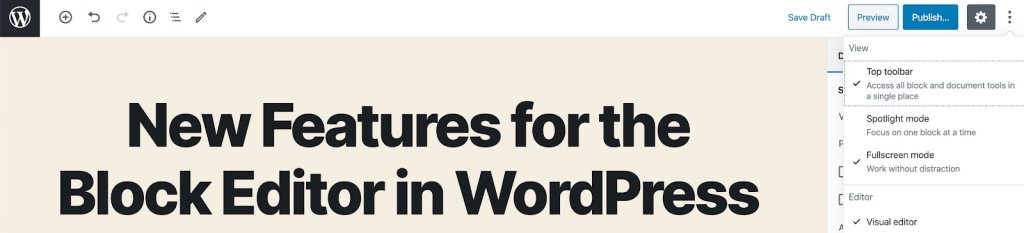
New WordPress installs now open the block editor in fullscreen mode by default for a distraction-free writing session. The W logo in the left corner is the shortcut to going back to the admin area, Posts list. If you want to switch off the fullscreen mode, click on the three small buttons to the right of your screen and unflag “Fullscreen Mode”. 

Full Screen Editing

Improved navigation and accessibility

It is now clearer to see what block you are using with block breadcrumbs: you will notice them on the very bottom of the screen.

breadcrumbs navigation

With each new release, the block editor becomes more accessible for people that rely on screen readers or keyboard navigation to use WordPress. The tabbing across elements has been improved and your screen reader will tell you if you are un Edit or Navigation mode.

What’s next

WordPress 5.4 has just been released, but the Core team is already working on preparing for the next two planned releases for 2020, 5.5 and 5.6. Josepha Haden, the WordPress.org Executive Director, wrote an update on the status of some upcoming projects and these are some of the features I am most excited about:

  • A block directory, so you can discover blocks and easily install them on your website like you would do for plugins. This is an opportunity to experiment with blocks and think of new ways to organize and show your content.
  • Support for blocks in the Customizer to make it easier to change the appearance of your website. This is another step towards full site editing via blocks. Endless possibilities!
  • A navigation block that will allow you to add a menu inside a post or a page. For example, you could create a “Where to start page” with links to relevant sources that might help your visitor move around easily.

Passing the mic to you

What do you like the most about the new release? What are you excited about in terms of future features. Let us know in the comments!

[subscribe_cta]

Communities, WordPress, and now SiteGround too – that is what I do and love!

This September I joined the SiteGround team. This was a move from freelancing to working for a big company. I was a little anxious about such a serious change. However, it actually felt like quite a natural development. Now, as part of the SiteGround team, I will spend even more time doing what I truly love – being actively involved with the WordPress community.

For the past few years, I have organized regular WordPress meetups and a WordCamp in my hometown – Torino, Italy. I have also participated in the organization of WordCamp Europe. Now I will continue to be part of these and even more WordPress events. I will keep sharing my experience and volunteering with my time for the WordPress community. What is new is that I will also be part of one of the most amazing teams I have previously only met at WordCamps — the people of SiteGround. Read below to see how I’ve ended up here and what is coming.

Continue reading “Communities, WordPress, and now SiteGround too – that is what I do and love!”